The "and also" that costs you a margin point
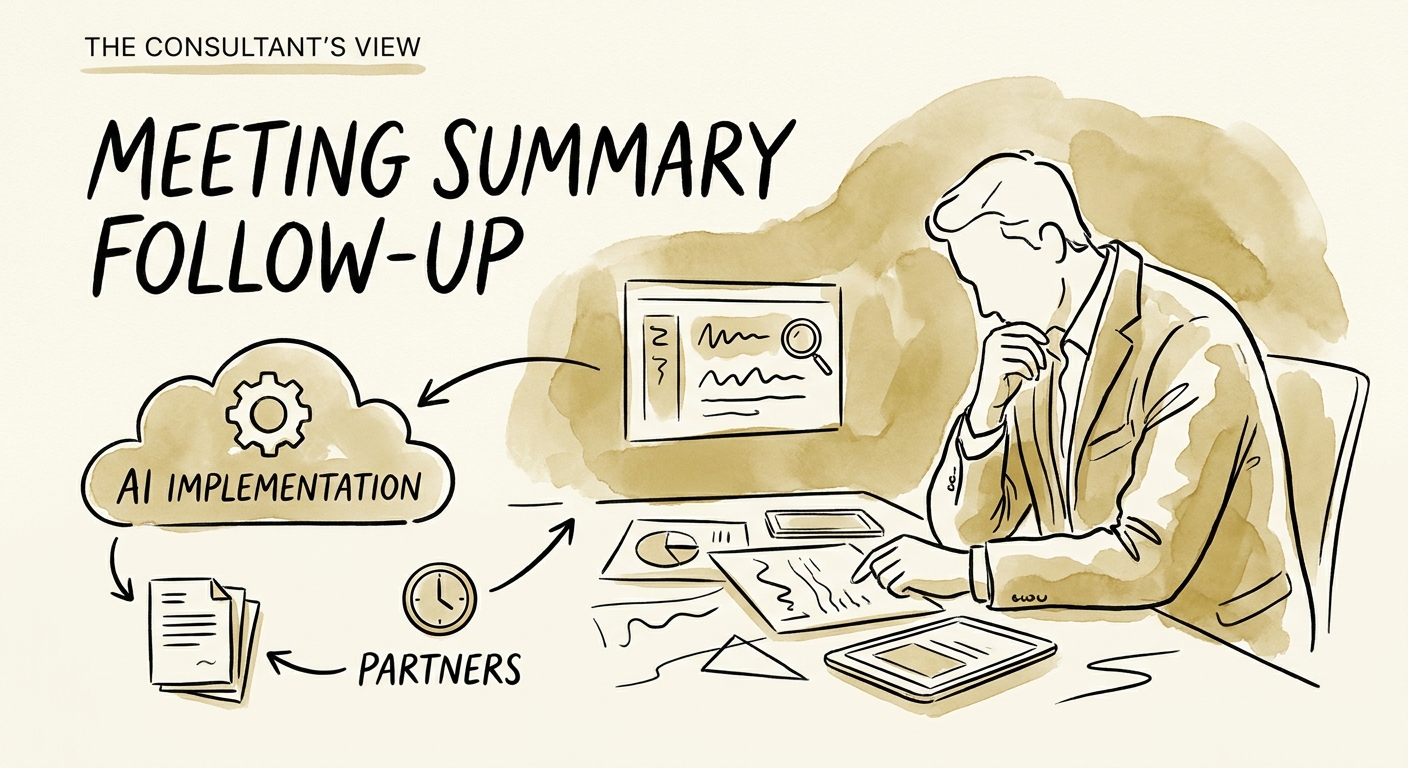
Picture a discovery workshop on a fixed-fee ERP rollout. Forty minutes in, the client's ops lead says: "Oh, and we'll need this to sync with the warehouse system too." Everyone nods. Nobody flags it as out of scope. It lands in someone's notebook as a bullet, gets carried as "build work" by the team, and surfaces six weeks later as an awkward change-order conversation you've already half-delivered for free. That is the exact moment AI meeting follow-up earns its keep for a software implementation partner—not by producing a prettier transcript, but by catching the commitment that just walked past your statement of work.
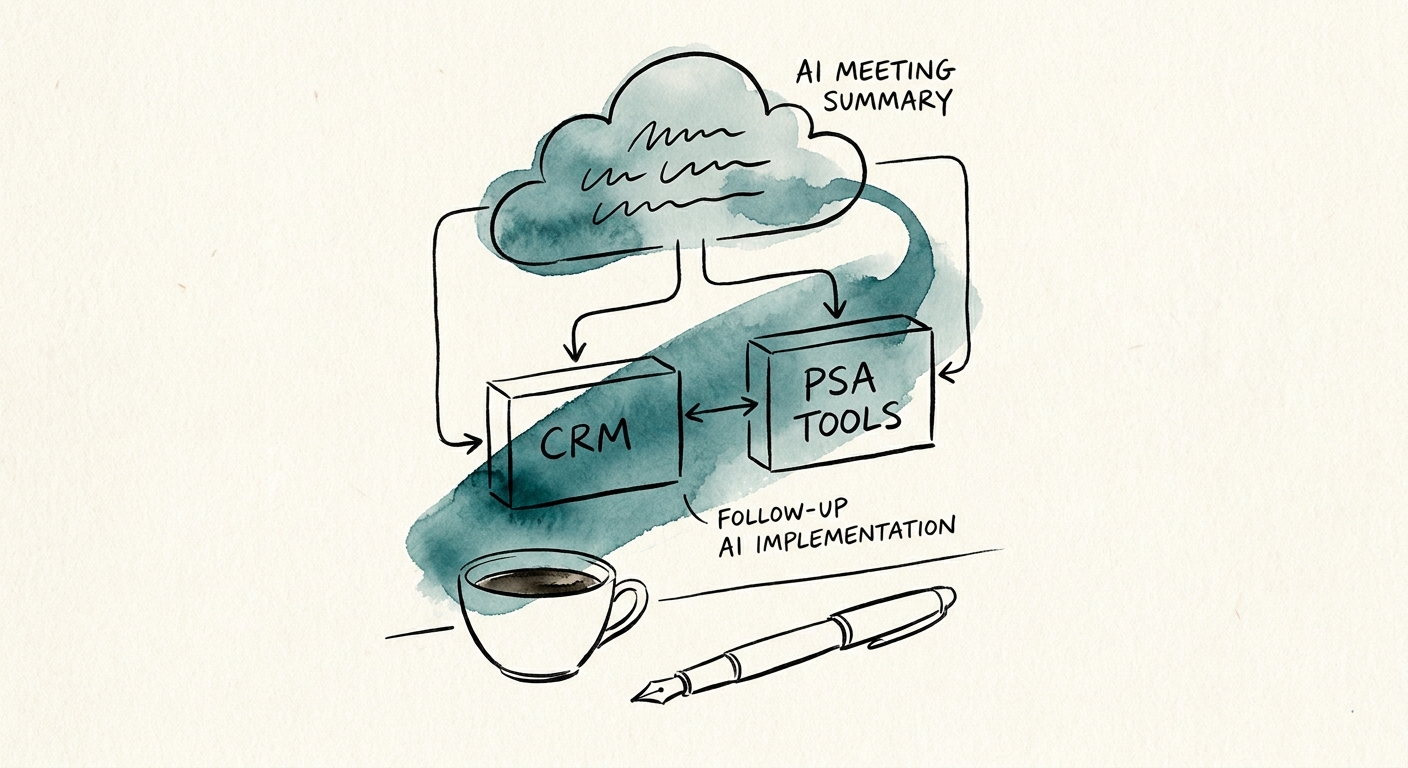
Implementation shops bleed margin in a specific place: the gap between what was decided in a working session and what actually made it into the RAID log, the project plan, and the change-control queue. Deloitte's State of AI in the Enterprise 2026 and the OECD SME AI adoption report both show delivery-heavy services firms moving on AI faster than the headlines suggest—but adoption pressure doesn't tell you which workflow to start with. For a partner shop, the answer is the one with the clearest dollar leak: turning approved meeting evidence into owner-confirmed action items, escalated scope flags, and project-system updates that actually happen.
Pick one workshop type and instrument it
Don't roll AI across every standup, steering committee, and hyper-care call at once. Pick one repeatable session type—say, the requirements/discovery workshop on your most common implementation pattern—and run the pilot there for a month. The reason is measurement: you need a baseline that's specific enough to argue with. Before AI touches it, count four things by hand for that session type: action items that landed late or with no owner, client decisions your team later disagreed about, scope changes caught after delivery instead of in the room, and RAID entries someone had to backfill from memory.
Then run the AI follow-up against the same session type and watch whether those four numbers move. The signal you want isn't "the summaries look good." It's "the project manager is starting fewer Monday mornings reconstructing what the client agreed to on Thursday." A useful tell: how many AI-drafted action items get edited or disputed before the PM confirms them. High dispute rates early are fine—they tell you the model is hearing the room. A dispute rate that never falls means the transcript quality or the prompt is wrong, not the workflow. Only once the operating behavior shifts—owners confirming faster, scope flags surfacing in the room—should you put numbers to it with the AI Opportunity Score or the AI ROI Calculator. Tie every figure to a named delivery lead, or it's a vanity metric.
Client transcripts are not your data—govern accordingly
Here's the part implementation partners underweight: those workshop recordings contain your client's confidential systems, processes, and sometimes their customers' data. A summary tool that quietly retains transcripts, trains on them, or leaves them broadly accessible inside your firm is a contract and trust problem waiting to happen—especially when half your clients sit in regulated verticals. The NIST AI Risk Management Framework gives you a clean way to write down intended use, risk, and accountability for this specific workflow, and CISA's AI data-security best practices should shape where transcripts live, who can open them, and what the tool is allowed to do with them.
Concretely, before you scale past that first workshop type: confirm recording consent is captured per client, restrict transcript access to the delivery team on that account, require a human to approve every action item before it becomes a client-facing commitment, and route any AI-detected scope change to your change-control process—never straight into the build queue. Get those four controls holding on one session type, prove the margin-leak numbers moved, and only then expand to your steering committees and hyper-care calls. Want help sequencing which workflow comes after this one? Start with the AI roadmap.
