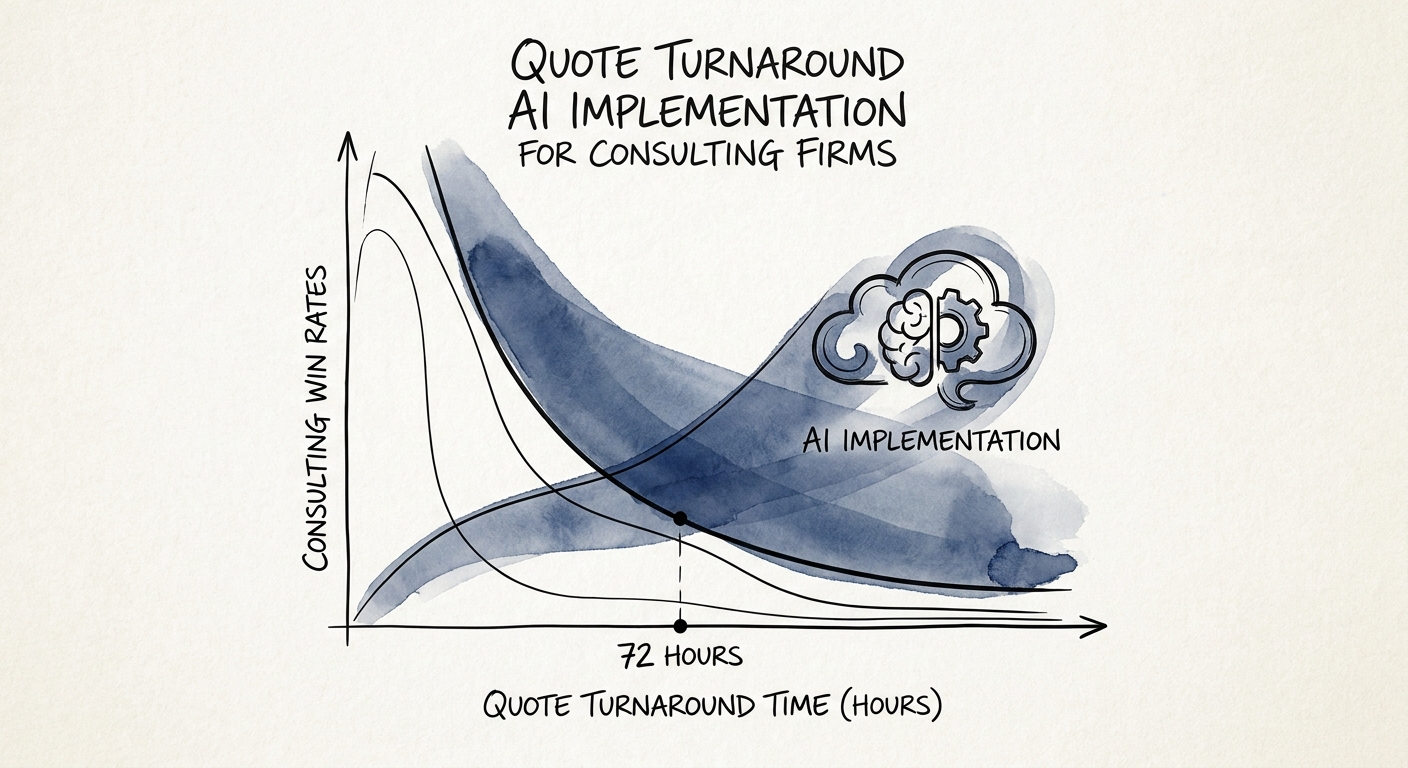
The quote isn't the bottleneck. The blank week before it is.
A prospect calls Tuesday wanting a scope and a number. Your best senior consultant — the only person who can size the engagement correctly — is billing 40 hours on a live delivery. So the proposal sits. It goes out the following Monday, six days later, by which point the prospect has two competing quotes and has mentally moved on. You didn't lose on price. You lost on the calendar.
That gap is what AI actually fixes for a consulting firm, and it's worth being precise about why. The slow part of a consulting quote is rarely the writing. It's the assembly: pulling discovery notes into a coherent scope, listing the assumptions a senior would normally hold in their head, drafting the exclusions, and prepping a review packet someone can actually sign off on. Salesforce State of Sales research keeps surfacing the same theme — buyers reward the firm that responds while the need is still hot — and in services, "hot" has a shelf life of days, not weeks.
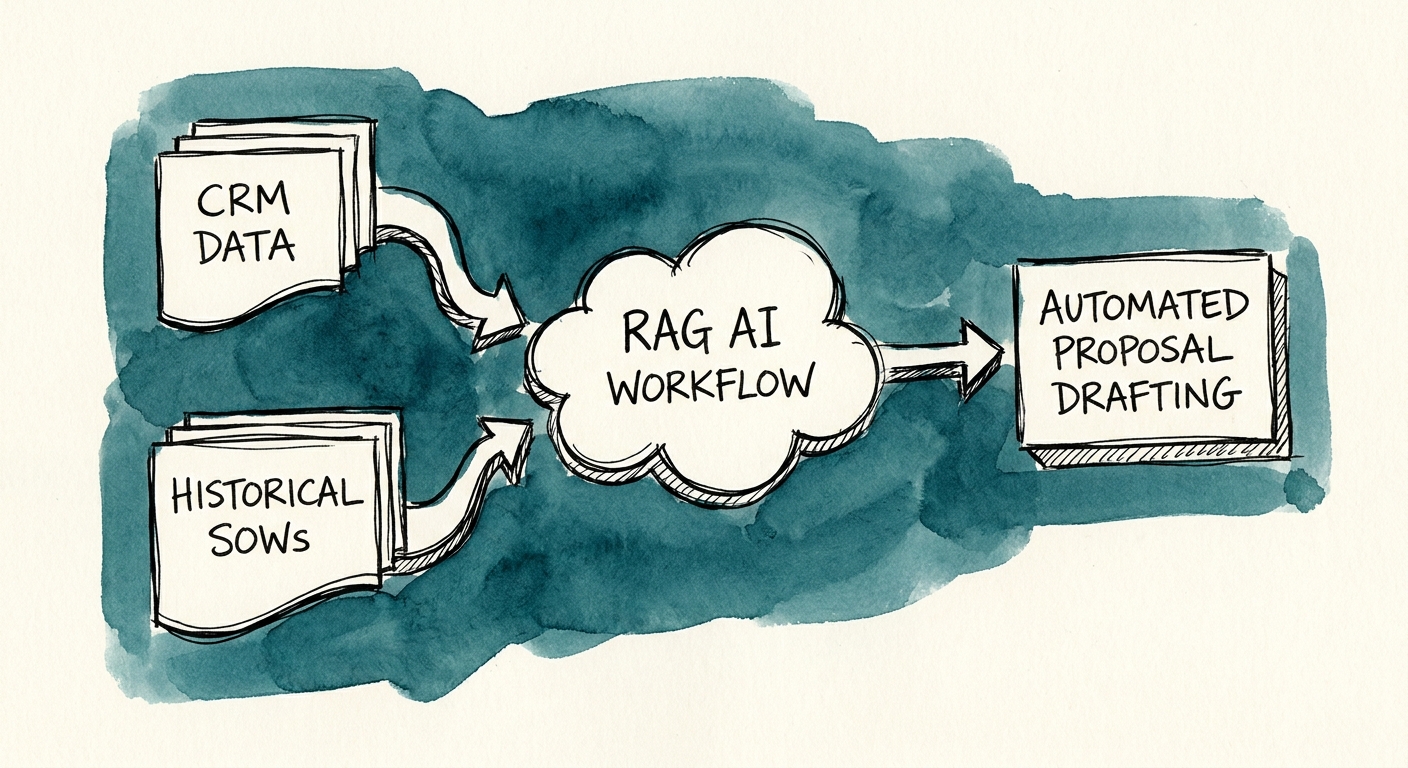
So pick one quote family and start there. A standard 6-week assessment, a fixed-scope implementation sprint, a retained advisory month. Let the AI draft the scope narrative, surface the assumptions explicitly, and build the internal review packet from your discovery notes. The goal isn't a quote that ships itself — it's a quote that lands on your senior's desk 90% built, so their hour of attention goes to the judgment calls instead of the formatting. See the quote turnaround first-use-case guide for how to scope that first release.
What goes wrong: the AI under-staffs the engagement
Here is the failure mode that bankrupts a consulting line, and it has nothing to do with prose quality. The AI reads discovery notes about a "data migration," matches it to a similar past engagement, and quotes 120 hours. But the past engagement had clean source data and one stakeholder. This one has three legacy systems and a client team that's never done this before. The AI can't see that. So it produces a confident, well-written quote that bakes in a 40% staffing shortfall — and your team eats the overage at zero margin for the next two quarters.
That's why the workflow has to physically separate four things and treat them differently. Approved rate inputs are locked — the AI references them, never invents them. Delivery assumptions and effort estimates are proposed and flagged as such. Exclusions and client responsibilities are mandatory fields, not optional polish. And the commercial language is the only part the AI gets real latitude on. RSM's middle-market AI survey shows firms racing to adopt, but adoption without this separation just lets the model launder a bad effort estimate into a clean-looking PDF.
The hard rule that protects you: if the model can't point to where a staffing or effort assumption came from — a comparable engagement, a stated client constraint, a discovery note — the quote stops and routes to a human. Say a 30-person firm runs this on a typical implementation quote; the partner shouldn't be re-checking grammar, they should be answering one question — "is this staffing mix right for what we heard?" — before margin and delivery risk get signed off and anything reaches the prospect.
Prove it on cycle time and rework before you scale it
Most firms measure the wrong thing here. They celebrate "we cut quote time from six days to one" and ignore whether those faster quotes were any good. The number that matters is the pair: turnaround time and reviewer correction rate. If quotes are going out in a day but your partners are rewriting half the staffing assumptions, you haven't built a workflow — you've built a fast way to generate drafts.
Track five things over your first 90 days: quote cycle time, how many lines a reviewer corrects per quote, how often a pricing exception gets requested, whether the won engagement matched the quoted staffing once delivery started, and win/loss notes from prospects. The delivery-match metric is the one consulting firms skip and the one that tells you the truth — a quote that wins but blows its hours is a worse outcome than one that was a day slower. The NIST AI Risk Management Framework and CISA's AI Data Security Best Practices give you the governance and data-handling guardrails for moving this from a sales assistant into a production workflow that touches client-confidential discovery notes.
Monday move: pull your last ten quotes for one engagement type, and tag where each one stalled and where a reviewer changed the most. That tells you exactly which step to hand the AI first. Then run the quote turnaround ROI guide to confirm the workflow earns its place before you expand it across other engagement types.
