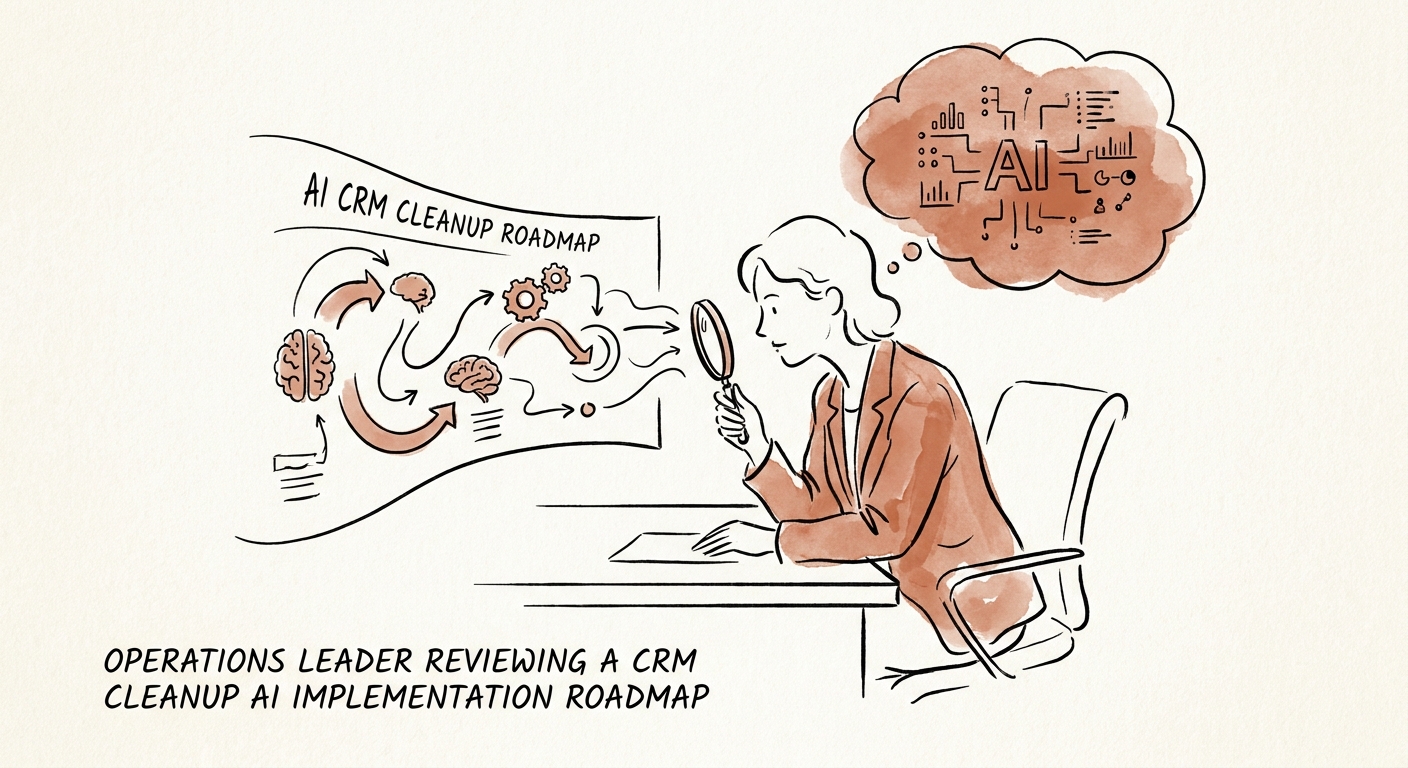
The deal everyone thought was dead
A managing partner is staring at the Q3 forecast. There's a $180K engagement in the CRM marked "Closed Lost" eight months ago. Except it isn't lost. The client called the partner directly in March, the work restarted, and three consultants have been billing against it ever since. The partner never updated the record because the partner doesn't live in the CRM. The partner lives in their inbox, in calendar invites, and in a head full of relationship context no field ever captured.
This is the specific failure mode of consulting-firm CRMs, and it's why "CRM cleanup" in a professional-services firm is a different animal than it is in a transactional sales org. The records don't decay because reps are lazy about data entry. They decay because the people who hold the truth, your partners and principals, are senior, expensive, and structurally allergic to admin work. The system of record and the system of reality drift apart, and every forecast, capacity plan, and renewal conversation inherits the gap.
The Salesforce State of Sales research points at the broader shift: teams are expected to pair cleaner data with AI-assisted workflows. But for a consulting firm the order of operations matters. The Deloitte State of AI in the Enterprise 2026 is blunt about why AI programs stall: the operating model never changes. Drop an AI cleanup tool on top of a firm where partners are still never expected to confirm anything, and you've automated the production of recommendations nobody acts on. The tool isn't the intervention. Changing who owns an account record, and how often it gets reviewed, is the intervention.
Build it to argue, not to act
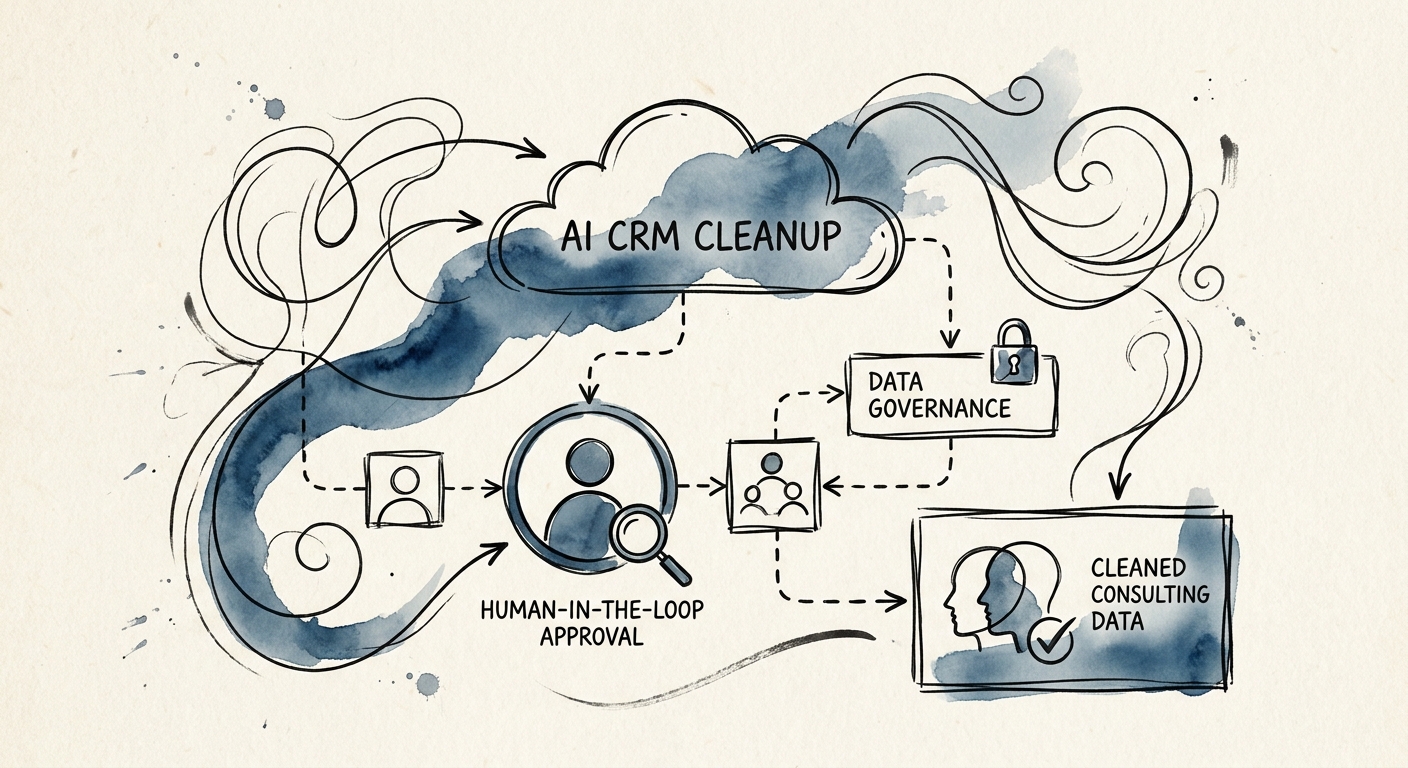
Here's the design principle that keeps this from blowing up a partner relationship: the AI prepares the case, a human renders the verdict. It should never silently merge two account records or flip a stage on its own. In a consulting firm, two "duplicate" accounts are sometimes two genuinely separate buying centers inside the same logo, and only the partner knows that. Auto-merge them and you've just deleted the partner's mental map of who actually signs.
Scope a first release to three narrow jobs that match how consulting deals actually rot. First, duplicate and entity review: surface the same client logo entered four ways across three partners, and ask a human to confirm whether they're one relationship or several. Second, stale-engagement review: flag opportunities where the last activity timestamp contradicts billing or calendar signal, the "Closed Lost" deal that's quietly invoicing. Third, missing-role enrichment: spot accounts where the record names a procurement contact but no economic buyer and no champion, which is exactly the account that surprises you at renewal.
Wire each recommendation to a one-click decision, approved, rejected, or escalated, and log every outcome. That logging is the actual product. The NIST AI Risk Management Framework frames the discipline here: you measure and govern the system's behavior continuously, not once at launch. Your accepted-change dashboard becomes the measurement layer. If partners are rejecting most of the duplicate suggestions, your matching logic is wrong and you'll see it in week two instead of after you've corrupted the pipeline. Then connect the changes partners actually accept to whether deals start moving again, using CRM cleanup pipeline velocity ROI so the cleanup ties to a number a managing partner cares about.
What a partner will actually do Monday
Before any of this reads a single record, settle the data question, because a consulting CRM is unusually sensitive. It holds rate cards, scoping notes that reveal your margins, named relationships your competitors would love, and sometimes client-confidential context that lives under an engagement NDA. The CISA AI data-security best practices give you the checklist worth running first: who can the model see, where does the data go, how long is it retained, and what's walled off entirely. Decide that pricing notes and NDA-flagged engagements are off-limits to the cleanup workflow before you turn it on, not after a partner asks where their client's confidential scope went.
The concrete Monday move: pick one practice group, run the stale-engagement review against last quarter's closed-lost pipeline, and put the flagged list in front of those partners in a 30-minute standing review. You're not asking them to use software. You're asking them to confirm or kill a short list of deals the system thinks are mislabeled. That one cadence, a recurring human review of AI-surfaced drift, is the operating-model change Deloitte says is missing. Get partners used to it on cleanup, where the stakes are low and the wins are obvious, and you've built the reflex. The first payoff is a forecast you can trust. The bigger one is a firm that knows how to put AI recommendations in front of senior people and get a decision back, which is the same muscle you'll reuse for proposal support, renewal summaries, and account research.
If you want help sequencing that from a one-practice pilot to a firm-wide pattern, that's exactly the kind of roadmap we build. Build the AI roadmap.