The lead that ate your best engineer's afternoon
Here is the scene an MSP owner knows too well. An inbound form comes in: "Need help with our network, getting weird pop-ups." It sounds like ransomware. Your senior tech, the one who bills out at the top of the rate card, drops a client project and spends ninety minutes on discovery. Turns out it's a 4-person law office with a single aging server, no budget for a managed contract, and an expectation that you'll "just take a look" for free. That afternoon is gone, and the client project that slipped now has an unhappy owner attached to it.
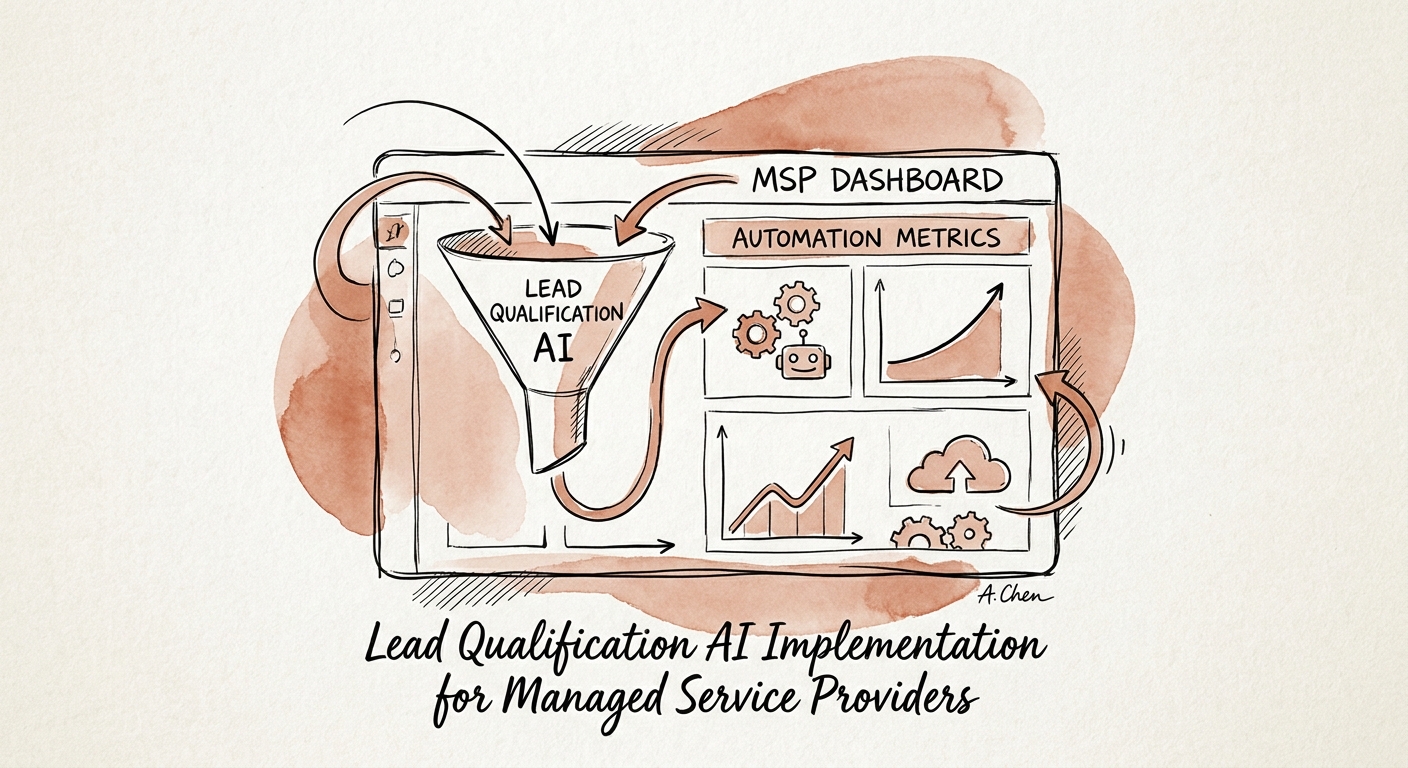
Lead qualification AI earns its keep by sorting that intake before a billable human touches it: reading the inbound signal for stack-fit, geography (can you even cover them on-site?), security posture, urgency, and rough contract size, then routing it to a sales owner, a vCIO, or a polite decline. The pressure to do this is real. The Salesforce State of Sales report and Deloitte State of AI in the Enterprise 2026 both show sales orgs racing to point AI at the top of the funnel. But for an MSP, the implementation decision is narrower than the hype: you are not building a sentiment engine, you are building a triage nurse that decides who gets seen, in what order, by whom.
So build it like one. The qualification queue should state, in plain language, why each lead was accepted, escalated, or declined, and any salesperson should be able to override it with a recorded reason. "Accepted: 60 endpoints, in coverage area, mentions compliance audit, no current MSP" is a decision you can audit. A bare score of 73 is not.
What to count before you trust the triage
Run one intake lane first, ideally your highest-volume web form, and instrument it honestly. The baseline is not "leads per month." It's the stuff that actually drains an MSP: hours your engineers and vCIOs spent in pre-sales discovery, the number of poor-fit calls that ended in a no, and the CRM records that show up missing endpoint count, current stack, or geography because nobody asked. Those gaps are why your reps can't prioritize today.
Then watch the override pattern, because that's where the model tells on itself. Each week, pull the leads the AI rejected and have a closer sight-read them. If it's quietly declining accounts that mention "Microsoft 365 migration" because the headcount field was blank, you've found a bias before it cost you a deal. Track three things: the accepted-lead-to-opportunity rate, the override frequency and the reasons behind it, and time-to-first-human-touch on the leads it ranked highest. If qualified leads aren't reaching a person faster and converting at least as well, the model is reorganizing your inbox, not improving your business.
Only once those numbers are attached to a named owner does it make sense to put dollars on it. The AI Opportunity Score and the AI ROI Calculator are for pricing the win you can already see in the override log, not for manufacturing a business case out of optimism.

Govern it like the customer data it actually is
An MSP's lead form is a security liability the moment it's connected to a model. People type their pain into it: "our domain controller is compromised," "we failed our cyber-insurance questionnaire," sometimes a partial IP scheme. That is sensitive prospect data flowing into a system you're now training and logging. The CISA AI data-security best practices should shape exactly which CRM fields the model can read, how long recommendation logs are retained, and how consent is handled, especially when the prospect is describing an active incident. The NIST AI Risk Management Framework gives you the structure to write down intended use, the risks of a bad reject, how you'll measure it, and who's accountable when it's wrong, the same governance posture you'd want from a vendor before you'd let them touch your own clients.
Concretely: lock the model to an approved field list, review the disqualification logic on a schedule, keep the human override and the reason it was used, and audit the firmographic filters for the failure that hurts most, screening out a viable account because it looked small on paper. Expand from that one intake lane to adjacent campaigns only after accepted recommendations convert better in your numbers and the reject pile holds up to a human read. An MSP that can show a clean reason trail on every qualification decision isn't just protecting sales capacity; it's modeling the operational discipline it sells.