The clause hiding in paragraph nine
A client sends back a redlined SOW. Your account lead is slammed, the project starts Monday, and the changes look cosmetic — a date here, a contact name there. So it gets signed. Three weeks later you discover the client quietly swapped "two rounds of revisions" for "revisions until client approval," and added a line granting them full ownership of "all working files and source assets." That is two margin-killers and an IP giveaway, signed in under a minute because nobody had time to diff paragraph nine against your standard terms.
This is the actual problem an agency should point AI at — not "review contracts," but catch the specific drift between what your template says and what the client sent back. Marketing agency contracts have a recognizable danger list: unlimited or undefined revision rounds, usage-rights and IP-transfer language, "and related deliverables" scope expansions, kill-fee and termination clauses, payment terms that stretch from net-30 to net-90, and indemnification that quietly makes you liable for the client's own claims. Those are the lines that decide whether a project earns its margin or bleeds it.
The pressure to automate is real — Census Bureau data shows AI use climbing fastest among firms in the 100-249 employee band, OECD research on SMEs says the same, and early Federal Reserve findings on small businesses point the same direction. But adoption pressure is not a use case. The use case is the redline diff, and it belongs in your account and legal operations workflow, not in a general assistant you let loose on every document in the shared drive.
What the review packet has to show — or it's useless
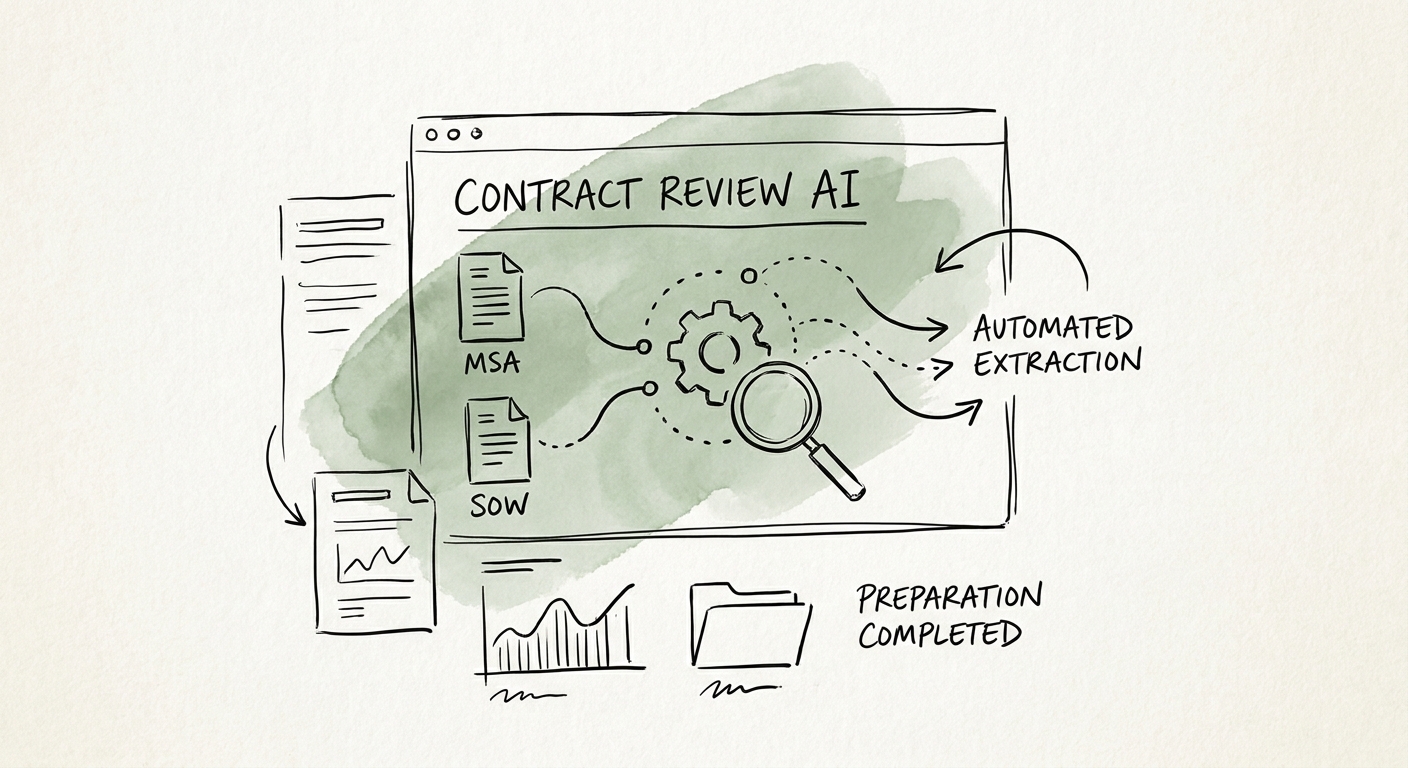
The mistake most agencies make is asking AI for a verdict: "is this contract okay?" That just trades a clause you didn't read for an answer you can't check. Instead, make the AI produce a comparison artifact for every contract before signature: here is the client's clause, here is your standard clause, here is what changed, here is why it matters to margin or liability, and here is the named person who has to approve the deviation. A revision-rounds clause that went from "two" to "as needed" gets flagged with a dollar exposure, not a shrug.
Be explicit about what the AI does not get to decide. It does not give legal advice, it does not approve a deviation from your usage-rights terms, and it does not waive a payment term. It surfaces the diff and routes it. Deloitte's 2026 AI research keeps landing on the same point: the demo that dazzles is not the system that holds up — value comes from a process you can measure and correct. The NIST AI Risk Management Framework fits here precisely because contract risk is contextual: a clause that's fine in a draft becomes material the moment it's the signed operating agreement. And because you're feeding the model real client contracts, CISA's data-security guidance should set your permission boundary, retention window, and logging path before the first MSA goes in.
Then track numbers that map to money: how many out-of-scope clauses get caught before signature versus after, how often the flagged deviation turns out to be real, contract turnaround time, and the rate of post-signature change orders you had to eat. If catches go up and eaten change orders go down, the workflow earns its place. If they don't, the fix is not a fancier model — it's a tighter standard-terms library to diff against.
A 90-day rollout that won't create another queue
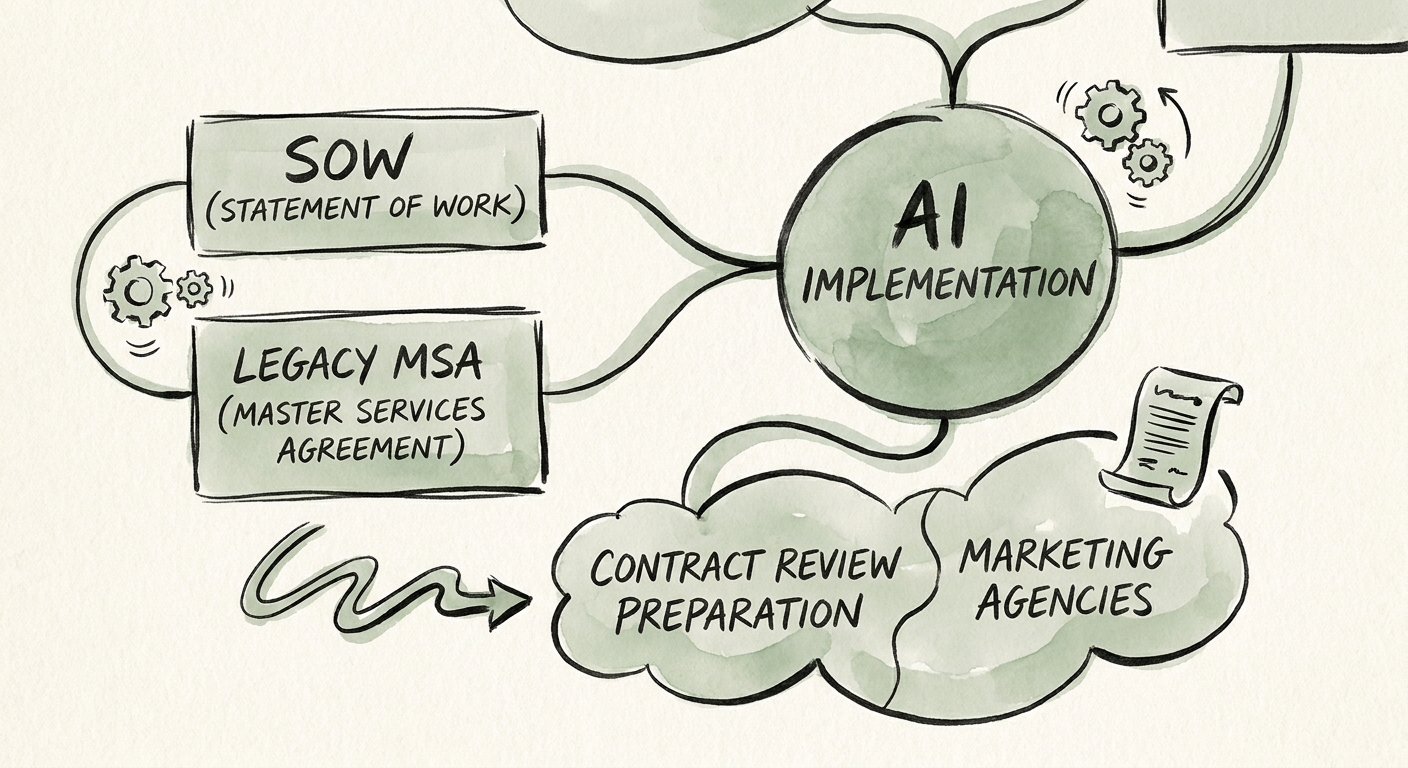
Start narrow. Days 1-30: pick one contract type — say, new-client SOWs — and feed the AI your gold-standard template so it has something concrete to compare against. Run every incoming SOW through it, but keep the human approval exactly where it already is. You're not changing who signs; you're changing what they see before they sign. Days 31-60: compare the AI's flags against what your sharpest account lead would have caught manually, and prune the false alarms — an agency that gets five noise flags per contract will start ignoring all of them, including the one that matters.
By day 90 you make a real call: expand to MSAs and renewals, hold at SOWs only, or pause because your template library is too inconsistent to diff against. A good outcome looks boring — fewer surprise change orders, fewer "wait, did we agree to unlimited revisions?" conversations, and a clear owner for every flagged clause. A bad outcome looks impressive in a deck but still has your ops lead re-reading every contract by hand, now with an extra dashboard to babysit. For a mid-market agency, that second outcome is worse than doing nothing.
If this is competing with other places to start, run it through the AI Opportunity Score first, and reach for the AI ROI Calculator only once the contract-review workflow has produced real time-saved or catch-rate evidence. Human Renaissance sequences that move inside the AI Transformation Blueprint, so you go from your first reviewed clause to the next governed workflow without losing control of the source.
