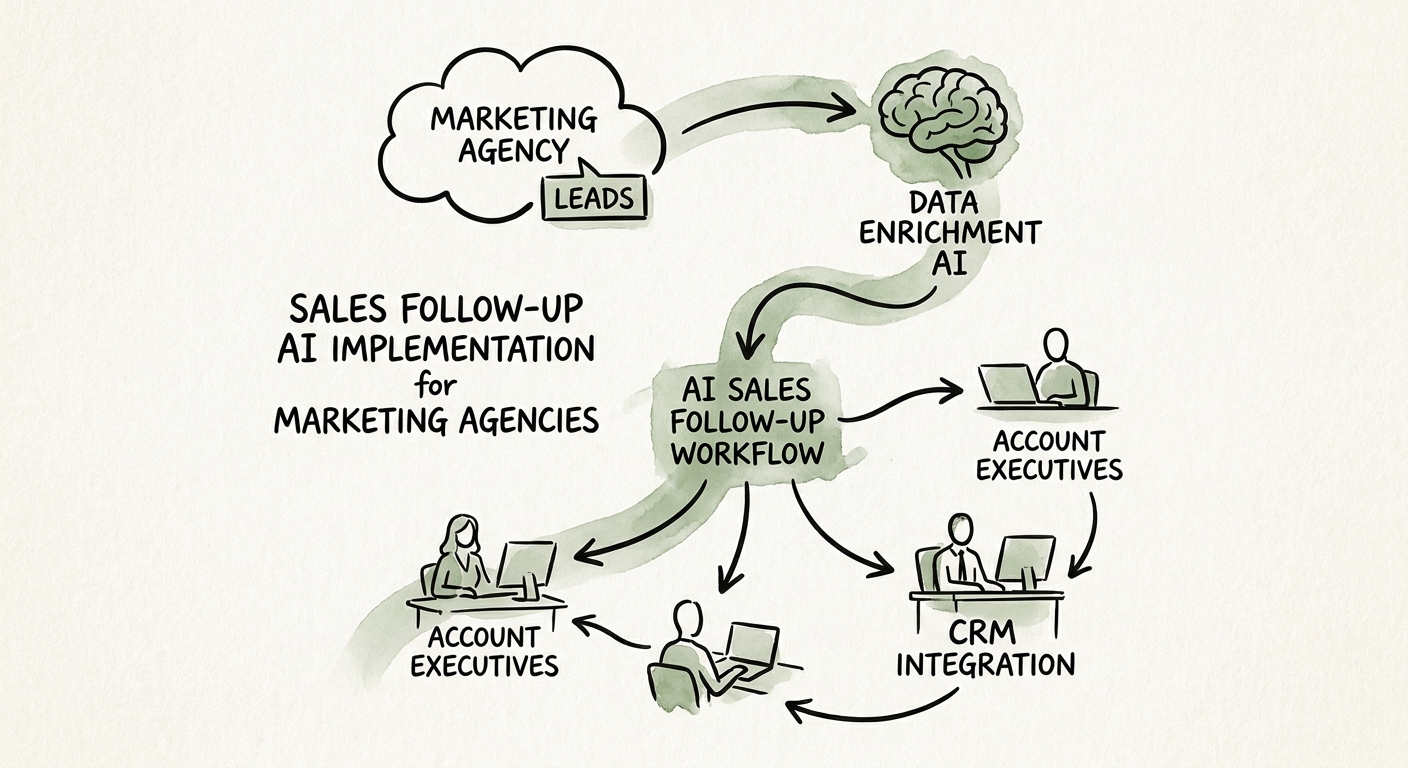
The pitch went great. Then nobody followed up for nine days.
Picture a 35-person agency. The creative director and an account lead walk out of a new-business pitch convinced they nailed it. The prospect said "send over the SOW and we'll talk next week." Then the account lead got pulled into a client fire drill, the SOW sat in drafts, and by the time anyone followed up the prospect had signed with the shop that emailed back the next morning. Nobody was lazy. The follow-up just had no owner and no deadline, so it lost to everything that did.
That is the gap agencies actually want AI to close — not "write more emails," but "make sure the next step after a conversation never falls through the floor." The pressure to reach for AI here is real: the Salesforce State of Sales report and Salesforce State of Marketing report both show sales and marketing teams leaning on AI to speed execution. But for an agency, the follow-up email is not a commodity touch. It is the relationship. A prospect deciding between three shops is reading your follow-up for taste, judgment, and whether you actually listened in the room. That is exactly the part a generic draft gets wrong.
So the implementation question is narrower than "should we use AI for sales." It is: which slice of follow-up is safe to let a model draft, and where does an account owner's judgment have to stay in the loop because a tone-deaf note can cost you the account?
Draft-assist is safe. Send-on-behalf is where agencies get burned.
The useful distinction is between AI that drafts and AI that acts. Drafting a proposal-reminder so the account lead has a 90% starting point on their phone between meetings — low risk, real time saved. Auto-sending that reminder to a client without a human reading it — high risk, and the failure is expensive. The model does not know that this particular client is mid-renewal-negotiation, that you owe them a credit from last month, or that "let's circle back after the holidays" was a polite no, not an open thread. It will cheerfully nudge anyway, in your agency's name, to a relationship worth six figures a year.
So run it as one motion, not a platform rollout. Pick a single follow-up lane — say, the post-pitch proposal nudge for new business, where the relationship is young and the downside of an awkward email is a lost prospect, not a torched retainer. Let AI pull from your CRM and meeting notes to draft, route every draft to the named account owner, and require a human send. New-business follow-up is the right first lane precisely because the blast radius is contained; existing-client and renewal follow-up should stay manual until you trust the pattern.
Then measure the thing that actually matters to an agency, which is not draft volume. Before you start, write down your real baseline: how many days, on average, between "great conversation" and the next touch; how often the next step is even logged in the CRM; how many proposal reminders the account owner currently rewrites from scratch. After a few weeks, look at three numbers — did time-to-first-follow-up drop, did the share of conversations with a logged next step go up, and what fraction of drafts did owners send nearly as-is versus heavily rewrite? A high rewrite rate is not failure; it is the signal telling you the model does not yet understand your accounts well enough to trust further. Only once those move together should you reach for the AI Opportunity Score or the AI ROI Calculator to size the next expansion.
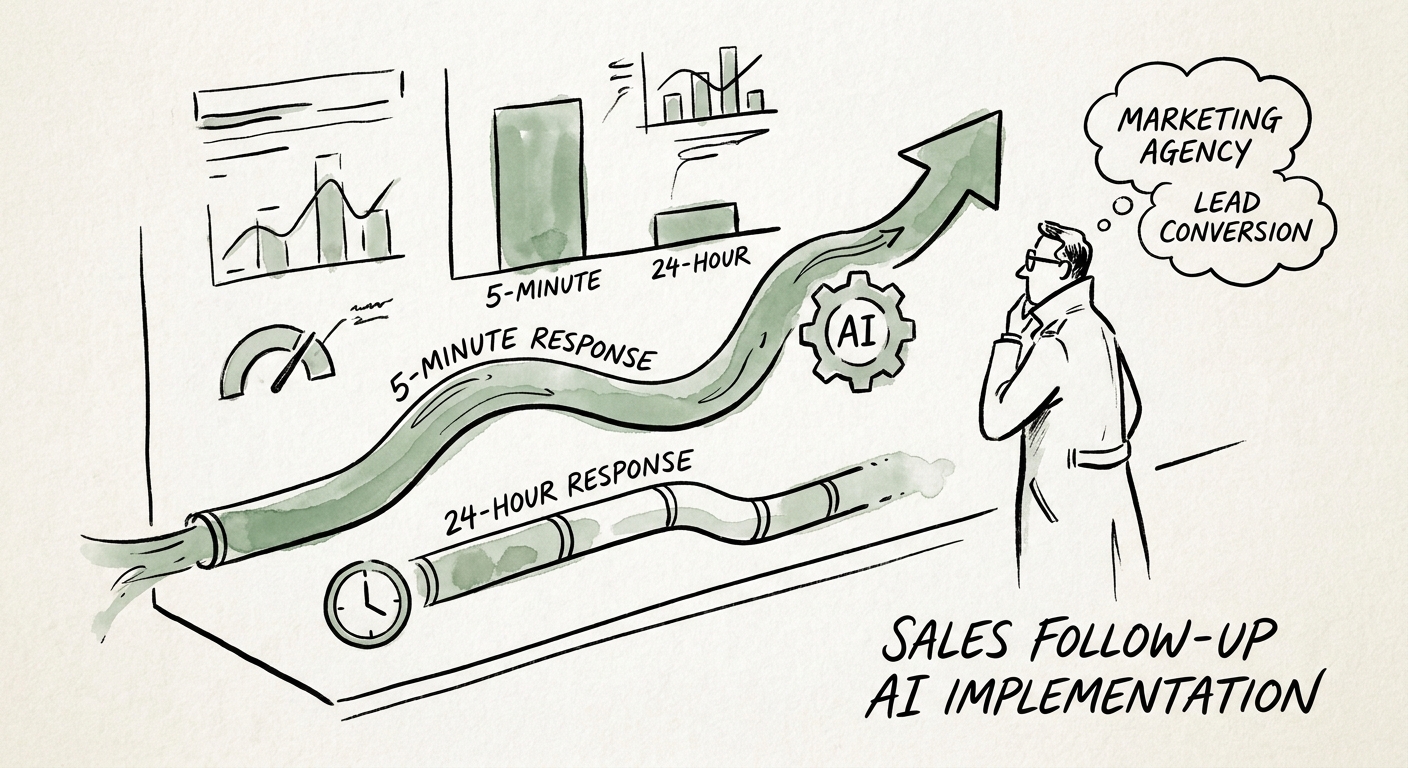
Two guardrails before a model writes anything a client will read
Agencies sit on data that is not theirs: client campaign performance, unannounced launches, competitive positioning, contract terms. A follow-up that leaks one prospect's context into another's inbox is not a typo, it is a confidentiality breach. So before any AI touches outbound, fence the inputs. The CISA AI data-security best practices are the practical reference here: limit the model to approved CRM records and your own meeting notes, never paste client-confidential material into a general tool, and keep an audit trail of what was generated and what was sent. The NIST AI Risk Management Framework gives you the simple structure to write this down — intended use, who owns the risk, how you measure it, who is accountable when a draft goes wrong — on a single page your team will actually follow.
Concretely, two rules cover most of the danger. First: one account, one record set — the AI sees the deal record and the notes for that single client, nothing else. Second: a named account owner approves every external send during the trial, and you log which drafts they accepted versus rewrote. That accept-versus-rewrite log is your real adoption metric, not seat licenses.
Hold the line on scope. Expand from new-business follow-up to renewal or upsell motions only after time-to-follow-up, logged next steps, and owner-accepted drafts all improve together — and only after a senior account person has read enough drafts to vouch for the tone on a client they care about. If you want help mapping which agency motion to test first and what "good" looks like before you commit budget, that is the work the AI roadmap is built to do.