The 11 AM problem in your AP inbox
Picture a 90-person B2B services firm. One AP coordinator, a shared invoices@ inbox, and somewhere around 600 invoices a month. By 11 AM she's already done the same triage forty times: open the PDF, figure out which vendor it actually is (the email says "Acme Logistics," the master record says "ACME LOGISTICS LLC," the PO says "Acme Log."), check whether there's a PO, decide which department head has to approve it, and notice that this might be the second copy of the invoice that came in last Tuesday. None of that is judgment. It's matching. And it's exactly the part where AI earns its keep — and exactly the part where most teams aim it at the wrong target.
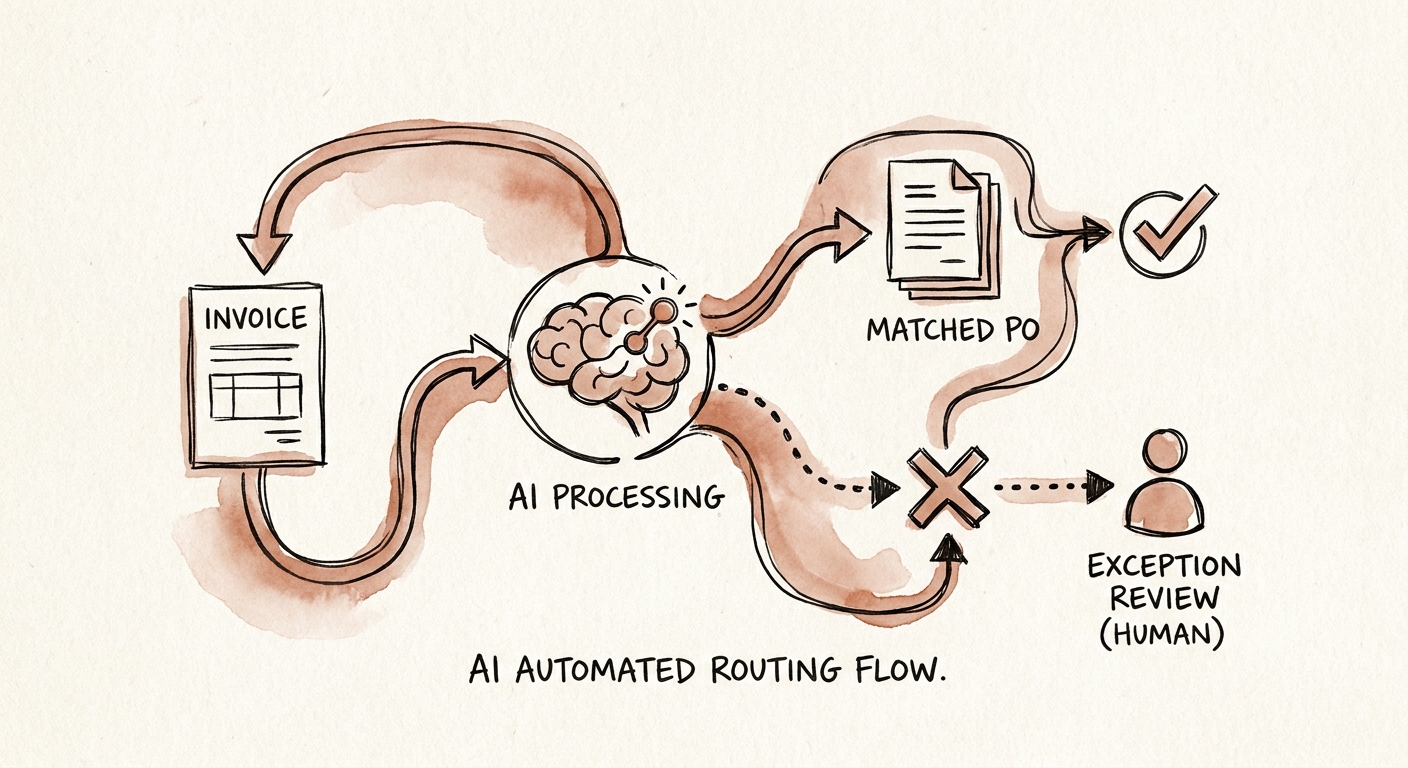
The wrong target is auto-approval. The right target is the route. AI is genuinely good at reading an invoice and saying: this is a PO invoice for the Marketing department, vendor matches master record #4471, amount $8,400, no duplicate detected, send to Dana. It is not good — and should not be allowed — to decide that the $8,400 actually gets paid. That decision stays with a person who can be named in an audit. Both the OECD report on AI adoption by small and medium-sized enterprises and the Deloitte State of AI in the Enterprise 2026 land on the same boring, correct conclusion: the wins in finance come from compressing repeated handoffs, not from a clever model making the call.
So scope the first pilot to lanes, not decisions. Five lanes cover almost everything that hits an AP inbox: clean PO invoices, non-PO invoices, missing-or-fuzzy vendor matches, anything over a department's approval threshold, and the "I have no idea who owns this" pile. Route into those. Don't pay anything. Then watch whether your coordinator's 11 AM got shorter.
Your AI is about to find out your approval matrix is fiction
Here's the uncomfortable thing that happens about two weeks into a real pilot: the model starts routing invoices correctly, and you discover the rules it's routing against don't actually hold up. Three different people approve $5,000 invoices for the same department. The "threshold" everyone quotes is in a 2023 spreadsheet nobody's opened since. Two vendor records exist for the same supplier because someone fat-fingered the name during onboarding. The AI didn't break anything — it held up a mirror.
That's why the packet matters more than the prediction. Every routing recommendation should arrive with the receipts: supplier name as written, the vendor-master record it matched (and the confidence), invoice amount, PO status, department code, the threshold it's being measured against, a duplicate-risk flag, and a plain-English exception reason. A coordinator looking at that packet can sanity-check the route in five seconds. A coordinator looking at "Route: Dana ✓" is just rubber-stamping a black box — which is worse than the manual process it replaced. The NIST AI Risk Management Framework frames invoice routing for exactly this reason: it's an efficiency play sitting on top of a financial control, and you have to measure both halves.
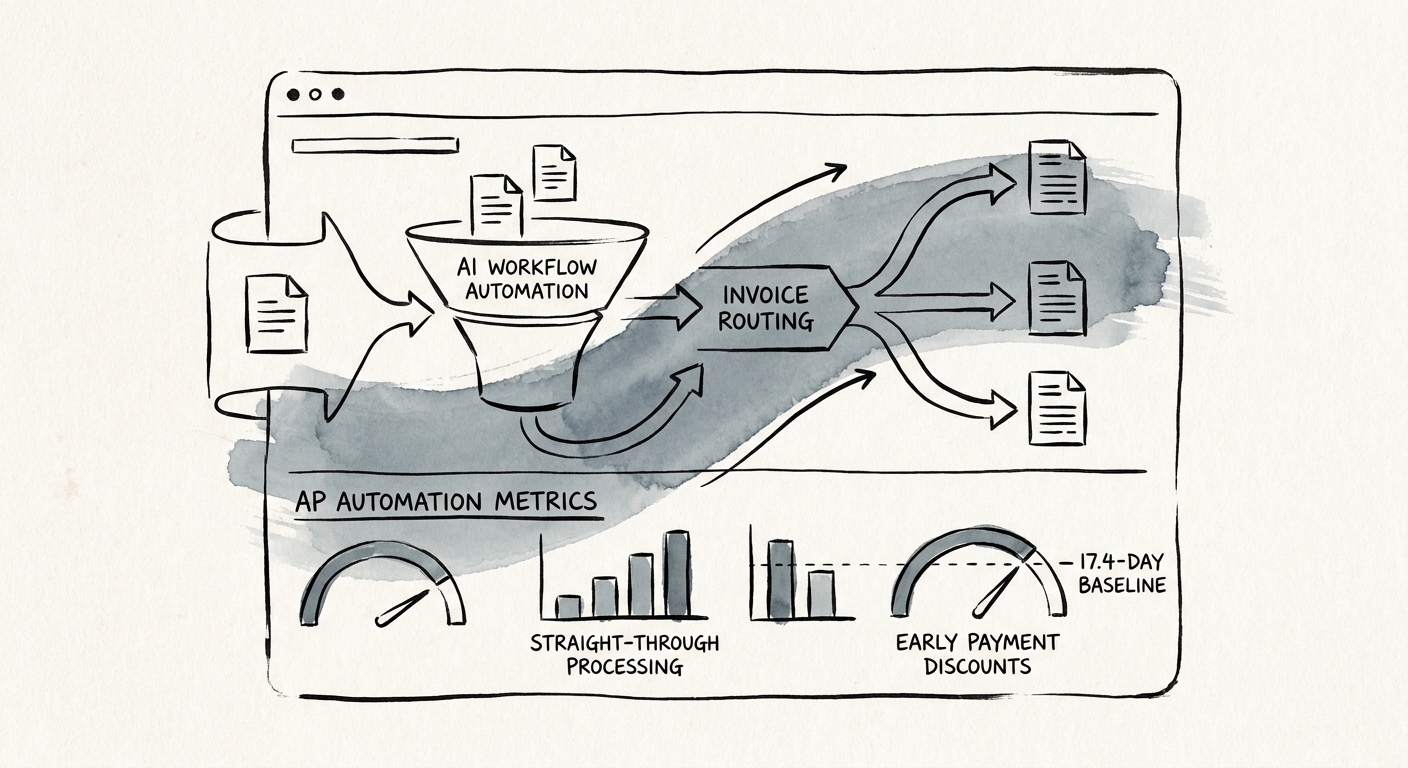
So measure both halves. Track first-pass route acceptance (did the human agree with the AI's lane?), duplicate catches, approver override rate, exception aging, and inbox-to-named-owner time. If acceptance is high but override rate is also high, your model is confidently routing into broken rules. Don't tune the model. Fix the approval matrix, dedupe the vendor master, and tighten PO discipline first. An AI that surfaces a stale threshold nobody maintains has already paid for the pilot — before it ever saves a minute.
What to do Monday — and where the data line is
An invoice is a small intelligence file on your business: what you pay suppliers, your tax posture, banking-adjacent details, internal budgets, and who approves what. Before the workflow reads a single live AP record, draw the boundary. The CISA AI data-security best practices are the right checklist here: least-privilege access to the AP system, an explicit retention rule for invoice images and extracted fields, logging of every routing decision, and a defined escalation path. Anything the model can't match with confidence goes to the exception queue, not to a guess.
The Monday version of this is smaller than it sounds. Pick one month of historical invoices. Run the routing logic against them in shadow mode — no writes, no payments, just predicted lanes next to what actually happened. Sit your AP coordinator down with a sample of clean matches, disputed invoices, and vendor-master exceptions, and ask one question: would this packet have made the call faster? Then sample the rejections specifically. A recommendation the model kicked to the exception queue is often more useful than one it routed cleanly, because it points at the stale vendor record or the orphaned department code that's been quietly slowing AP for a year. The AI ROI Calculator turns the time delta into a dollar figure, and the AI Opportunity Score tells you whether invoice routing is even your best first finance workflow or whether something adjacent scores higher.
Hold one line and you'll be fine: routing is not paying. The first release proves finance can see the source, the rule, the exception, and the reviewer behind every recommendation. Only after the approval trail is genuinely easy to inspect — and the cycle-time win is real and measured — do you let the workflow creep toward accrual support, variance commentary, or payment timing. Get the route clean first. The money decision stays human for a reason. If you want that sequencing mapped against the rest of your stack, the AI Transformation Blueprint is where it lives.
