Follow the PDF that gets re-read four times
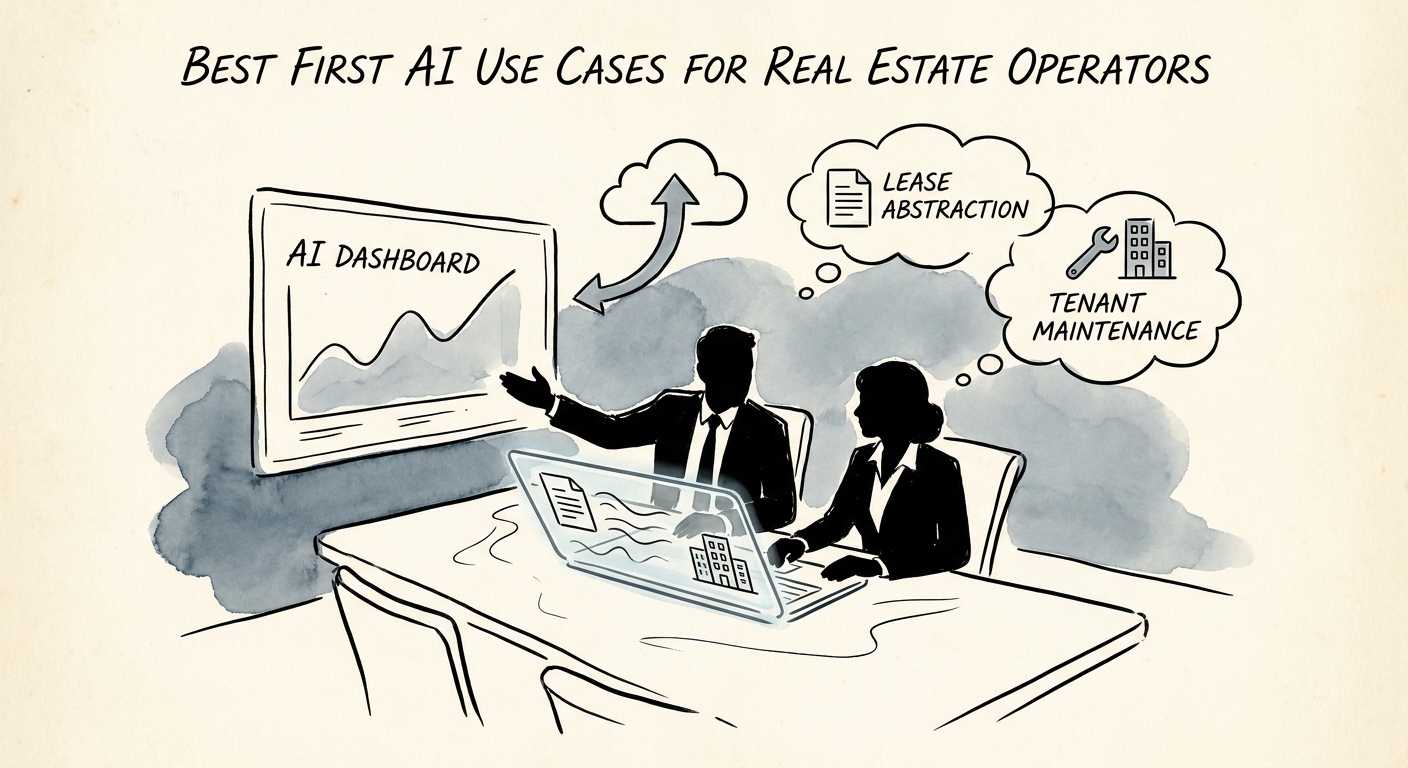
Picture a 30-property residential operator. A renewal comes back with a redlined estoppel and a new addendum. The property manager skims it for the rent bump, the asset manager re-reads it for the term and renewal option, and the bookkeeper re-reads it again to set up the new charge schedule. Same 47-page document, opened three times, by three people, on three different days — and the security deposit interest clause still gets missed half the time. That re-reading, not your leasing website, is where AI earns its keep first.
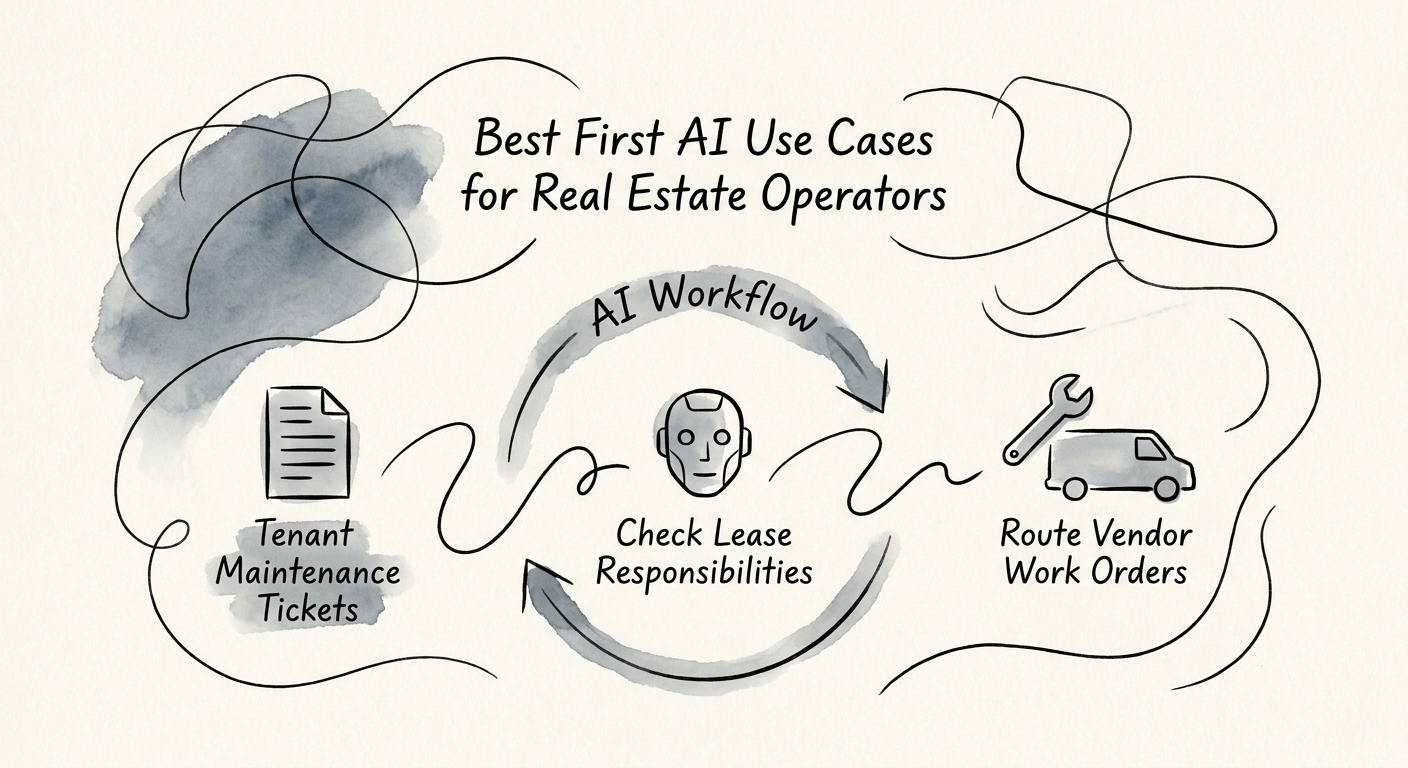
The pattern that makes a property workflow a good first candidate is boring and specific: a document arrives in a known format, the same fields get pulled out every time, a human is accountable for the answer, and the volume is high enough that delay costs real money. Lease abstraction fits perfectly. So does certificate-of-insurance tracking — vendor COIs expire, the dates live in a spreadsheet nobody updates, and an expired plumber's policy on a flooded unit is a problem you find out about from a claim. Maintenance triage fits too: a tenant texts "water under the sink," and someone has to decide emergency-vs-routine and route it before it becomes a mold remediation.
The trap is starting with the visible thing instead of the repeated thing. A chatbot answering prospect questions on the leasing page demos beautifully and changes almost nothing about your operating cost, because nobody was re-reading those questions four times. If you want a structured way to rank candidates, the AI use-case scoring model lets you compare lease abstraction against vendor follow-up against tenant triage on the same axes — repetition, known source, accountable reviewer, visible metric — instead of by which one is easiest to show your investors.
Decide what the assistant is allowed to touch before it touches a lease
Property operations are a data-classification nightmare wearing a trench coat. One workflow can pull from a tenant's SSN and bank info, a commercial lease's confidential rent terms, a vendor's W-9, a maintenance log with photos of someone's apartment, and an owner's distribution statement. CISA's guidance on securing data used to train and operate AI systems is the right pre-flight here: before you point a tool at the lease folder, decide which document types it may read, where tenant PII gets redacted or walled off, and who is allowed to see what it generates. A lease-abstraction helper that surfaces a tenant's payment history to a leasing agent who has no business reason to see it is a problem you created, not a feature.
The consequence of a wrong answer is not the same across these workflows, which is why one blanket "AI policy" fails. A vendor follow-up email that's slightly off tone costs you an awkward call. A maintenance-triage assistant that downgrades a real gas-smell complaint to "routine" can get someone hurt. An abstraction tool that misreads a renewal option date can cost you a holdover dispute. The NIST AI Risk Management Framework gives you the vocabulary to set a different confidence threshold and a different escalation path for each — the triage assistant should escalate anything with safety or legal-rights keywords to a human instantly, while the COI-expiration flagger can run mostly unattended.
The 90-day version is narrow on purpose. Pick the single highest-volume document workflow — for most operators that's lease and renewal abstraction. Run every output past the accountable reviewer, but keep a visible exception queue: every clause the tool flagged as "unsure," every field a human had to correct. That queue is your real deliverable in month one. It tells you exactly which lease formats break the tool and whether your reviewers are catching errors or rubber-stamping them. Adoption research like the San Francisco Fed's analysis of AI and small businesses and the OECD report on AI adoption by small and medium-sized enterprises consistently shows the small operators who win start with one contained, measured workflow rather than a portfolio-wide rollout.
Measure the thing a property manager would feel on a Monday
The metrics that matter to a property operator are not "AI accuracy" in the abstract. Measure how long it takes from a signed lease landing to the charge schedule being live and correct. Measure how many critical fields — renewal date, deposit amount, escalation terms, pet/parking addenda — were missing or wrong before versus after. Measure how many vendor COIs lapsed unnoticed last quarter versus this one. Measure the lag between a maintenance request arriving and a correctly-prioritized work order going out. If a property manager doesn't feel one of those get faster within the pilot, the use case was wrong, not the technology.
Keep the assistant firmly in a drafting seat the moment a document conflicts or a lease right is in play. When the redlined estoppel disagrees with the original lease, when a tenant's request brushes against a habitability obligation, when an output would commit you to a tenant or a vendor — the tool gathers the facts and lays out the options, and the accountable operator decides and signs. That line is not bureaucracy; it's what keeps a fast abstraction tool from quietly manufacturing a legal commitment nobody reviewed.
If the pilot works, you'll have built something more valuable than a faster lease reader: a documented record of where your operating data actually lives and who's accountable for each decision. Use honest AI ROI measurement that avoids fake savings to tie the win to real operating leverage — fewer holdover surprises, fewer lapsed COIs, faster turn on charge setup — before you extend the same playbook to vendor follow-up and tenant triage. When you're ready to sequence those next workflows, build the AI roadmap around your document backlog, not your demo wishlist.
