A CVE with a 19-day fuse, and a committee that meets monthly
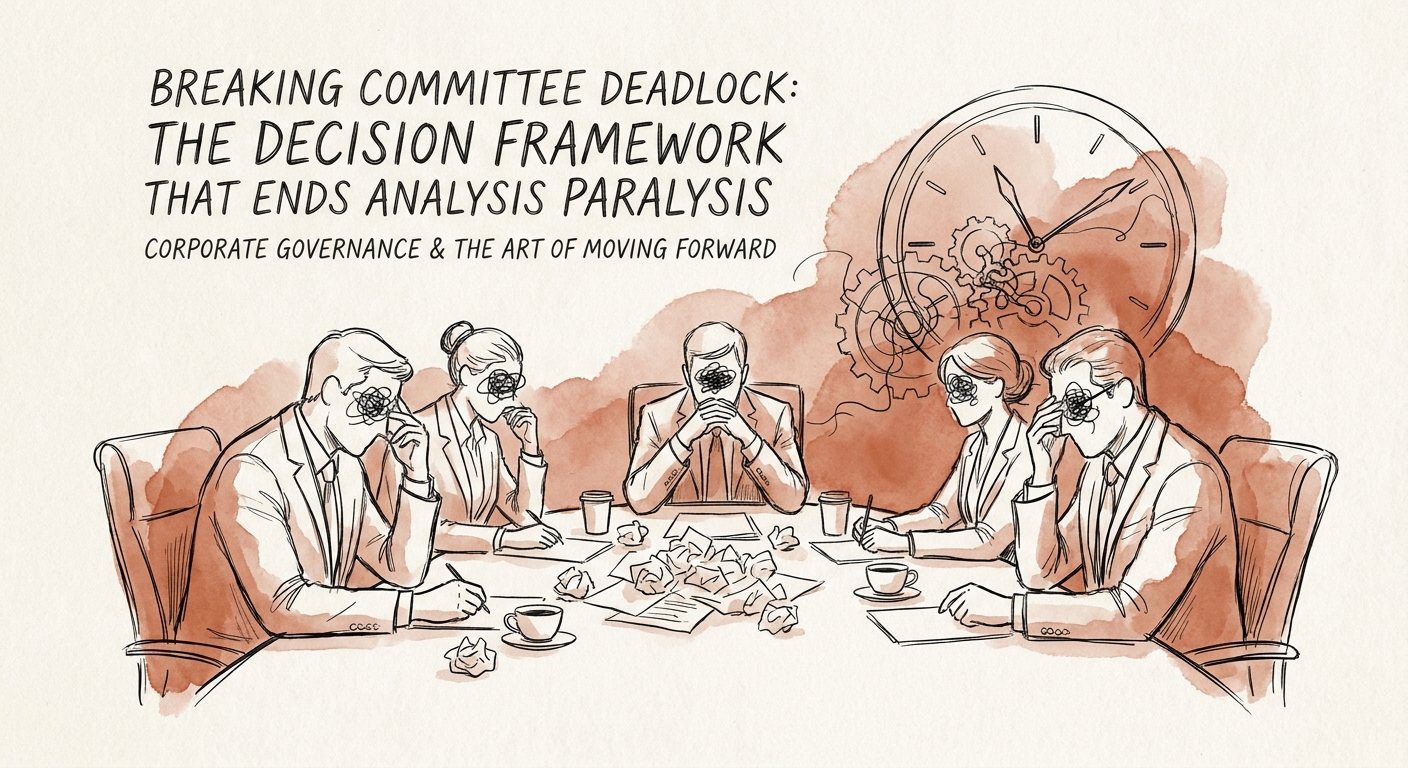
Picture a 14-person security steering committee at a Series C SaaS company. A critical CVE lands in a dependency that touches their customer auth flow. Patch window: a couple of weeks before exploit code goes public. The committee's next standing meeting is 19 days out. So the patch waits—because nobody on a 14-person committee has the authority to ship it alone, and asking for an emergency session means owning the blame if the rollback breaks prod. The vulnerability isn't in the dependency. The vulnerability is the org chart.
I've rebuilt this exact structure three times across portfolio companies, and the pattern never changes: a big cross-functional committee gets stood up to oversee security and compliance, and everyone mistakes the size of the room for the safety of the decision. In the engagement that taught me this, that 14-person group spent six months litigating one question—do we build zero-trust ourselves or buy it? Engineering wanted a custom build. IT wanted an enterprise vendor. Legal wanted indemnification clauses nobody would sign. Finance wouldn't release budget without unanimity. The paralysis didn't avoid a mistake. It manufactured a $2.4M compliance gap that nearly torched their PE exit.
The numbers behind this aren't soft. McKinsey's analysis of large IT projects ties governance failures and delayed decisions to enterprise initiatives running 45% over budget, slipping at least 7% on timeline, and delivering 56% less value than promised. Bain's research on committee effectiveness finds decision quality drops sharply past seven members—and that bloated groups burn roughly 40% of their meeting time just briefing each other on status instead of choosing anything. In security, that latency isn't a budget line. It's the window an attacker is counting on.
Consent over consensus: one owner, a 48-hour clock, and a real veto bar
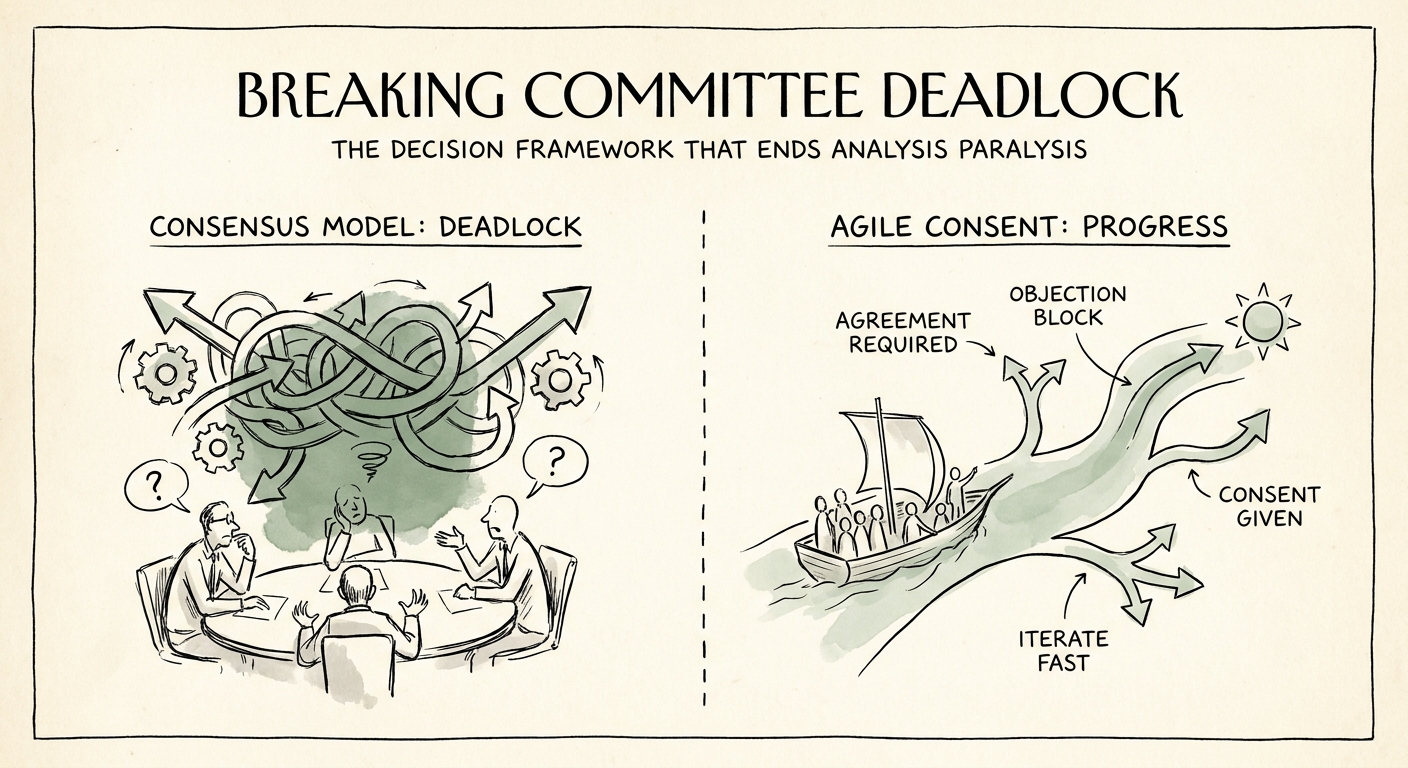
The fix isn't fewer meetings or better pre-reads. It's a different rule for how a decision actually closes. Consensus means nothing moves until everyone agrees—which quietly hands all 14 members a veto over your security posture. Consent flips it: a single named owner makes the call, and it proceeds unless someone can show, with specifics, that it causes imminent and irreparable harm. "I'd have done it differently" is not a veto. "This patch will brick SSO for our three largest accounts, here's the test that proves it" is.
Make it operational with three rules you can write on a card. First, name one Accountable owner per security domain—not a department, a person whose name goes in the ticket. Second, set a fixed consultation window: 48 hours for advisors to surface hard objections, then the window closes and execution begins whether the deck is polished or not. Gartner's 2026 work on decision latency flags approval-heavy, timing-sensitive workflows as a leading driver of margin compression—and patch authorization is the most timing-sensitive workflow you own. Third, set a threshold that keeps the committee out of routine work entirely: if the financial exposure is under $50K, the security risk is contained, and the compliance impact is documented, the owner decides and logs it. Full stop.
That last rule is the one that actually frees the room. The steering committee should convene for existential risk and large capital allocation—a breach response, a framework migration, a seven-figure platform bet—not to relitigate which EDR agent to standardize on. When you reserve the committee for the decisions that genuinely need many heads, the people in it stop performing governance and start doing it. For how this directly moves enterprise value and risk posture, see The Board Member's Guide to Technology Risk Oversight: Beyond 'Are We Secure?'.
The data room remembers every week you stalled
Here's what makes security governance different from any other committee problem: it leaves timestamps. When an acquirer runs diligence on a SaaS target, they aren't only scoring your current posture—they're reading your operational cadence backward through your own logs. The mean-time-to-remediate on your last ten critical findings. The gap between when an audit flagged a control and when you closed it. The CVE that sat open across three monthly meetings. A consensus committee thinks its caution is invisible. It isn't. The Jira timestamps narrate the whole story, and they don't flatter you.
This is exactly where deferred security decisions become deal math. PwC's 2025 M&A reporting warns that delayed integration and governance decisions inflate cost and build technical debt that craters value before the LOI ink dries. And PwC's Transformation Risk Insights note that while 81% of tech leaders say they prioritize future-proofing their architecture, over-indexing on committee consensus pushes teams toward temporary patches and deferred calls that collapse the moment a sophisticated buyer pulls on them. A diligence team finds the half-implemented zero-trust rollout in an afternoon—because the half that's missing is the half nobody had the authority to finish.
So do this before your next steering committee meeting, not after the term sheet arrives. Pick your top three open security domains. Assign one accountable name to each, in writing. Pull your last ten critical remediation timelines and circle every one that waited on a vote. Then put the 48-hour window and the $50K threshold in place and watch how fast the backlog clears once a single person is allowed to decide. Decisive security governance isn't a compliance checkbox—in diligence, it's a valuation multiplier. For how financial buyers actually dissect operational cadence in a transaction, read What Is Operational Due Diligence? The 2026 Playbook for Portfolio Ops.
