The dangerous board packet is the one that reads perfectly
Picture a 180-person company the Thursday before a board meeting. The chief of staff pastes last month's pipeline export, the finance actuals, a project-status doc, and a headcount sheet into ChatGPT Business and asks for a one-page narrative. Ninety seconds later it's gorgeous: tight prose, a confident story about why net revenue retention dipped, a clean line on burn. Everyone nods. Nobody notices that the pipeline export used the sales team's definition of "qualified," the finance number used the close-won definition, and the retention figure was calculated on a different cohort window than last quarter's slide. The narrative is wrong in a way that's invisible precisely because it's well written.
That is the actual decision in front of you, and it has almost nothing to do with whether an AI can write. It's about whether the numbers feeding the AI mean the same thing every time. Mid-market adoption research from RSM, the San Francisco Fed, and the OECD all land on the same uncomfortable point for companies your size: the AI is usually ready before the underlying data discipline is. Board reporting is where that gap costs the most, because the audience makes capital decisions off the output.
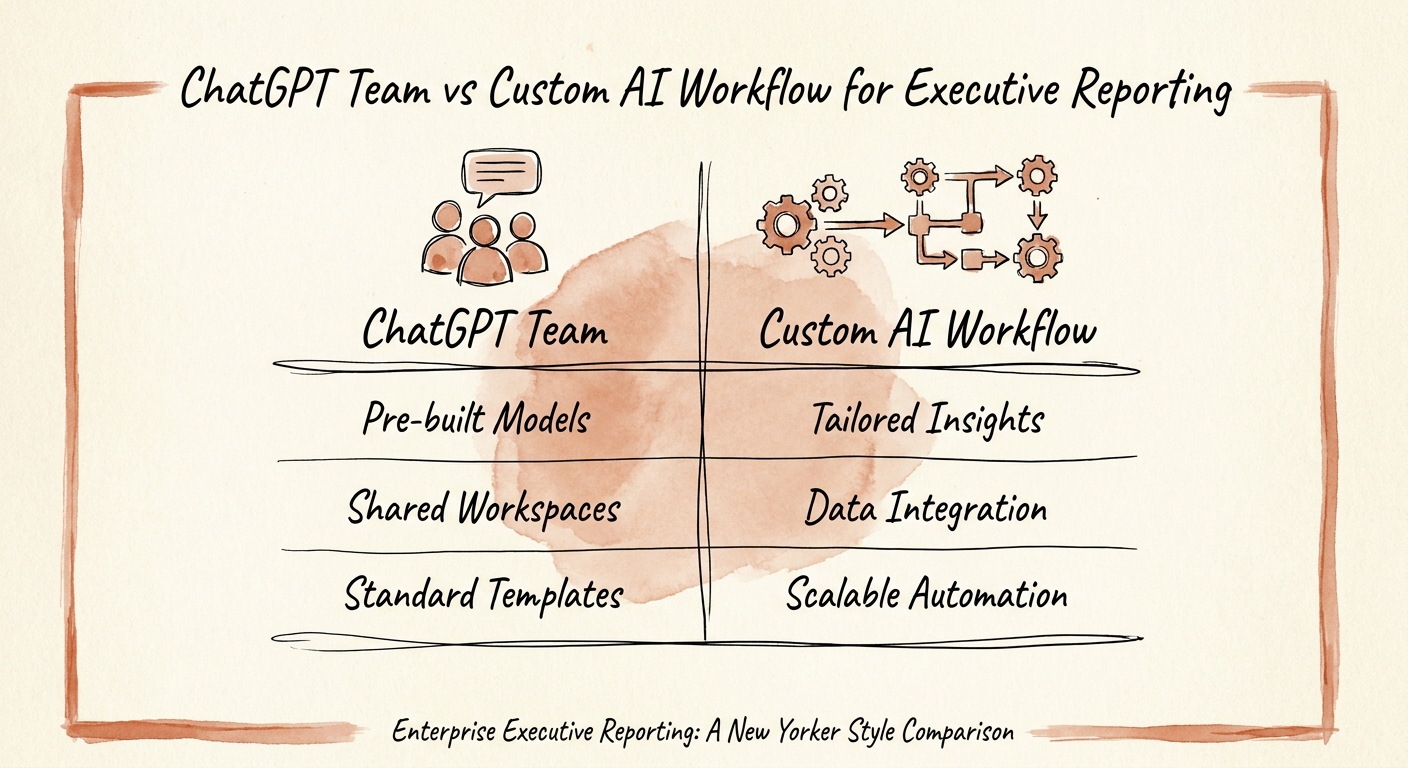
So here's the honest split. If your CFO or chief of staff is working from a single reviewed export they've already sanity-checked, and they just want a faster first draft of the narrative, ChatGPT Business is genuinely fine. Use it. The human did the reconciliation; the model is a writing assistant. You need a custom workflow only when the packet recurs every cycle and pulls from multiple systems where a single KPI can quietly mean two different things.
What a board number has to carry that a chat prompt can't
The difference between a chat draft and a governed workflow comes down to one question: when a director points at the retention number and asks "what's in that?", can anyone answer in under thirty seconds? In a paste-into-chat setup, the answer is usually a scramble through Slack and old exports. In a custom workflow, every figure on the page carries its own paper trail.
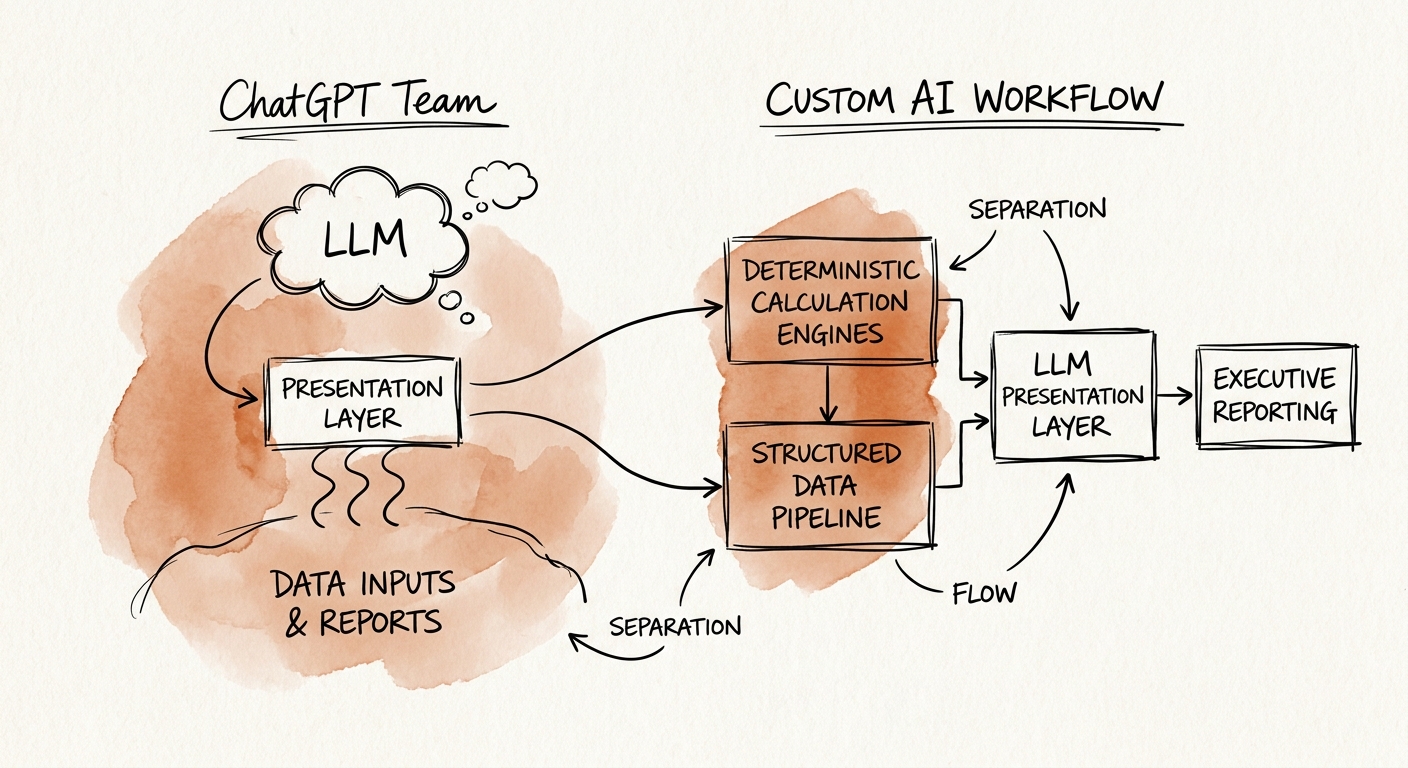
A board-grade reporting workflow does five things a prompt cannot reliably do. It pulls each metric from one approved source instead of whatever got pasted. It pins the KPI definition and the period cutoff so this quarter's NRR is computed exactly like last quarter's. It routes each variance to the owner who actually knows why the number moved, rather than letting the model guess a plausible reason. It links every figure back to the underlying record so a skeptical director can click through. And it logs who approved the final narrative before it left the building. The model still drafts the prose. It just never gets to silently reconcile two conflicting numbers or invent the story behind a swing.
This is also where the data-control decision gets real. Board packets carry the most sensitive data in the company: financials before they're public, named customer risk, comp and headcount, deal strategy. The OpenAI enterprise privacy terms belong in your review, but they don't decide which of that data should be in a reporting prompt at all. The NIST AI RMF gives you a clean way to reason about measurement and accountability, and CISA's AI data-security guidance is the right reference once employee, customer, and strategic data are in scope. The practical move: decide what stays inside finance and operating systems, what's allowed into ChatGPT Business, and which sections require a named human signoff before distribution.
Score it on Monday's decisions, not Thursday's slides
The trap is grading this on how good the packet looks. Deloitte's 2026 research pushes hard on operating value over polish, and board reporting is the cleanest test of it. The win isn't a prettier deck. It's that the meeting spends its time on the actual decision instead of forty minutes relitigating whose number is right, and that the call the board makes Monday rests on figures everyone trusts.
So measure the boring things. How long the packet takes to assemble. How many "wait, which number is that" disputes happen in the room. How fast variance owners respond when asked to explain a swing. How many late edits land the night before. And the one that actually matters: did the board reach a decision with evidence it could stand behind. If a reviewed export plus your CFO's judgment already clears that bar, keep ChatGPT Business and don't overbuild. Build custom when the cadence is relentless and the source lineage keeps breaking.
Don't try to govern every report at once. Take a single recurring packet, your monthly operating review is usually the right one, and put it through a real workflow before the board surface depends on it. Use the executive-reporting automation guide to scope it and the ROI calculator to weigh assembly time against review burden. Expand only after the owner of that packet can tell you, in plain numbers, what got faster and what got more trustworthy. If you want a sequenced version of that for your specific stack, that's what the AI roadmap is for.