The proposal that won the deal and lost the margin
Picture a 60-person B2B services firm. A senior consultant has a discovery call at 4pm and needs a draft proposal out by morning. She opens ChatGPT, pastes the call notes, and asks for a scope and pricing section. Ninety seconds later she has three crisp paragraphs, a tidy deliverables list, and a number. She tweaks the intro, sends it, and goes home. The client signs.
Then delivery starts. The scope quietly assumed two senior architects that the bench doesn't have this quarter. The rate quoted was last year's, before the firm raised its blended rate. The "similar engagement" the proposal referenced was real, but the part that made it succeed isn't in this contract. None of these were lies the model told. They were defaults it filled because nobody handed it the firm's actual rate card, capacity calendar, or approved proof. The proposal sounded complete, which is exactly why no one checked.
That is the real build-vs-buy question for proposal drafting, and it is not "which tool writes better prose." Both write fine prose. The question is whether your drafting process forces the four things that decide a proposal's economics — scope, rate, delivery capacity, and which case studies you're actually allowed to cite — to survive contact with someone accountable before a number reaches a client. OpenAI's ChatGPT Business with its enterprise privacy terms keeps your inputs out of training and is a genuinely good first drafting surface. What it does not do, on its own, is connect a draft to your CRM opportunity record or stop a confident-sounding sentence from shipping a stale rate.
Buy the drafting. Build the four checks that touch money.
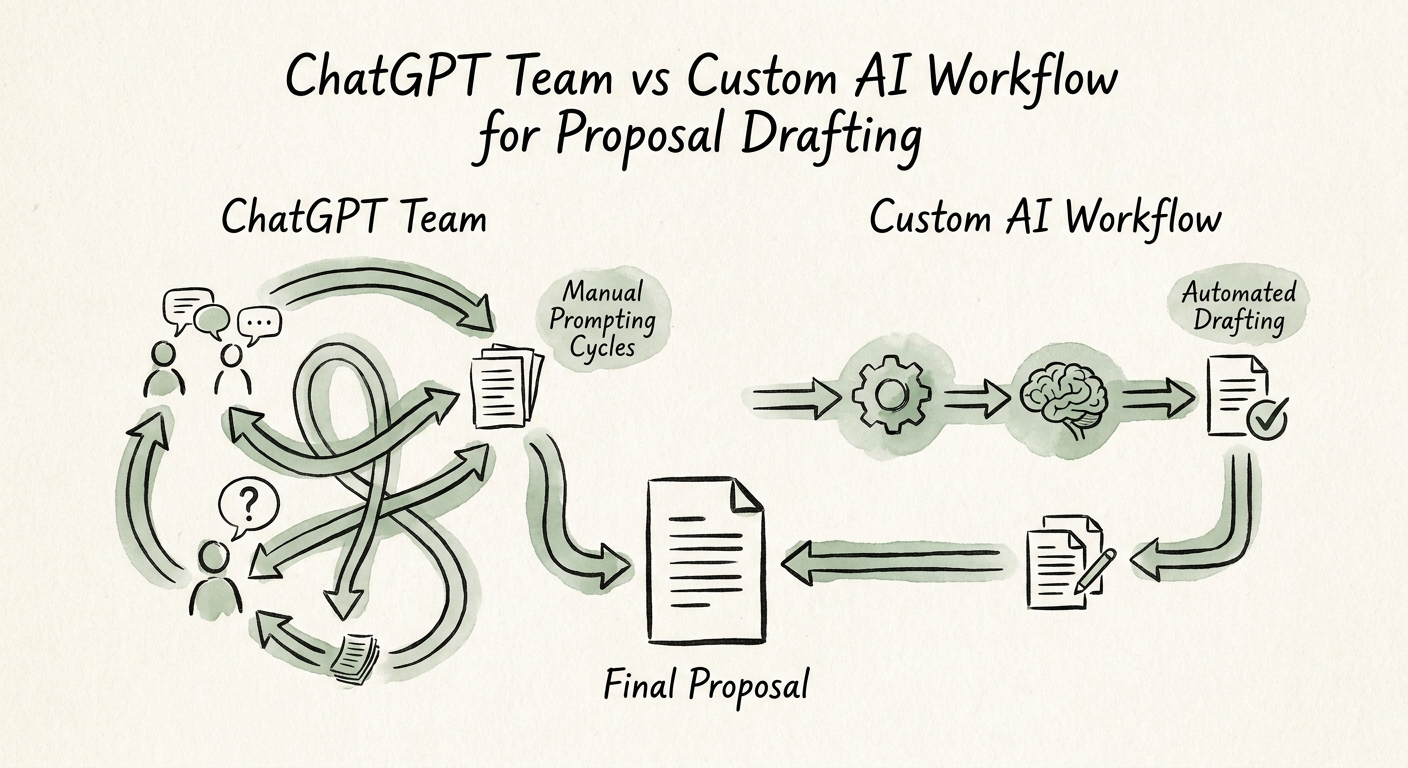
Most B2B services firms get the framing backwards. They debate "ChatGPT vs. a custom tool" as if it's one decision. It's two. The drafting layer — turn messy notes into clean structured prose — is a commodity, and you should buy it. ChatGPT Business handles that for a few seats and a couple hundred dollars a month; there's no reason to build it. The part worth building is narrow: the four gates between a draft and a sent proposal.
Concretely, a custom workflow for a services firm doesn't mean a sprawling AI platform. It means a thin layer that, before any draft becomes client-facing, pulls the live rate card so the model can't invent pricing, checks the named delivery roles against the actual capacity calendar and flags an overbook, restricts case-study references to an approved list keyed to industry and engagement type, and surfaces the deal's margin against your floor with the assumptions visible. Each gate produces an artifact a proposal owner can accept, reject, or fix in thirty seconds — not another chat transcript to re-read. The NIST AI Risk Management Framework calls this contextual risk, and proposals are a clean example: the same sentence is harmless in a brainstorm and expensive once it's a quote. If those gates touch real customer records or pricing data, CISA's AI data-security guidance is your checklist for what gets retained, logged, and permissioned.
Here's the test for whether you even need the build yet: count your last twenty proposals. How many went out with a pricing error, a scope the bench couldn't staff, or an unapproved client reference? If the answer is zero or one, your reviewers are already catching it and ChatGPT Business plus a sharp human is your whole solution — don't build anything. If it's four or five, you don't have a drafting problem, you have a governance gap, and that's the gate worth automating. Deloitte's 2026 State of AI read is blunt on this: the value shows up in workflows you can measure and repair, not in tools you adopt.
What to do Monday, and what to measure by day 90
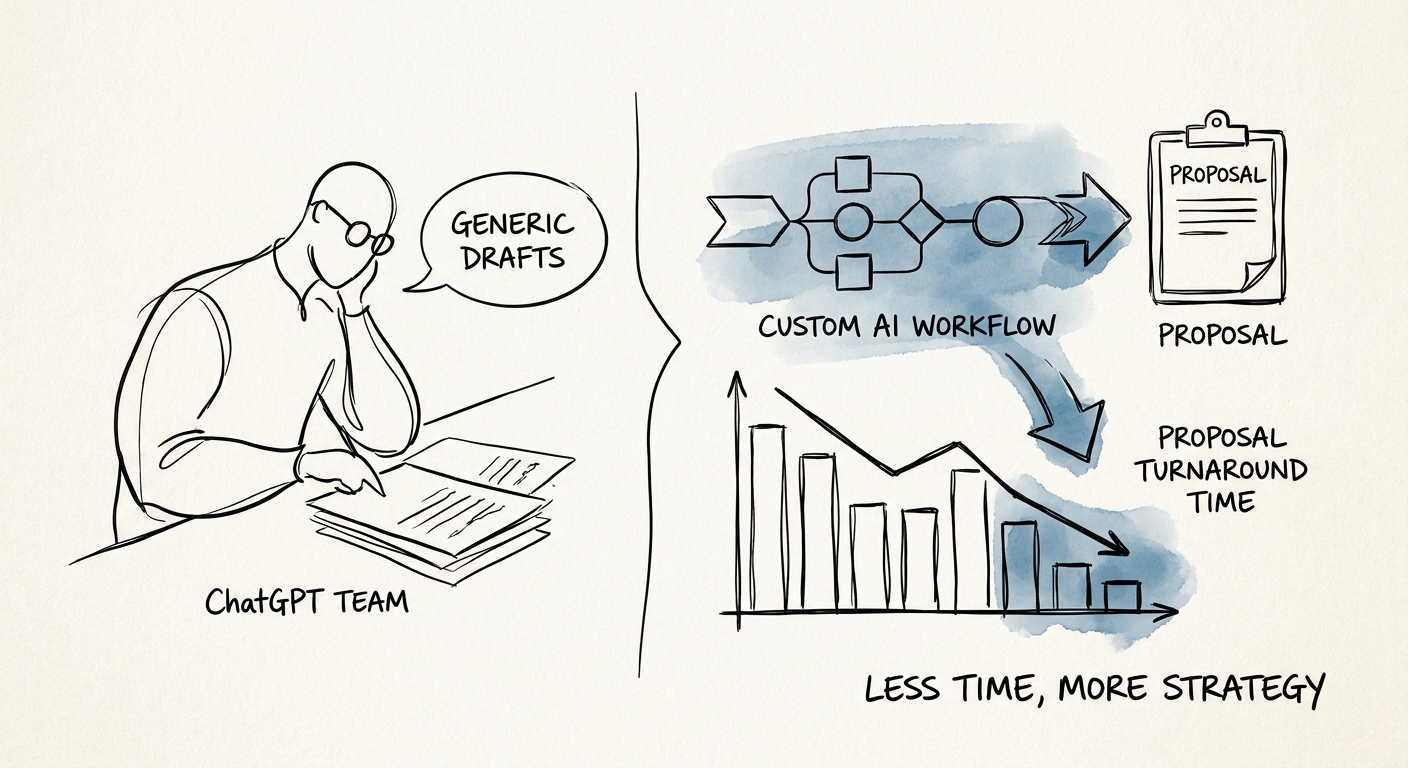
Don't start with a tool. Start with a tape measure. For the next two weeks, log every proposal as it leaves: cycle time from discovery to sent, whether a reviewer rewrote pricing or scope, and whether any case study or rate had to be corrected after the fact. That baseline is your whole business case. If proposals already go out clean in a day, a custom build will create a review queue you don't need — buy the seats, write a one-page rule about what AI may never decide (price, delivery commitments, legal terms, client-specific proof without sign-off), and stop.
If the baseline shows leakage, build one gate first — the one tied to the costliest mistake, which for most services firms is the rate card. Wire the live rate card into the drafting step so the model quotes from truth, not memory. Watch a month of proposals. The signal you want is boring: fewer pricing corrections, fewer "we can't actually staff this" conversations after signing, faster sign-off because the proposal owner trusts the numbers. The failure signal is a polished draft that still sends a manager back to the CRM to verify by hand — that means your source data is dirty, and no model fixes dirty source data.
If you're weighing proposal drafting against other places AI could earn its keep first, run the AI Opportunity Score to rank them, then use the AI ROI Calculator only once a gate has produced real before-and-after numbers — not projected ones. When you're ready to sequence the build so it doesn't sprawl, the AI Transformation Blueprint maps proposal drafting to the next workflow without losing control of where the numbers come from.