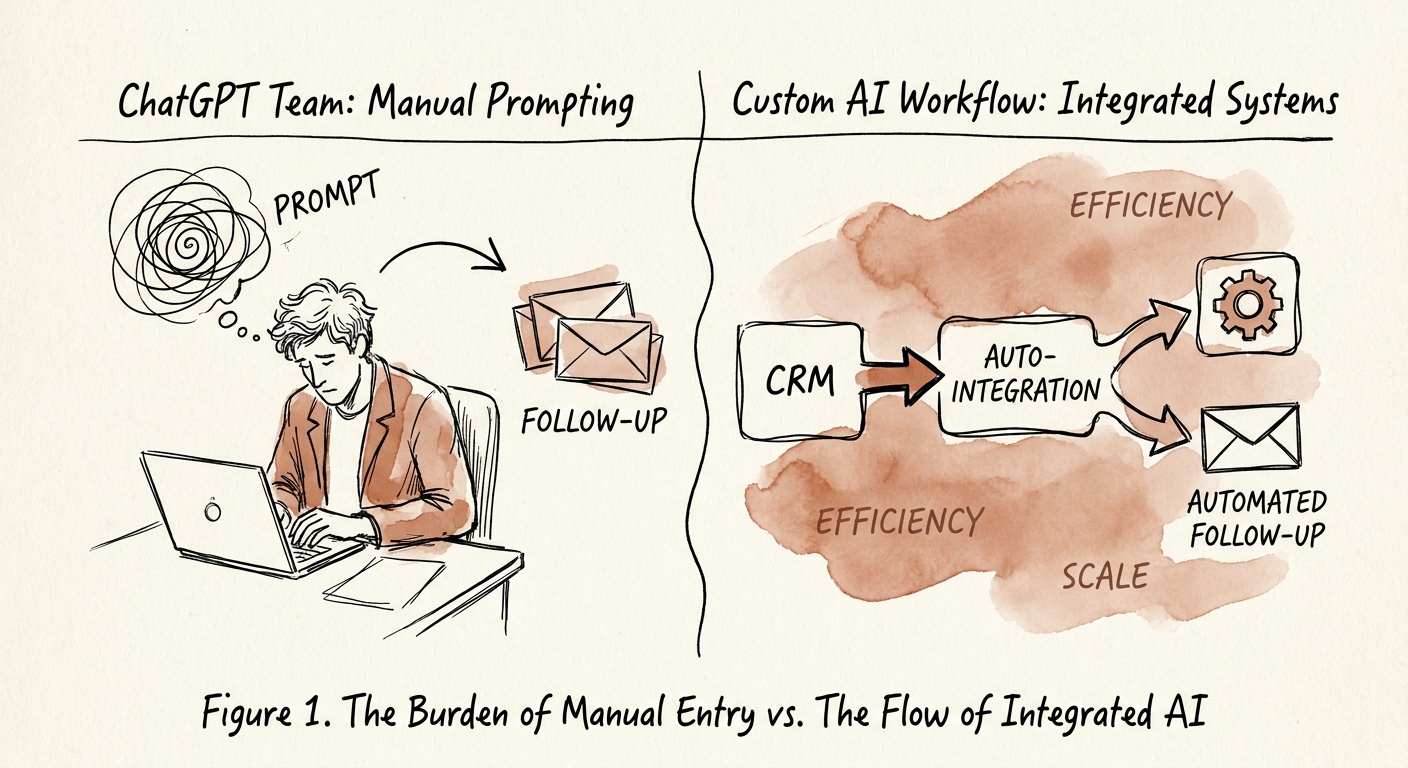
The follow-up that thanked a prospect for a meeting that never happened
A rep wraps a call, pastes the transcript into ChatGPT, and gets back a clean four-paragraph follow-up in nine seconds. It reads beautifully. It also references a pricing tier the prospect never asked about, restates a "next step" the buyer explicitly declined, and addresses the procurement lead by the name of someone who left two emails ago. The rep is moving fast, so it goes out. Now you have a prospect re-reading a thread to figure out whether your team was even on the same call.
That is the actual build-vs-buy question for sales follow-up, and it is not "which tool writes better." Both write fine. The question is whether the draft can prove which buyer commitment, which CRM stage, and which promised date it is standing on — before it reaches someone deciding whether to wire you money. A generic chat window has no idea your deal sits at "verbal yes, legal pending" rather than "discovery." It will cheerfully write the email for the stage it imagines.
Two things from OpenAI's own material set the floor here. ChatGPT Business is a workspace product — the renamed Team tier — that starts at a small seat minimum, and its value to a sales org depends entirely on whether the admin controls and enterprise privacy commitments let you keep customer conversation data inside a boundary you can defend. A seat handles the writing. It does not handle the knowing. For follow-up, the knowing is the whole job.
What "buy" covers, what "build" earns you, and where the line actually sits
Buy the seat when the bottleneck is blank-page speed: a rep who can paste their own notes, eyeball the draft against the deal they personally ran, and edit before sending. That rep is the review layer. Deloitte's 2026 enterprise AI research keeps landing on the same point — the demo isn't the value, the repeatable reviewed process is — and for a five-rep team running their own deals, a Business seat plus a saved prompt is often the entire honest answer. Don't build a pipeline to replace a copy-paste habit that already works.
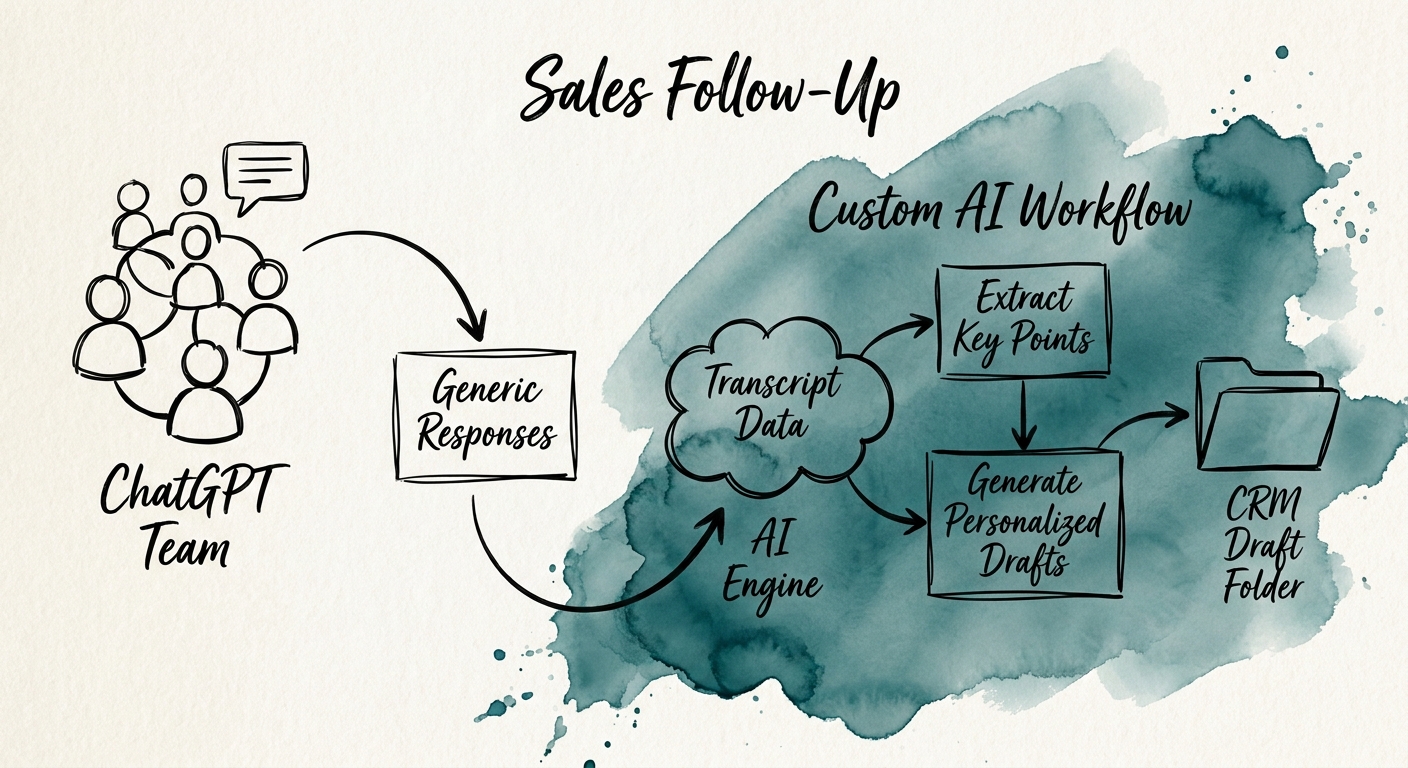
You earn the custom build when the draft has to read the system instead of the rep's memory: the CRM stage, the actual last next-step field, the promised-by date, the buyer roles on the opportunity, and the calendar record of what was scheduled versus what happened. The test is concrete. Can the output show the reviewing manager a packet — source record, proposed email, why it chose that next step, and the one field it couldn't confirm — instead of another loose transcript? If a manager has to re-open Salesforce to check whether the email is even talking about the right stage, you have automated typing, not follow-up.
This is where the boundary work stops being optional. CISA's AI data-security guidance should shape exactly which CRM and call records the workflow may read, how long it keeps them, and what gets logged — because a sales transcript carries pricing, competitor names, and people's contact data. And NIST's AI Risk Management Framework is useful here precisely because the risk is contextual: "I'll send the contract Friday" is harmless as a draft suggestion and a liability once it leaves your domain as a commitment your rep never made. Whatever you build, name the four things AI is forbidden to assert without an account owner's sign-off: pricing, legal terms, competitive claims, and any executive-level promise.
A 90-day test that tells you which one you actually needed
Don't decide build-vs-buy in a meeting. Run it. Days 1–30: pick one deal stage — say, post-demo follow-up on opportunities sitting in "evaluation" — and have reps draft the old way (their notes plus a seat) while you log how often the email matches the real CRM next step and how often it invents one. You will find the invented next-step rate fast; it is the single clearest signal that memory-based drafting is failing at scale.
Days 31–60: stand up the narrow custom version for that one stage and compare drafts head to head against what a sharp manager would actually approve. Track five numbers and nothing else — time-to-follow-up, next-step accuracy against the CRM field, manager rewrites per draft, stale opportunities reactivated, and reply quality. By day 90 the verdict is usually unglamorous and obvious: if rewrites and invented next-steps drop, the build paid for itself; if a seat with a saved prompt already hit those numbers, you've just saved yourself a pipeline nobody needed to maintain. The bad outcome to watch for is the polished version that still leaves a manager hand-checking every CRM stage — that's not automation, it's a second review queue wearing a nicer coat.
If you're weighing follow-up against other first AI workflows competing for the same attention, run the AI Opportunity Score before you commit, and reach for the AI ROI Calculator only once the 60-day numbers are real rather than projected. When you're ready to sequence this into the next governed workflow without losing control of which records the AI can touch, that path is what we structure inside the AI Transformation Blueprint.
