The reminder is the easy 10%
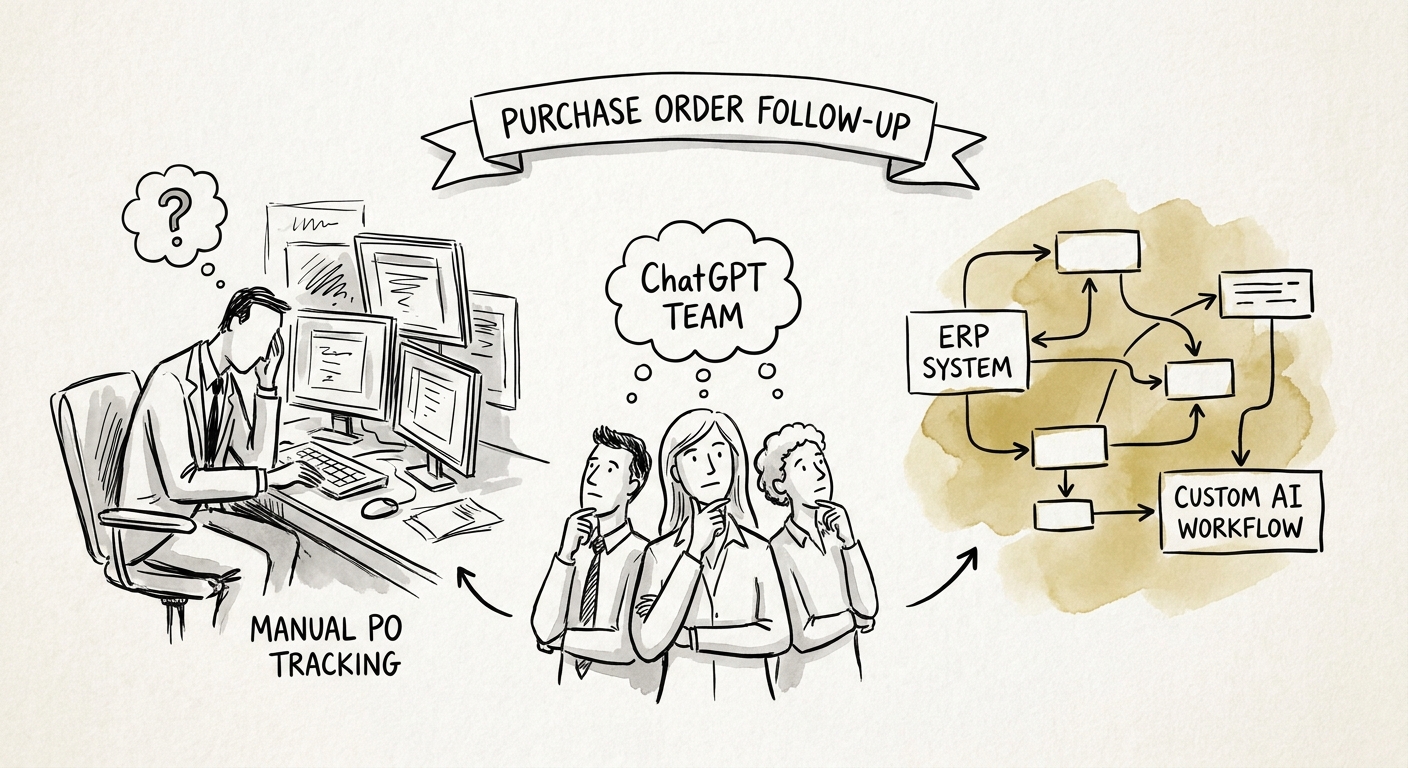
Picture a buyer at a 60-person distributor with 40 open POs. Vendor 14 was supposed to confirm a ship date three weeks ago. The follow-up email itself takes ninety seconds to write, and ChatGPT Business will draft a polished version in five. That part was never the problem. The problem is everything the email implies: that this PO is still live, that the quantity and price on it are the ones finance approved, that nobody already chased this vendor yesterday, and that the company actually still wants the goods. A confident reminder built on a stale ERP line doesn't save time, it manufactures a commitment the business has to honor or walk back.
That's why purchase order follow-up is such a clean build-vs-buy test. The drafting is trivial; the record-keeping underneath it is where money moves. Deloitte's State of AI in the Enterprise 2026 and the OECD's report on AI adoption by SMEs both describe mid-market teams pushed to pick between a chat tool and a wired-in workflow. For POs, the honest answer is: ChatGPT Business is fine for the wording when a human verifies the PO record first. The moment the status update has to obey an approval threshold or write back to the ERP, you've left chat-tool territory.
What to count before you trust the bot
Most teams measure the wrong thing. They count emails sent and declare victory. The number that actually predicts whether AI helped is how often the draft pointed at the wrong source. So before any pilot, baseline four things specific to your PO desk: POs sitting in limbo because an approval never cleared, follow-ups sent against a quantity or price that had already changed, the same vendor pinged twice in a week by two people, and reminders the buyer had to rewrite because the ERP field was ambiguous. Those are the failure modes a chat tool can't see, because it only reads what you paste into it.
Run the pilot on one PO category, not the whole desk. Then in a weekly fifteen-minute review, look at the drafts a human approved versus the ones they killed, the exceptions that got escalated, and any case where the system of record contradicted what the AI wrote and the record won. If the AI is generating more reminders but the rewrite-and-correction rate is climbing, you've automated noise. The goal is fewer stalled POs and a cleaner line between "draft a nudge" and "commit company spend," not a higher email count. Only once you've got a named owner for those metrics should you reach for the AI Opportunity Score or the AI ROI Calculator to size the move.
Decide where ERP authority lives before you scale
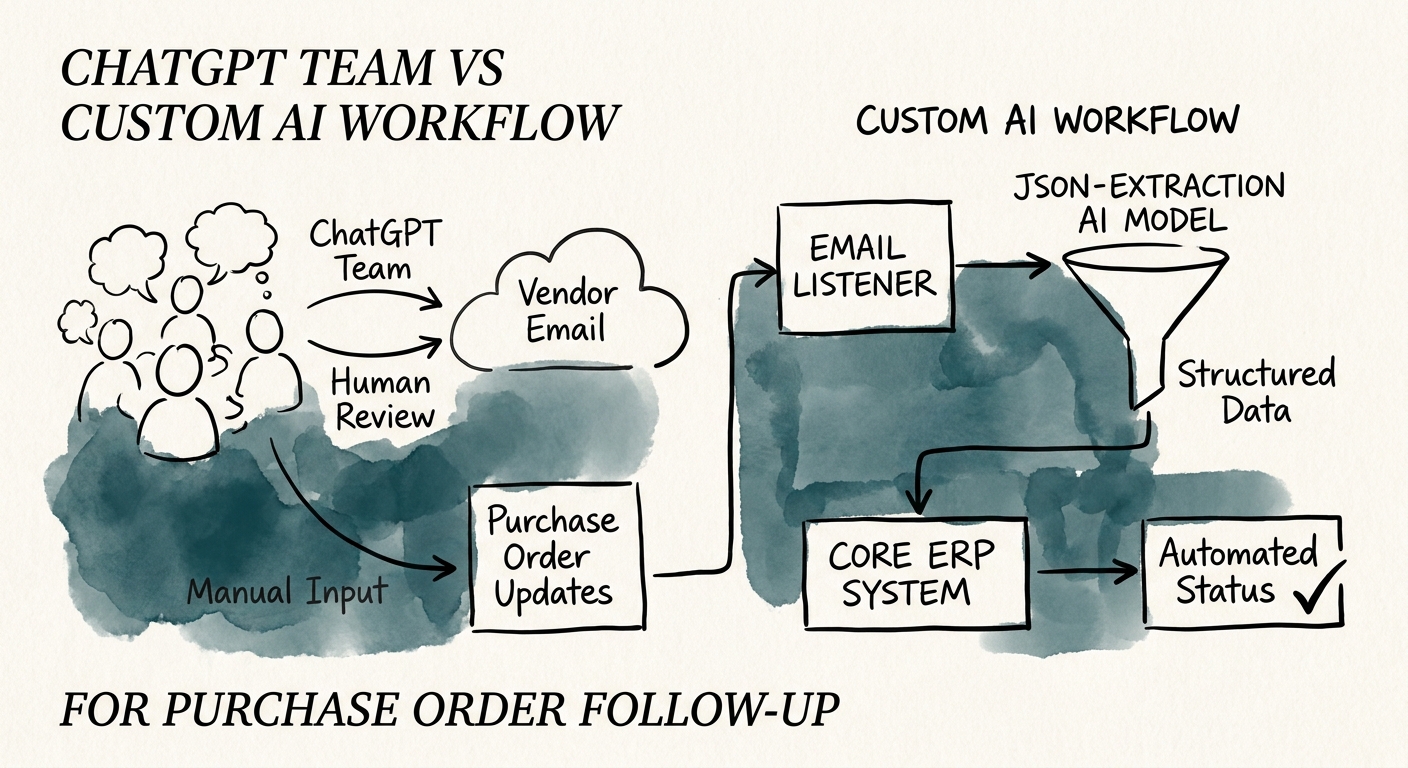
The build decision comes down to one question: who is allowed to say a PO's status is true? With a chat tool, the answer is "whoever pasted the data in," which doesn't survive an audit. A governed workflow makes the ERP or procurement system the single source of truth, checks the approval matrix before any vendor communication goes out, logs every reminder and escalation, and routes anything over a spend threshold to finance instead of letting an automated note imply a commitment. The NIST AI Risk Management Framework is a practical way to write down intended use, risk, and accountability for exactly this kind of step, and CISA's AI data-security guidance should govern how vendor records, approval logs, and pricing data are exposed to whatever tool you choose.
So here's the Monday move: take your single busiest PO category, write one sentence naming the system of record and the spend threshold above which a human must sign off, and run two weeks of follow-ups through ChatGPT Business with a buyer verifying each PO line by hand. Track the rewrite rate. If it stays low and the verification is the bottleneck, that's your signal to build the workflow that does the lookup automatically. If the rewrite rate is high, the bot was never your problem, your PO data was. Either way you'll know, and you won't have scaled a guess across the whole desk.