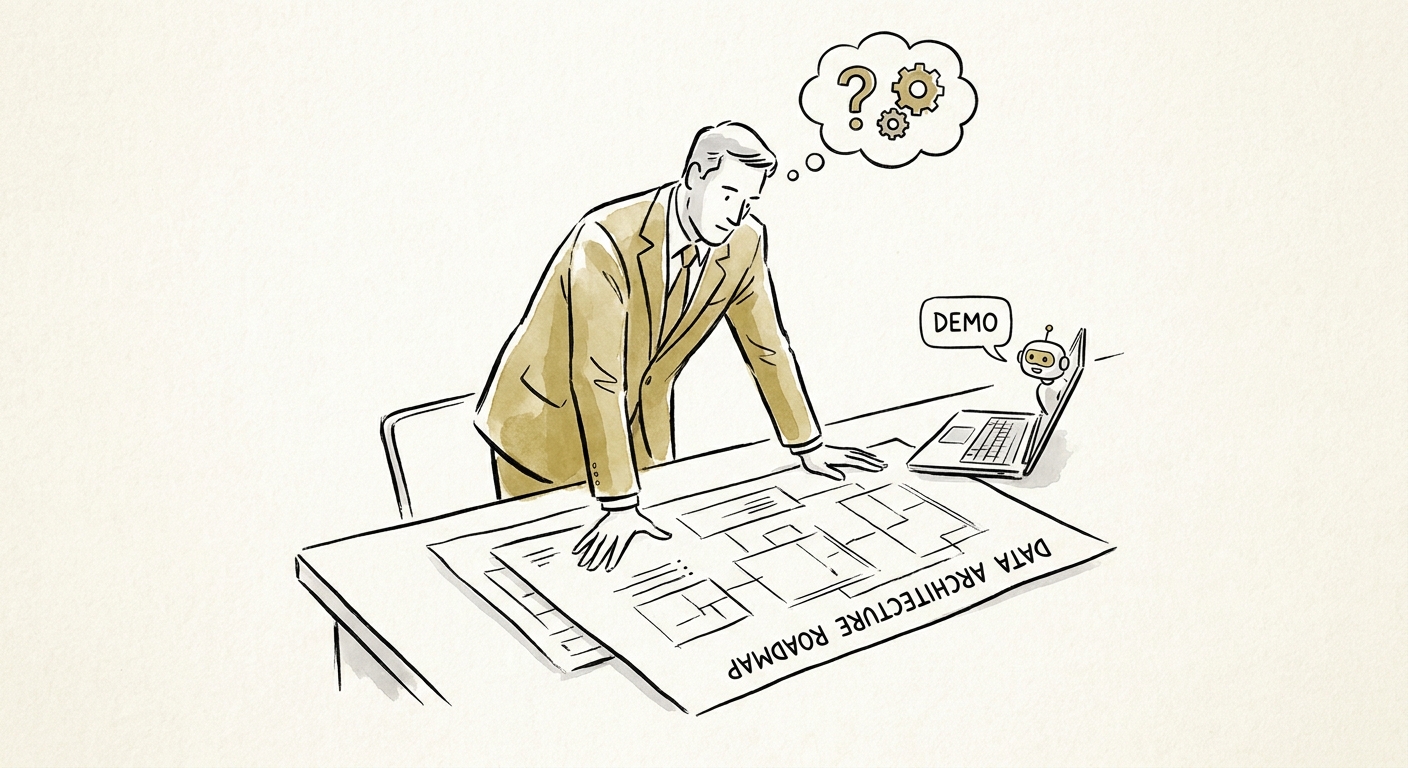
The demo is a magic trick, and you're the volunteer
A consultant walks in, types a question into a chat window, and a tidy answer scrolls back referencing your pricing sheet. The room nods. That demo took an afternoon to stage against three clean documents the consultant cherry-picked. It tells you almost nothing about whether the same system survives contact with your actual data: the CRM field three reps fill in differently, the knowledge article that contradicts the new policy, the service ticket that's really four tickets stapled together.
The thing being sold in that meeting is confidence, not capability. And confidence is the easiest part of an automation project to manufacture. So stop evaluating the output. Evaluate the questions the consultant asks before they propose anything. A serious one will spend the first conversation on the boring half of your business: where the process breaks, who owns the exceptions, which records can never leave your environment, and what an employee is going to do differently on a Tuesday morning once this thing exists.
If they reach for a chatbot, an "agent," or a packaged automation before they understand any of that, you're not looking at a transformation plan. You're looking at the same demo they showed the last three buyers, with your logo swapped in. The tell is simple: a build partner sells you the tool; an operating advisor first wants to see the mess. Use AI consultant vs. automation agency to tell which one is sitting across the table.
Make them draw the production diagram, not the slide
Here's the substitute for a demo. Ask the consultant to walk you through one workflow as it would actually run in production, and listen for nine things: the trigger, the inputs, the source references it's allowed to read, the output format, the review rule, the exception path, the named owner, the measurement plan, and the rollback. If the answer is a list of tools and a price, the project is under-specified and you've found your answer early. If the answer includes who approves an output before it touches a customer or a financial record, what the system does when it produces a weak answer, and how a human gets pulled in on anything sensitive — keep talking.
Work one concrete case in the room. Say you run a 60-person professional services firm and you want AI to draft client status reports. Good. Where does it pull the project data from, and what happens when two source systems disagree on hours billed? Who signs off before that report reaches the client? What does the assistant do when a project has no recent activity logged — invent a status, or flag the gap? A consultant who has shipped this before answers in specifics. One who hasn't reaches for the word "robust." That gap is the whole evaluation.
Ask for the governance plumbing, too, not screenshots: how instructions are version-controlled, how source documents get refreshed so the system isn't quoting last quarter's policy, how access permissions map to who's allowed to see what, and how a new hire is trained to actually use the workflow instead of routing around it. The operating disciplines that separate a durable workflow from a showcase — workflow redesign, data readiness, responsible governance, and value measurement — are the same ones surfaced repeatedly by McKinsey, PwC, and Gartner. Treat those four as your scorecard, and notice how much of a polished demo says nothing about any of them.
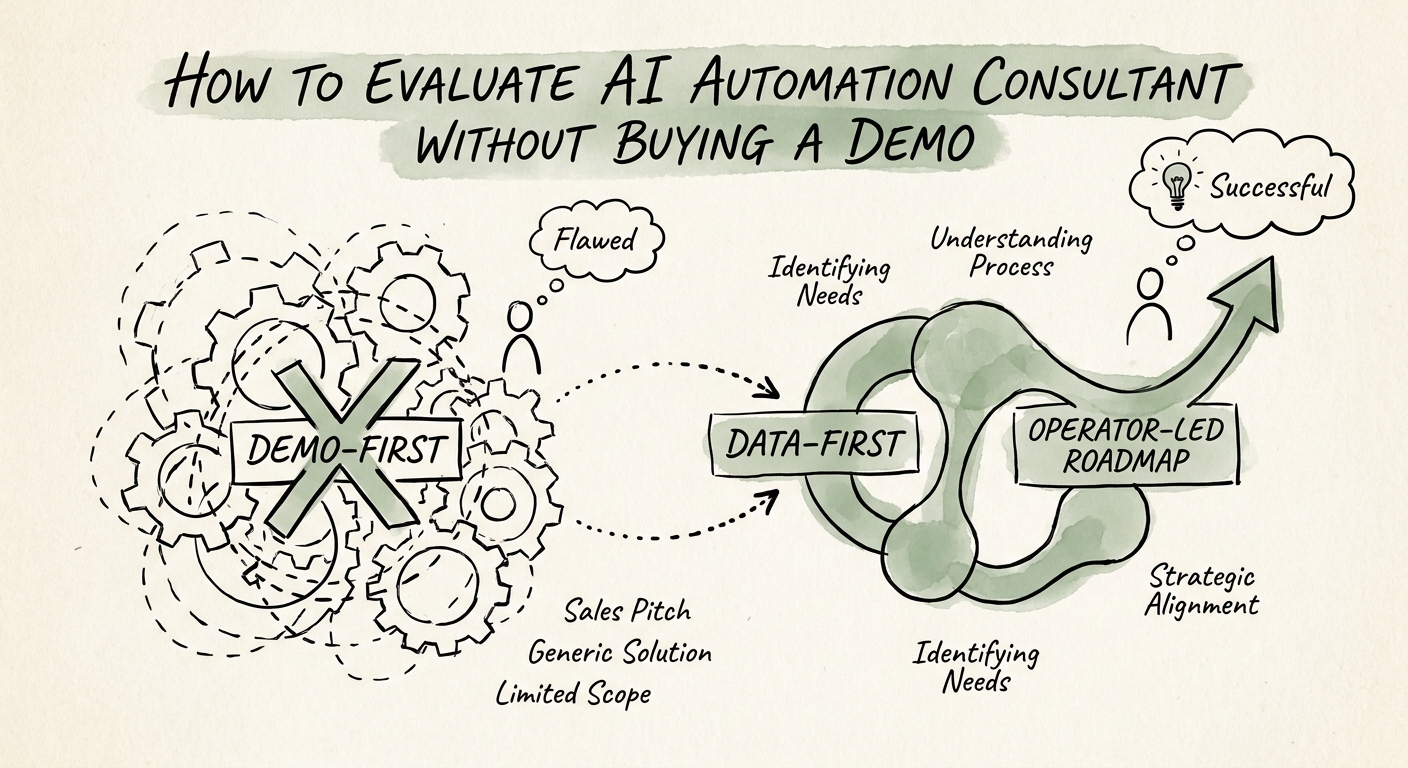
The proposal must name a first workflow — and a thing they won't touch
A demo asks you to imagine everything getting better. A real proposal names exactly one workflow that will change first, plus its baseline, owner, users, allowed data sources, approval gates, rollout cadence, training need, and how you'll know it worked. Be allergic to two things: a proposal promising broad "transformation" without naming that first workflow, and one that converts every saved minute into a dollar figure without showing how that freed capacity actually gets redeployed or how revenue responds. Saved time on a slide is not money in the account.
The strongest signal isn't enthusiasm — it's restraint. The consultant you want can rank your use cases into three buckets: worth building now, useful but premature, and unsafe to automate until you fix the underlying data or review controls. A vendor whose entire pipeline depends on the sale will never tell you the third bucket exists. An operator will, because they've watched a too-eager automation blow up on its first real exception and they'd rather protect your budget than book a doomed engagement. The frameworks IBM lays out on workflow automation and the adoption research in MIT Sloan Management Review both land in the same place: the constraint is rarely the model, it's the workflow and the people around it.
So skip the demo. Bring your candidate workflow to the first meeting already scored, and watch how the consultant reacts to scrutiny instead of how they perform a tool. Run it through the AI Opportunity Score first, then pressure-test the business case with the AI ROI Calculator. The right partner will lean in and argue the numbers with you. The wrong one will steer you back to the chat window.
