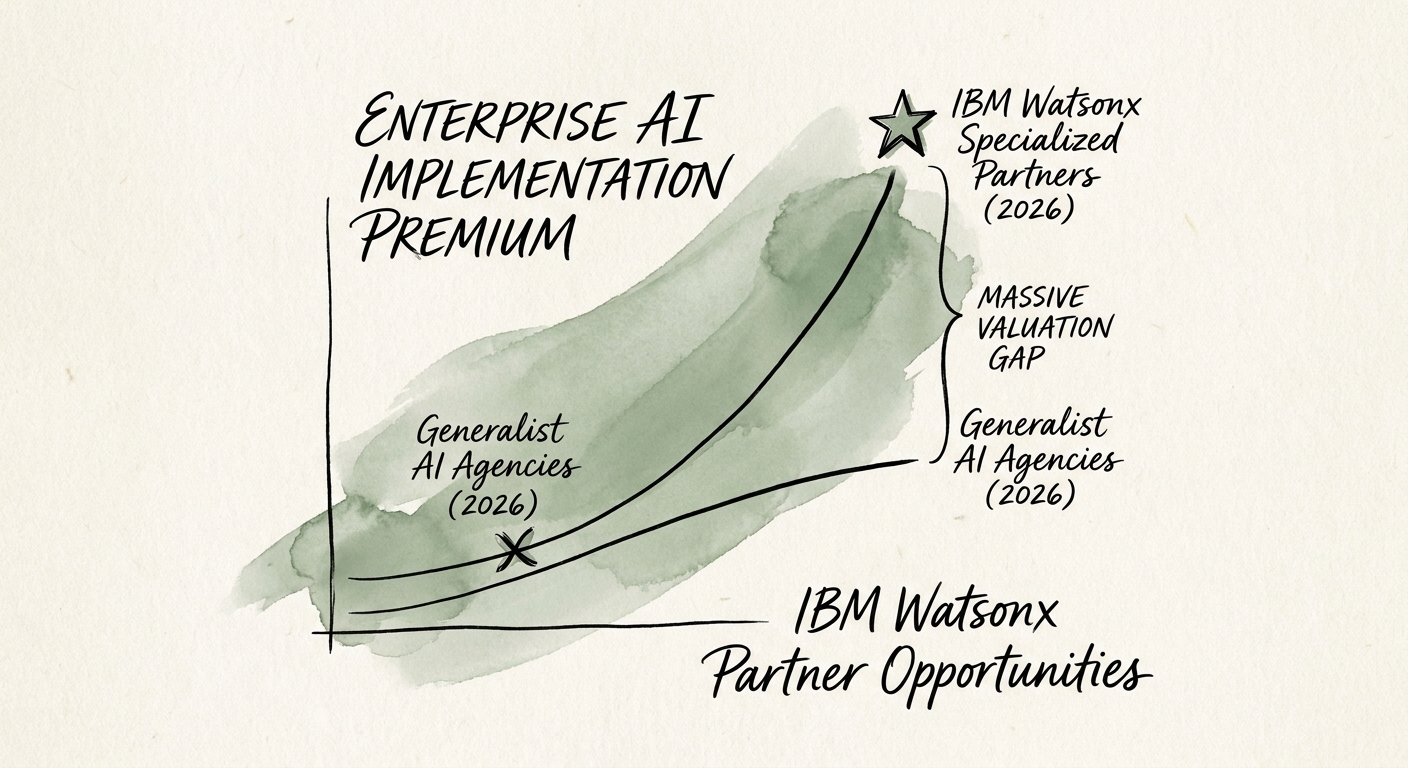
The badge on your website is worth roughly zero
Picture the moment an AI implementation firm decides to "go all in on watsonx." Someone forwards a partner-tier email, leadership likes the idea of an enterprise logo on the site, and three weeks later there's a badge in the footer and a half-finished landing page. Nine months on, it has generated exactly one inbound lead, which went nowhere. The badge was never the product. It was a costume.
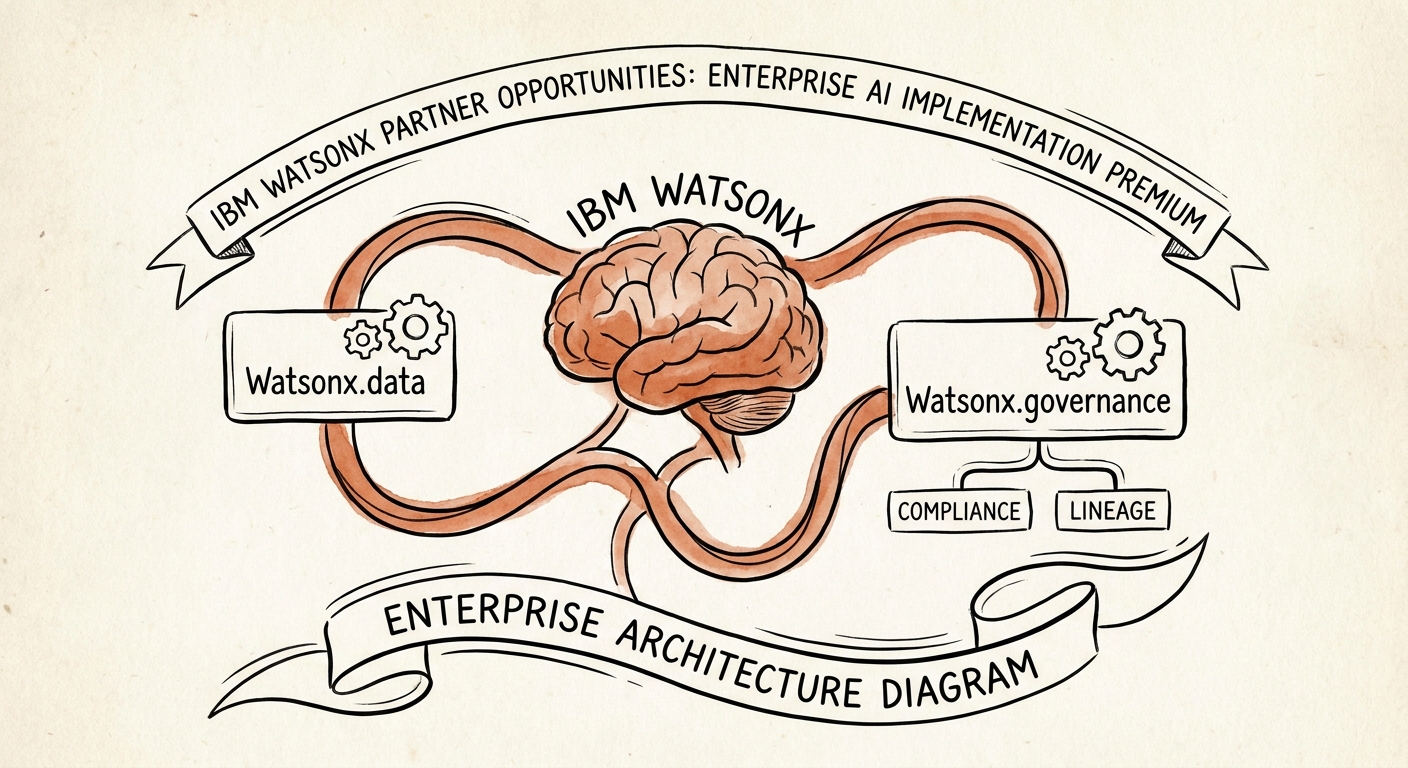
The reason this happens is that an enterprise platform is the easy half of the bet. IBM positions watsonx as the place to build and govern AI and data workflows — the model layer, the tooling, the runtime. None of that is what a regulated buyer is actually shopping for when they call you. They already assume the platform works. What they're trying to find out is whether your firm can take their messy claims data, their inconsistent process docs, and their nervous compliance officer, and turn all of it into a workflow that survives an audit. That is delivery capability, and it lives entirely on your side of the contract.
Deloitte's 2026 State of AI research tracks the same shift on the buyer side: the conversation has moved from "can it demo" to "can it run in production." For your firm, the implication is uncomfortable and clarifying at once. The premium does not attach to platform familiarity. It attaches to a repeatable answer to the question, "what do you do when their data is a mess and their governance is a guess?"
Price the practice, not the platform
Before you commit a single billable hour to building a watsonx specialization, run the math the way you'd underwrite any new revenue line. A practice has to clear three tests: a repeatable offer with a known margin, proof assets you can reuse in the next sale, and a delivery motion that doesn't depend on your single most senior engineer being free. A logo clears none of those.
Here's the concrete build. Say a 30-person firm wants in. The packageable offers are a readiness assessment (fixed-fee, two weeks, the front door), a governed retrieval implementation on watsonx for a regulated dataset, and a post-launch optimization retainer that tracks adoption and rework. The spine underneath all three is NIST's AI Risk Management Framework — Map, Measure, Manage, Govern — because in a compliance-heavy account, the governance artifact you hand the client's risk committee is often what closes the deal, not the model accuracy. Data security carries the same weight: CISA's guidance on securing the data used to train and operate AI systems gives you a checklist you can show a buyer's security lead in the first meeting, which shortens the sale by weeks.
What most firms get wrong is treating "watsonx partner" and "vendor-neutral advisor" as opposing identities. They're the same business at different phases of the client's journey. A buyer who hasn't cleaned their data, hasn't picked a use case, and hasn't named an owner does not need a platform recommendation — they need operating design first, and pushing watsonx into that gap is how you torch trust and the deal. The skill is knowing the line: recommend the platform when the readiness work is done, and earn the readiness work by being the firm honest enough to say "not yet."
What to do Monday
Don't decide on the platform. Decide on the buyer. Pull your last twenty closed engagements and mark which ones had a real IBM footprint, regulated data, or an enterprise integration problem that watsonx would genuinely solve. If that's three deals, you don't have a practice — you have a coincidence, and the badge can wait. If it's nine, you have a wedge worth building behind. The bet only compounds when there's a real cluster of clients whose problems watsonx specifically improves; chase every AI deal regardless of platform fit and you'll dilute the one thing that would have made you referable.
Then write a one-page service-line scorecard before you write any marketing copy: target buyer, the first three repeatable offers, the reference architecture, the certifications and delivery roles you'll need, your security posture, the change-management motion, the margin per offer, and the proof assets a buyer can inspect before signing. Tape it to the wall. If you can't fill in the margin column or name the proof artifact, you're not ready to commit — you're ready to do one paid readiness assessment and let it tell you the truth.
The honest version of this strategy also names what you'll decline. A firm that says no to out-of-fit work is a firm that builds a record worth a premium. When you're ready to turn the scorecard into a sequenced build, that's the work behind an AI transformation blueprint — connected to a candid implementation-cost conversation and a concrete 90-day delivery plan so the practice ships instead of sitting in the footer.