The 47-minutes-per-rep trap
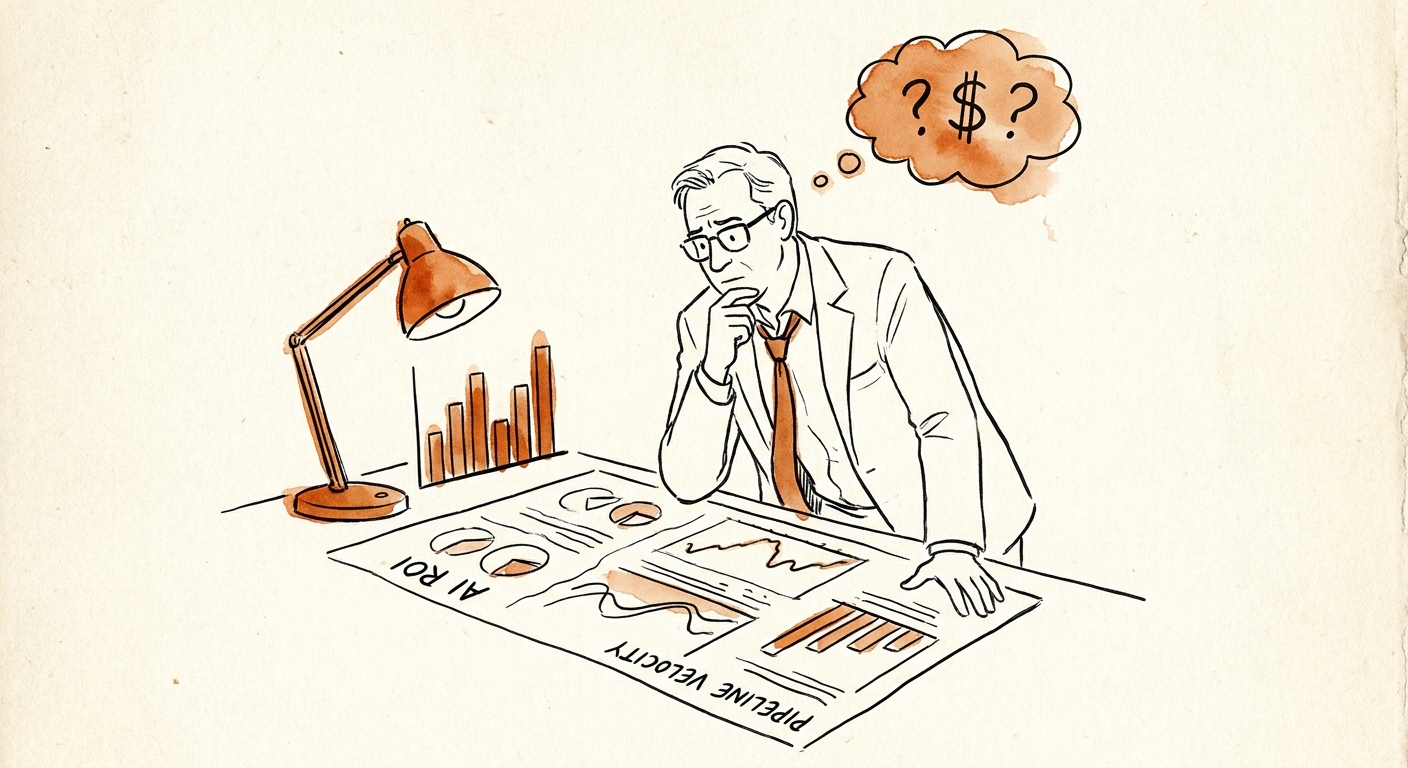
Here is the slide that gets AI account research approved: "Reps spend 47 minutes per account on manual research. AI does it in 4. With 30 accounts a week per rep, that's 21 hours saved per rep per month." The CFO nods, the deal closes, and twelve weeks later pipeline looks exactly like it did before.
The hours were real. The problem is that "research time" was never the constraint on bookings. In most B2B technology and services teams, reps weren't failing to hit number because they ran out of time to read a 10-K — they were failing because they pursued the wrong accounts, opened with generic value props, and single-threaded a deal that needed four stakeholders. Handing those reps faster research doesn't fix any of that. It just lets them do the unproductive version faster.
So before you model a dollar of return, answer a different question: at which exact moment in your sales motion does better account knowledge change what a rep does next? Maybe it's account selection — reps are spreading effort evenly across a list where 20% of accounts deserve 80% of attention. Maybe it's the first touch — outreach that cites a real trigger gets replies, generic outreach gets archived. Maybe it's the deal review — managers can't pressure-test a forecast when the account plan is three stale CRM fields. Pick the moment. That's where your ROI either exists or doesn't.
Then capture a real baseline for it. Pull last quarter's numbers: reply rate on cold outreach, meeting-to-opportunity conversion, average stakeholders engaged per open deal, percentage of account plans a manager actually corrects in review. Those are the dials AI research has to move. The AI ROI measurement guide walks through keeping the model anchored to those operating outcomes instead of the time-saved fiction.
The brief acceptance funnel
Most teams measure AI account research by counting outputs — "the system generated 1,200 briefs this month." That number is worthless on its own, because it counts production, not consumption, and definitely not results. The metric that actually predicts ROI is a funnel that follows a single brief from creation to closed revenue.
Track it in four stages. First, brief acceptance: of the briefs generated, how many did a rep or manager mark as usable rather than discard? A 30% acceptance rate is telling you the research is wrong more often than it's right. Second, activation: of accepted briefs, how many actually changed a rep's next action — a different opening line, a new stakeholder added, an account dropped from the list? A brief that's "accepted" but produces the same boilerplate email is theater. Third, meeting creation from those activated accounts versus your baseline reply and booking rates. Fourth, stage conversion: do deals sourced from research-led outreach move faster or convert higher than your control group?
Run the negative signals in parallel, because they're where the failure hides. Watch for duplicated work (two reps researching the same parent account), trigger decay (briefs citing a funding round from eight months ago as "recent"), and source thinness (a brief built entirely from the prospect's own homepage, which tells you nothing they wouldn't tell anyone). And separate quality from volume explicitly: more accounts researched is a liability if it means reps chase poor-fit logos with confident-sounding context. A scorecard that breaks out fit, trigger freshness, source quality, and rep activation lets you tune the system instead of celebrating throughput.
This is the same operating conclusion that runs through McKinsey's work on AI in B2B sales, Bain's AI insights, and Gartner's sales research: commercial AI returns come from changed seller behavior and better decisions, not from faster drafting. The drafting was never the bottleneck.
Run it as a territory split, not a launch
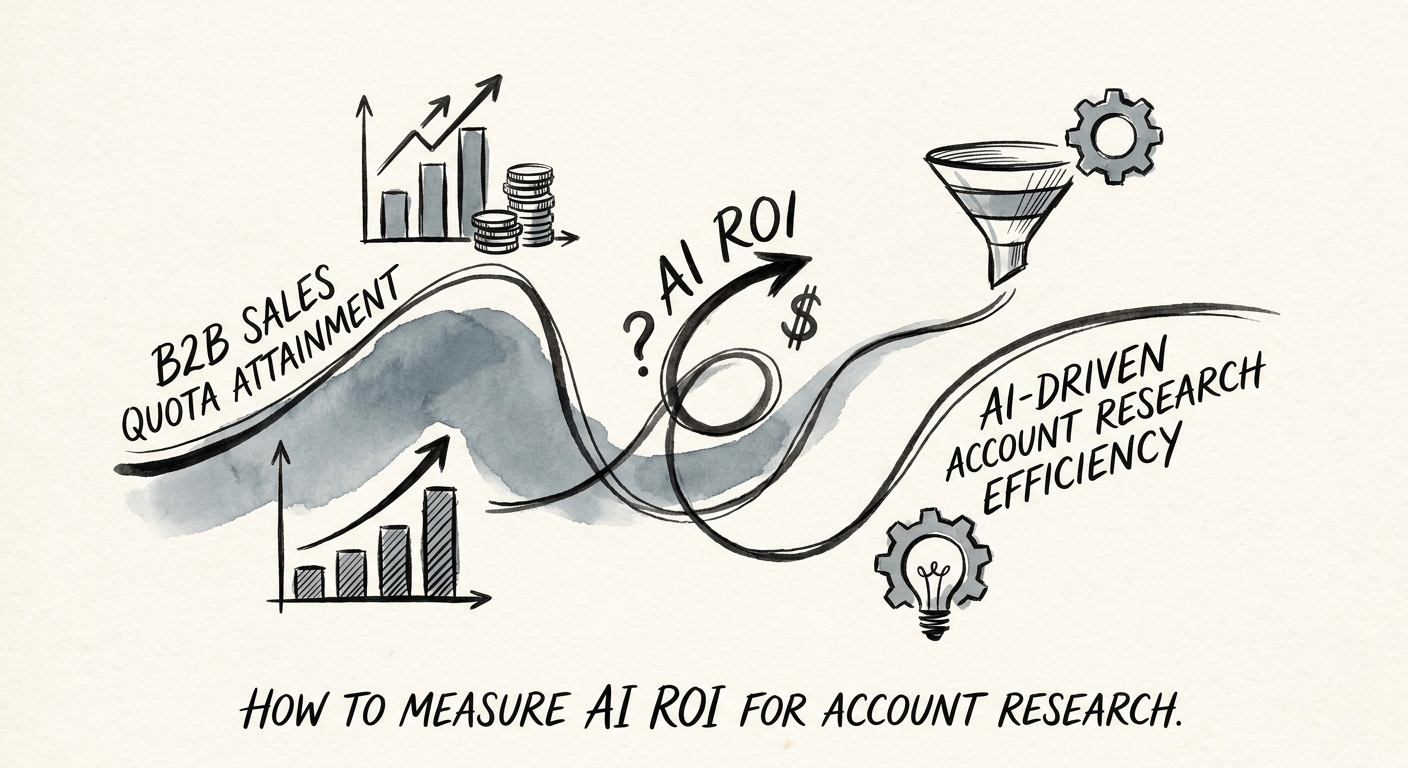
The cleanest way to prove account-research ROI is also the one most teams skip because it feels slow: a controlled split. Take two comparable rep groups or two matched account segments. One gets AI-assisted research, one keeps the current process. Same quota, same product, same quarter. Then you're not arguing about whether pipeline went up — pipeline always moves for ten reasons — you're measuring the gap between the two groups on the four funnel metrics above.
Inspect it weekly, and inspect the right thing. Don't ask "how many briefs did we generate." Ask: which accounts did the AI group prioritize that the control group didn't, did the triggers it cited hold up under a manager's eye, did reps change their first move, and did the next step actually beat the old one? If the AI group is busier — more touches, more "researched" accounts — but its meeting-to-opportunity rate matches the control group, you don't have ROI. You have a more expensive way to stay flat, and you should say so out loud before the renewal.
When the split shows a real lift, the next move is governance, not a blanket rollout. Decide which data sources the briefs are allowed to pull from, what makes an account in-scope, how managers sign off on a brief before it drives outreach, and how stale account data gets corrected on a cadence. That discipline is what keeps AI research from degrading into one more noisy layer your reps learn to tune out. Pressure-test the economics with the AI ROI Calculator, and use AI workflow automation for account research when you need the operating design behind the measurement.