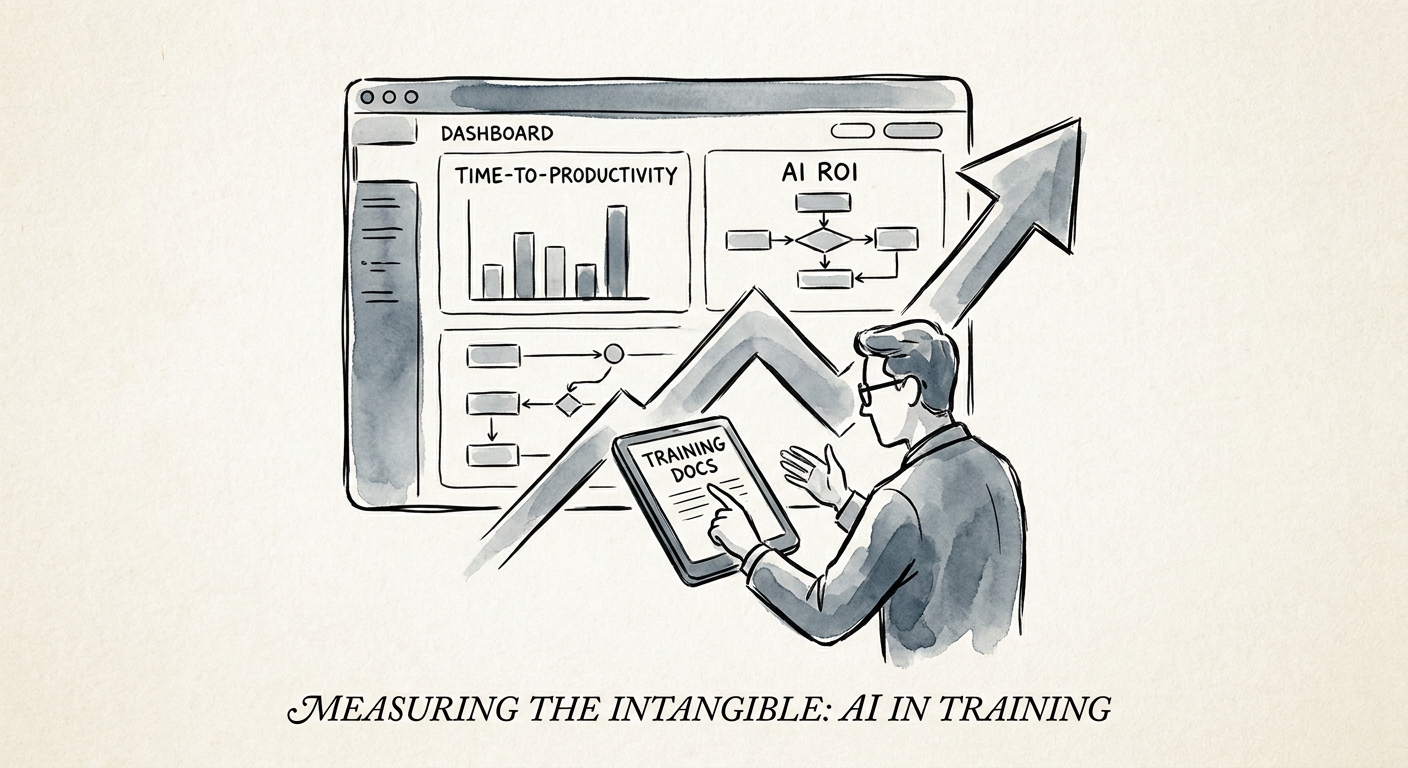
You can generate a year of documentation in a weekend. That's the trap.
Here is the scene that sells the project: someone feeds the company wiki, a few Slack threads, and last year's onboarding deck into an AI tool, and out comes a clean, formatted training library. Two hundred SOPs where there used to be a dozen half-finished Google Docs. It looks like a year of technical-writing work compressed into a Saturday, and the screenshot lands beautifully in the board update.
Then a new hire starts. They still ping their manager six times before lunch. They still rebuild the same proposal twice because nobody told them the discount rule changed in March. The 200 documents exist, but the one they needed at 4pm — the actual edge case with the actual customer on the line — either wasn't in there, or was buried under three near-duplicate versions the AI happily generated from contradictory source threads.
That gap is the whole story. Authoring speed is an input you can buy cheaply now. The return only shows up when a person who didn't know how to do the job yesterday does it correctly today, without borrowing an expert's afternoon to get there. The research from Microsoft WorkLab and McKinsey's people and organizational performance practice keeps landing on the same uncomfortable point: the value is in the workflow change, not the artifact count. Before you book documentation throughput as savings, run it through the AI ROI measurement framework.
The number that actually moves: time-to-second-week-productive
Pick one role and one hard, countable milestone. Not "completed onboarding" — that just measures whether someone clicked through the modules. Measure the thing the role exists to produce. For a support rep, it's the day they resolve a ticket independently without an escalation. For a sales hire, it's a clean, on-policy proposal sent without a manager rewriting it. For an implementation specialist, it's a customer kickoff they run solo. Write down how many calendar days that took for your last five hires, before the AI documentation existed. That's your baseline, and most companies have never written it down once.
Now watch three behaviors after launch, because they're where training docs either earn their keep or quietly fail. First, the expert-interruption rate: how often do new people pull a senior engineer, a top closer, or your one person who "just knows how billing works" into a routine question? Knowledge trapped in three people's heads is one of the quietest, costliest dependencies in a growing company, and good documentation is supposed to drain that pool. If the senior staff's calendar doesn't loosen, the docs aren't being used or aren't trusted.
Second, the repeat-mistake rate on procedure-driven work — the misrouted ticket, the proposal at the wrong price, the onboarding step skipped that surfaces as a churn risk three weeks later. These have a dollar cost you can estimate. Third, and this is the one teams skip: track what the AI assistant gets asked and *can't* answer. Every unanswered question is a real gap a real employee hit. Say a 60-person services firm finds 40% of assistant queries return nothing useful in month one — that's not a failure, it's a free, ranked backlog of exactly which documents to write next, sourced from actual confusion instead of a content committee's guesses.
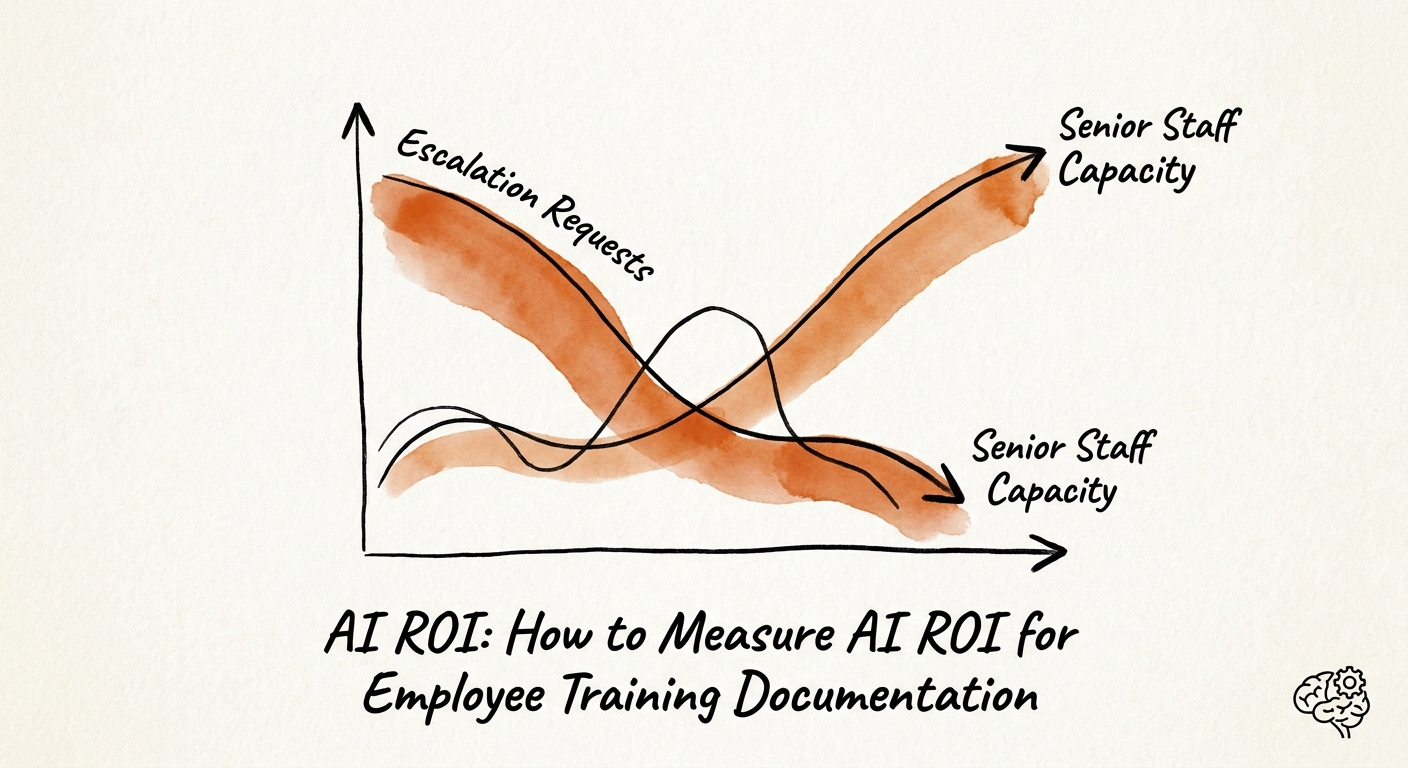
Run it like a system that decays, because it does
The quiet killer of training documentation isn't bad writing — it's the half-life. A process changes, the doc doesn't, and now the AI is confidently teaching new hires last quarter's workflow. That's worse than no documentation, because it carries authority. So the ROI model has to fund maintenance, not just creation: a named owner per content area, a review cadence, and a way for the assistant to flag when its source material is stale. IBM's AI governance guidance, PwC's responsible AI work, and Bain's AI insights all circle the same operating discipline — controls and ownership are what separate a useful system from a confident liability.
Start narrow on purpose. One role's onboarding path — say, the first 30 days of a support hire or the handoff from sales to delivery. Capture the baseline ramp days and expert-interruption count, launch the assistant against a curated set of documents you actually trust, and compare the same two numbers a quarter later. One clean before-and-after on one workflow tells you more than a wiki of 200 pages nobody has opened.
To design the source architecture so the assistant draws from material you'll defend, use the internal AI knowledge assistant guide. To sanity-check that training documentation is even your highest-leverage first AI bet — instead of, say, automating a billing handoff — run it through the AI use-case scoring model. Then put real ramp-time and escalation numbers into the AI ROI Calculator before you scale past that first role.