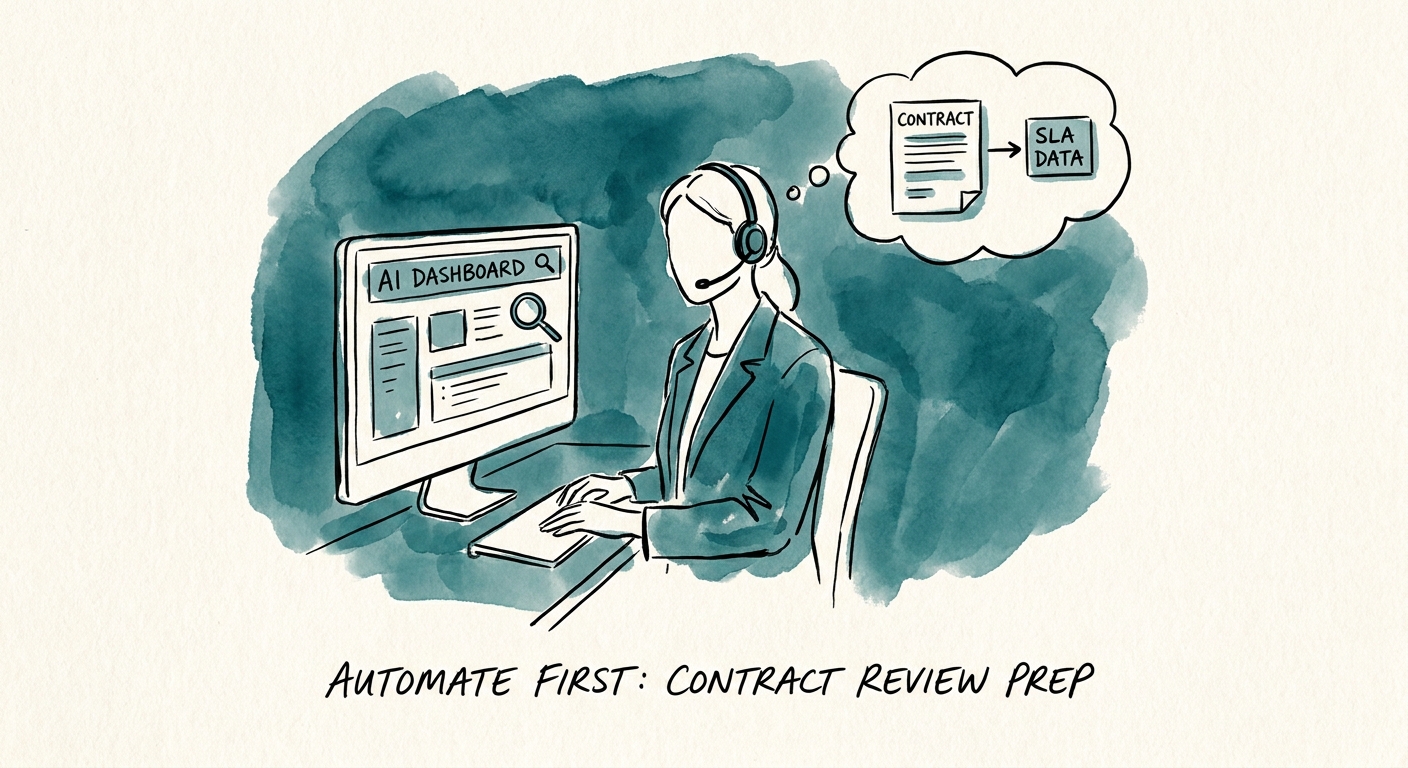
A P1 ticket lands. The clock starts. Where's the SLA?
Picture a B2B software vendor: a customer files a "system down" ticket at 4:55pm. The agent's first move isn't to fix anything — it's to figure out what was actually promised. Premium support or standard? Four-hour response or next business day? Is this account even entitled to weekend coverage? The answer lives in a signed MSA and an order form filed somewhere in SharePoint, and by the time anyone finds the right clause, half the response window is gone.
This is exactly why contract review preparation is the right place to point your first AI use case. The source of truth already exists and it's authoritative — a signed agreement, not a guess. For professional services and B2B software teams especially, the support reply is only as good as the entitlement facts behind it, and those facts are buried in documents your agents don't have time to read mid-incident. Salesforce State of Service 2025 shows service teams being asked to absorb more complex work as AI reshapes the front line; the highest-leverage move is giving the human better context before they respond, not removing the human.
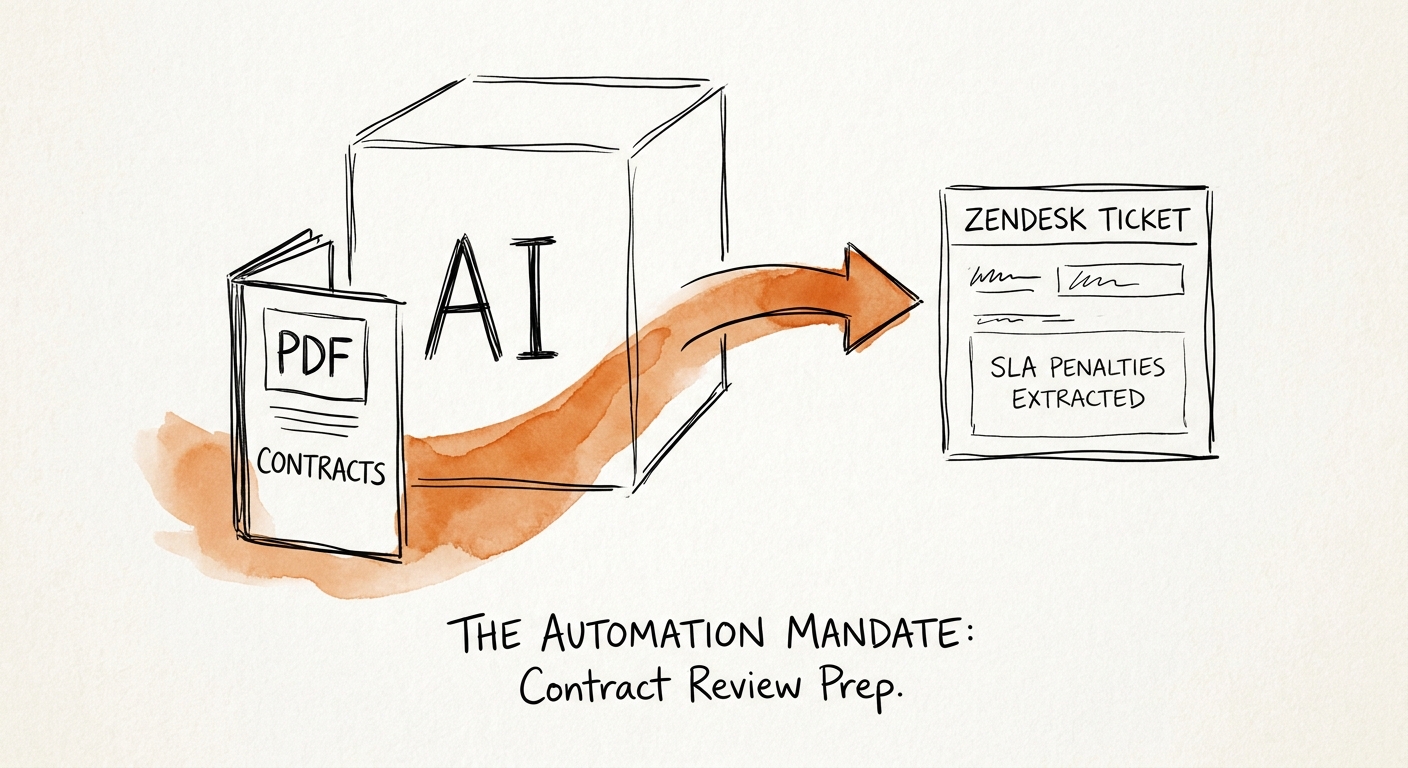
So scope the first workflow tightly. It does not interpret legal risk or decide what a customer deserves. It extracts named obligations — SLA tier, entitlement, escalation path, evidence clause — attaches the source paragraph, and routes anything ambiguous to a named owner. The NIST AI Risk Management Framework gives the operating frame for that boundary: map the context, measure the risk, manage the control, govern the deployment.
The risk isn't the AI. It's the folder it can read.
Here's what most teams get wrong: they worry about the model hallucinating a clause and never ask the more dangerous question — who can the AI see contracts for? Contract repositories in mid-market software and services firms are notoriously over-permissioned. The "Legal" drive has read access for half the company because someone needed one NDA in 2023. Point an AI assistant at that estate and it doesn't create a new exposure; it surfaces the one you already had, at scale and at speed.
That's the real lesson from Microsoft 365 Copilot's data protection architecture: enterprise AI inherits identity, access, and sensitivity labels from the underlying content. It is a mirror, not a shield. Before you extract a single SLA, tighten contract folder permissions, apply sensitivity labels, and confirm the AI's access matches the support team's actual need-to-know — not the historical sprawl.
Then add the controls that make extraction trustworthy in practice rather than on paper. PwC's Responsible AI survey makes the case that policy language alone doesn't govern anything; you need working mechanisms. For this workflow that's concrete: a versioned clause library, a source citation on every extracted field, an escalation threshold for ambiguous terms, and a named legal owner who reviews the gray-area cases. Four contract facts to extract, one human check before anything touches the customer.
Measure prep quality before you scale anything
The temptation after the first win is to widen the workflow fast — let it draft the reply, auto-apply credits, close the loop. Resist that until the narrow version is provably accurate. Your scorecard has five lines and none of them are "tickets deflected": extraction accuracy, clause-evidence coverage (does every field cite its source paragraph?), legal correction rate, escalation frequency, and ticket cycle time. If the legal correction rate is climbing, you don't have an automation problem — you have an extraction problem, and scaling it just multiplies the errors.
The win you're after is modest and real: an agent opens that 4:55pm ticket and already sees "Premium tier, 4-hour response, weekend coverage active, MSA §7.2" with a link to the clause. They respond correctly in minutes instead of guessing or escalating to legal for something the contract spells out plainly.
Set the boundary first with AI governance and training so your team knows exactly where extraction stops and judgment begins. Then run a QuickStart AI Audit before contract data flows into anything broader — confirm the permissions, the labels, and the human checkpoint are real before you trust them at volume.