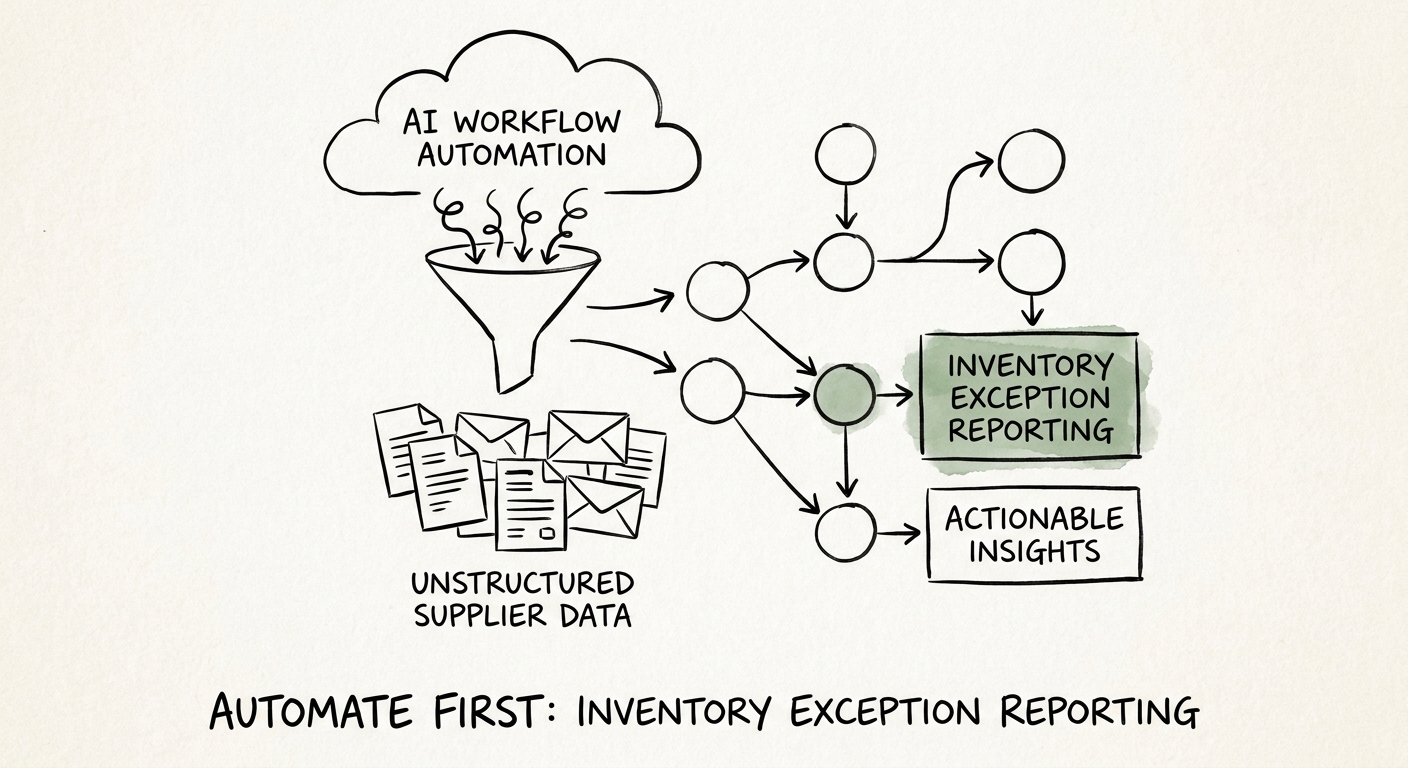
The buyer who clears 200 flags to find the 6 that matter
Picture the planner at a 90-person distributor on Monday morning. The ERP has spat out an exception report: 200-some lines where on-hand doesn't match expected, where a PO is past due, where a SKU dipped under its reorder point over the weekend. Most of it is noise — a cycle count that hasn't posted, a receipt logged a day late, a min/max that was set in 2021 and never touched. Buried in there are maybe six lines that actually mean something: a fast-mover about to stock out, a supplier quietly slipping its lead time, a quantity that's about to trigger a reorder nobody needs. The planner spends the first ninety minutes of the week separating the six from the rest, by hand, in a spreadsheet.
That is the workflow to point AI at first — not the demand forecast, not the chatbot, not the procurement email. The exception queue. U.S. Census data on AI use in businesses and the OECD report on AI adoption by small and medium-sized enterprises both show mid-market operators reaching for use cases they can actually keep their hands on — and an exception queue is exactly that. It is bounded, it repeats daily, and every line already carries the three things a safe pilot needs: a source record in the ERP, an operating consequence (reorder, escalate, or do nothing), and a named owner who has to make that call.
Score the queue on the decisions, not the alert count
The trap is the demo that looks great because it generates more flags than the old report. That is backwards. A good exception system raises fewer flags, not more — it should suppress the cycle-count noise and the late-posted receipts so the planner sees the six lines that change a purchasing decision. So measure the pilot on what the buyer did, not on how much the model surfaced.
Run it shadow-mode for two or three weeks against the planner's real Monday queue. Track four things: how many flagged exceptions a human accepted as real and acted on; the false positives — alerts that sent someone chasing a phantom shortage; the false negatives — the stockout or lead-time slip the system missed that the buyer caught anyway; and the time from flag to decision. If the same fast-mover stocks out twice during the pilot because the model kept burying it under stale-data noise, you have your answer, and you have it in a week instead of after a quarter of bad fill rates. Save the broader business case — and tools like the AI Opportunity Score or the AI ROI Calculator — until a named planner will sign their name to those four numbers moving the right direction.
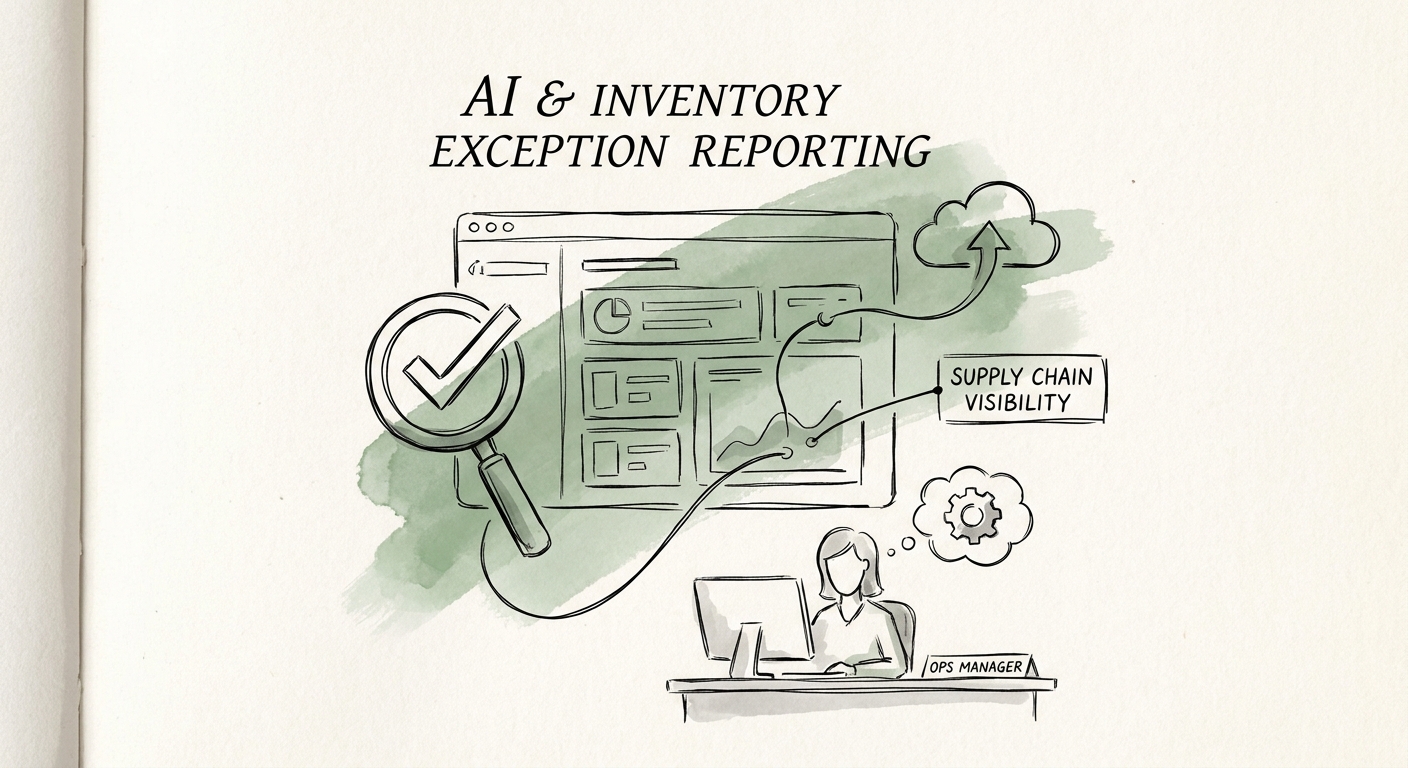
The reorder threshold is where you draw the line
One rule decides whether this pilot is safe or expensive: AI flags and ranks the exception, a human approves the reorder. Inventory mistakes don't quietly self-correct — an over-order ties up cash on a shelf for months and a missed reorder shows up as a lost sale you never see. So the model triages and explains; it never fires a PO. The NIST AI Risk Management Framework gives you the structure to write down the intended use, the failure risks, and who is accountable when a flag is wrong — do that before go-live, not after the first bad order. And because the queue runs on supplier records, lead times, and pricing, scope the data tightly: CISA's best practices for securing the data used to train and operate AI systems should define which inventory and vendor fields the system may touch and how long exception logs are retained.
Then expand one exception family at a time. Start with reorder-point breaches on your A-items, get the false-positive rate down and the buyer's response time up, and only then add supplier-delay flags or slow-mover stale-data checks. The team that automates the whole exception report at once just moves the spreadsheet triage into a black box. The team that earns one clean exception family at a time ends up with a queue the planner trusts — and gets their Monday morning back.
