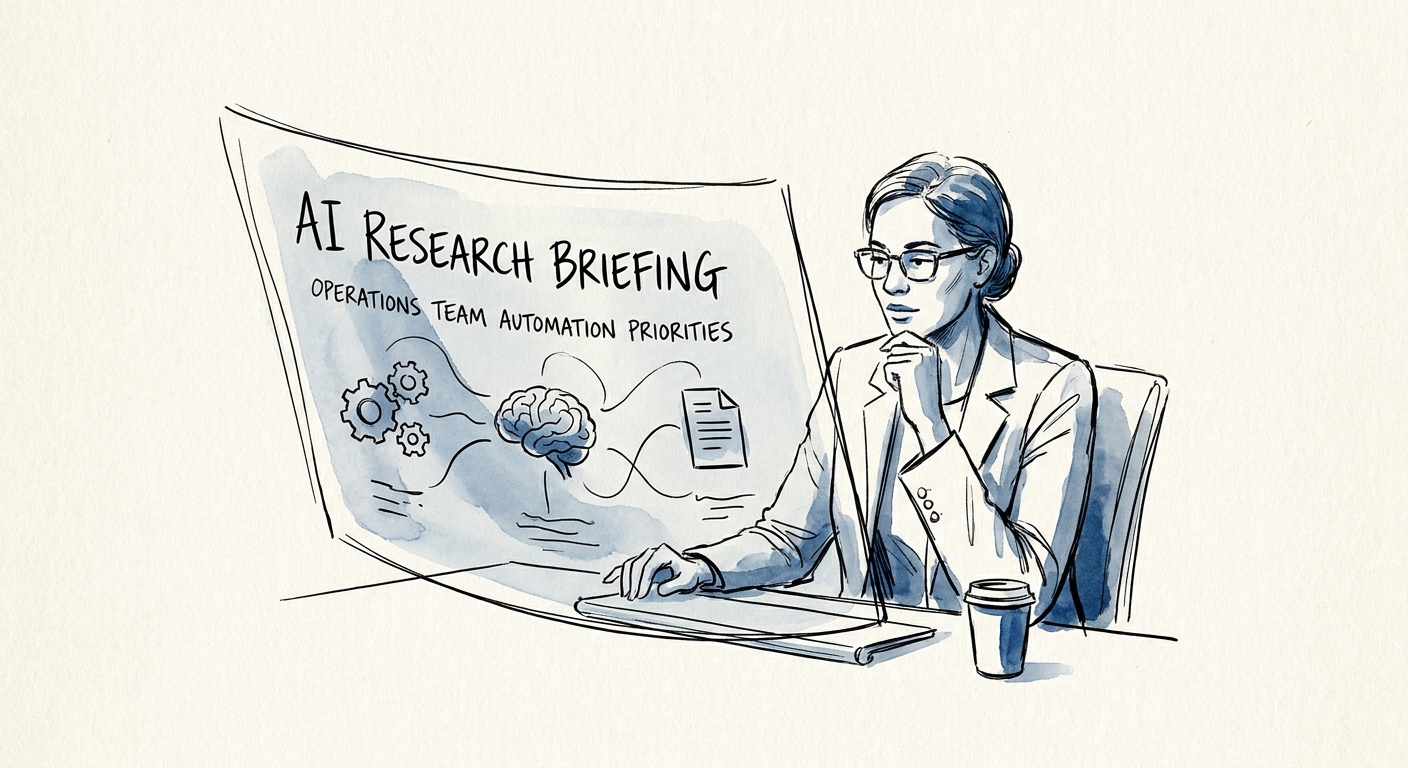
The Tuesday decision that AI should touch first
Say your ops lead is deciding between two logistics vendors by Thursday. Someone spends a chunk of Tuesday pulling pricing pages, an old MSA, a compliance bulletin from who-knows-when, and three Slack threads — then writes a one-pager that the lead skims and half-trusts. That packet, not your invoicing or your ticket routing, is the right place to point AI first. It is a contained, repeating decision with a clear input list and a clear output, and the cost of getting it slightly wrong is a redo, not a refund.
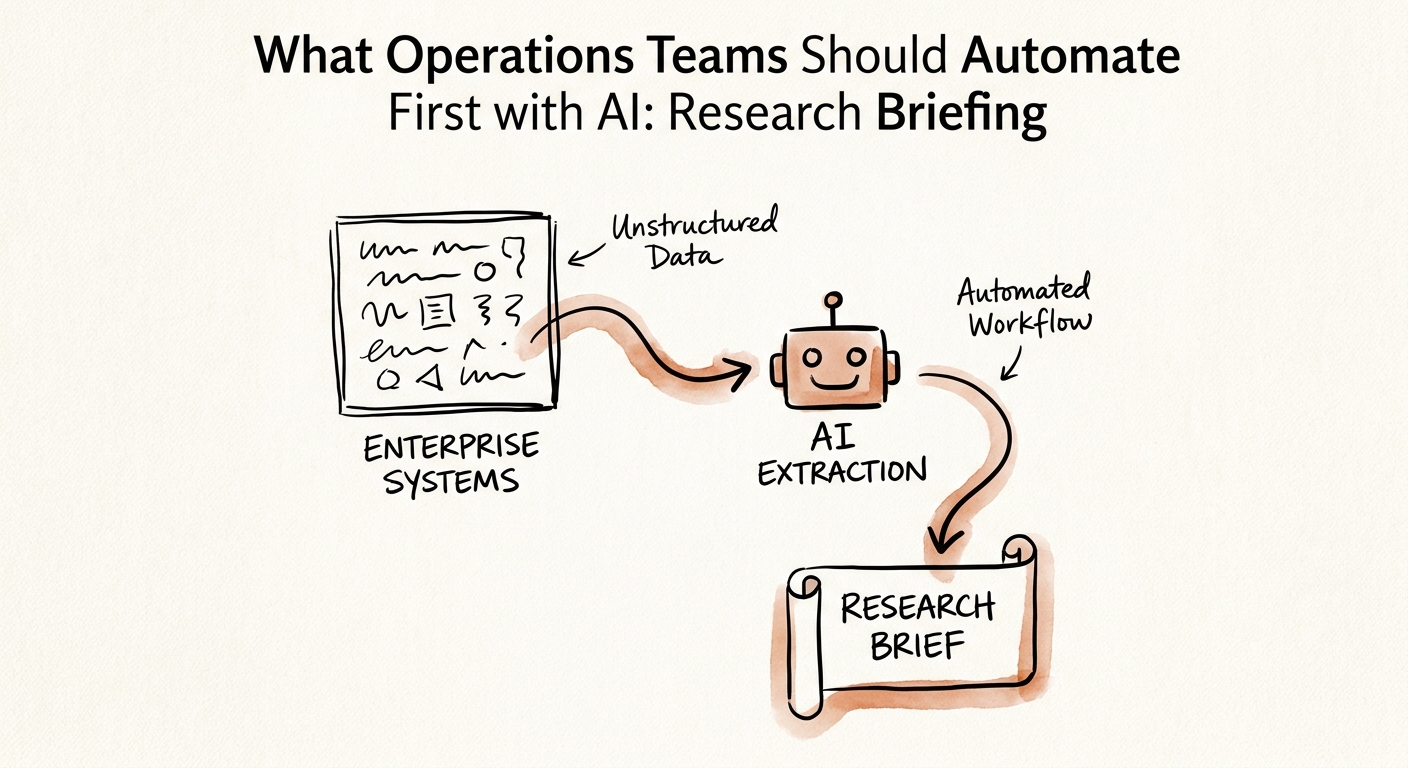
This is why research briefing beats the flashier automation candidates as a starting point. The pressure is real — both the U.S. Census AI business adoption analysis and Deloitte State of AI in the Enterprise 2026 show mid-market operations teams reaching for AI to support decisions — but the briefing case is forgiving. A human still owns the call. The AI's only job is to gather approved sources, summarize the evidence, flag how fresh each source is, and keep facts on one side of the page and recommendations on the other.
Pick exactly one briefing type for the pilot: vendor comparison, a regulatory scan, a market input, or prep for a recurring operating review. One type. The whole point is to be able to read every output yourself for a few weeks and catch where it lies to you.
The failure mode is confidence, not throughput
Here is what goes wrong, and it is not slowness. A research briefing fails by being more convincing than it deserves to be. It cites a vendor's 2023 SOC 2 as if it were current. It folds a superseded internal policy into the same paragraph as the live one and gives them equal weight. It quietly slides from "the contract caps liability at X" into "so we should sign" — turning evidence into advice with no seam you can see. A longer, smoother summary that hides a weak source is worse than the messy half-hour of digging it replaced.
So measure the things that catch that. Before you start, write down your baseline: how long assembling a decision packet takes today, how often a citation is missing or unverifiable, how often the research turns out stale, and how many manager corrections happen before the decision. Then run a short weekly review on the AI's output and count what actually matters — briefings accepted, sources rejected for being too old or unsourced, freshness flags raised, and whether recommendations stayed cleanly separated from summarized evidence. If the only thing that moved is draft volume, the pilot failed even if everyone feels faster.
Only once those measures are real and tied to a named owner should you reach for sizing tools like the AI Opportunity Score or the AI ROI Calculator. Run them before that and you are pricing a workflow you cannot yet trust.
Govern the source list, give the reviewer a red pen
The governance for briefing is narrower than people expect, because the risk is concentrated in two places: which sources are allowed in, and whether a human can push back. The NIST AI Risk Management Framework gives you the structure — name the intended use, the risk, how you measure it, and who is accountable — and for a briefing that mostly means an approved source list, mandatory citations, a freshness stamp on every source, and a standing path for the reviewer to challenge a claim before it backs a decision. The CISA AI data-security best practices should shape what sensitive operating context the tool is allowed to touch, how long briefing evidence is retained, and who can see it.
Practically, that is four rules you can write on an index card: nothing enters a briefing without a citation, every citation carries a date, sources outside the approved list get rejected and logged, and any manager can mark a claim "challenged" and stop it from supporting the decision. Run those for a few weeks on your one chosen briefing type. Expand to a second type only when a manager can point at a specific call and say the briefing made the decision better — not just longer. On Monday, write down your current packet-assembly baseline and name the owner. That single line is the difference between a pilot you can defend and a tool that flatters everyone into worse decisions.