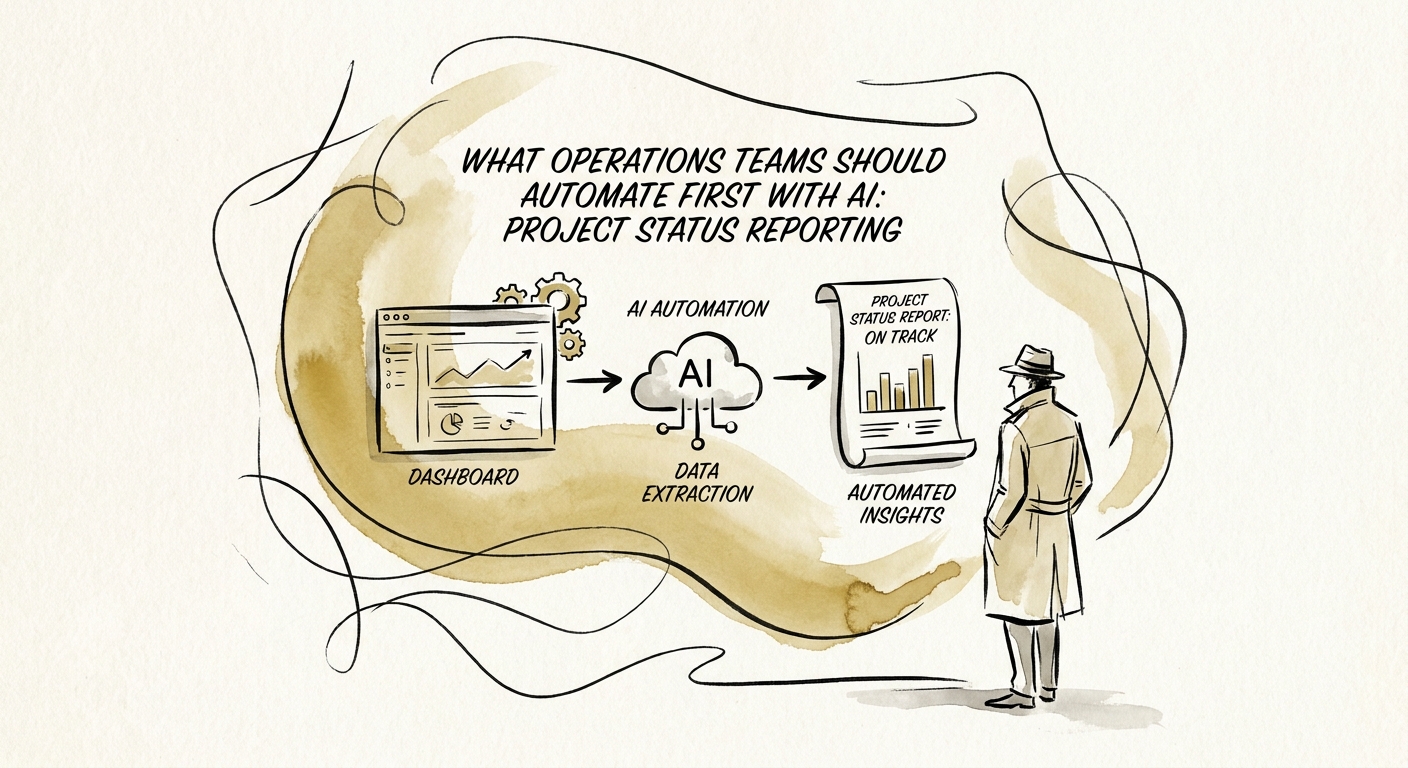
The status rollup is the wound, so stitch it first
Picture the Thursday before a monthly steering review. An ops manager is pasting Jira filters into a deck, chasing two project leads on Slack for "the real number," and reconciling a spreadsheet that disagrees with the Asana board. By Friday the deck looks clean — and three of its fourteen green dots are green because nobody updated them, not because the work is on track. That gap between what the report says and what is actually happening is the single most expensive thing an operations function carries, and it is exactly where a first AI pilot earns its keep.
Status reporting is a good first candidate precisely because it is bounded, repeats on a known cadence, and has a brutally clear definition of success: did the summary surface drift before a human had to discover it in the meeting? The pressure to move here is real — the U.S. Census AI business adoption analysis and Deloitte State of AI in the Enterprise 2026 both show mid-market operations groups adopting AI faster than their governance has caught up. But "report faster" is the wrong target. The target is to compress the loop between a milestone slipping and a decision-maker knowing it slipped.
So scope the pilot narrowly: one program, one cadence. Point the model at your project systems — Jira, Asana, the spreadsheet, the threaded email — and have it produce one artifact: a variance-and-risk brief that names what moved, which blocker is now older than its owner's last update, and which "asks" have no decision attached. That brief goes to the ops lead before the meeting, not to the executives instead of it.
The failure mode is confident green, and you measure for it
The way this pilot goes wrong is specific and predictable. The model reads a Jira ticket last touched eleven days ago, sees no red flag in the text, and reports it green. Now you have laundered a stale field into executive confidence — worse than the manual deck, because at least a human pasting that field might have squinted at the date. So the metric that matters is not "hours saved." It is how many stale updates the summary catches versus misses, and how many corrections a manager has to make to the brief before it is trustworthy.
Set the baseline honestly before you turn anything on. How many minutes go into the manual rollup each cycle? How many blockers surface in the meeting that were already knowable from the data three days earlier? How much of the meeting itself is spent arguing about which status is current rather than what to do about it? Those four numbers are your before-picture. Then run the review weekly and watch the ratio of manager corrections trend down. If at week six a manager still rewrites half the brief, the pilot is failing and you stop — you do not scale a habit of editing the robot.
The win condition is concrete: drift shows up in the brief earlier than it used to show up in the room, and the brief needs fewer corrections each cycle. Once those two lines are moving the right way and tied to a named owner, a structured read with the AI Opportunity Score or the AI ROI Calculator tells you what the next automation is worth — but run those after the behavior changes, not as a substitute for proving it did.
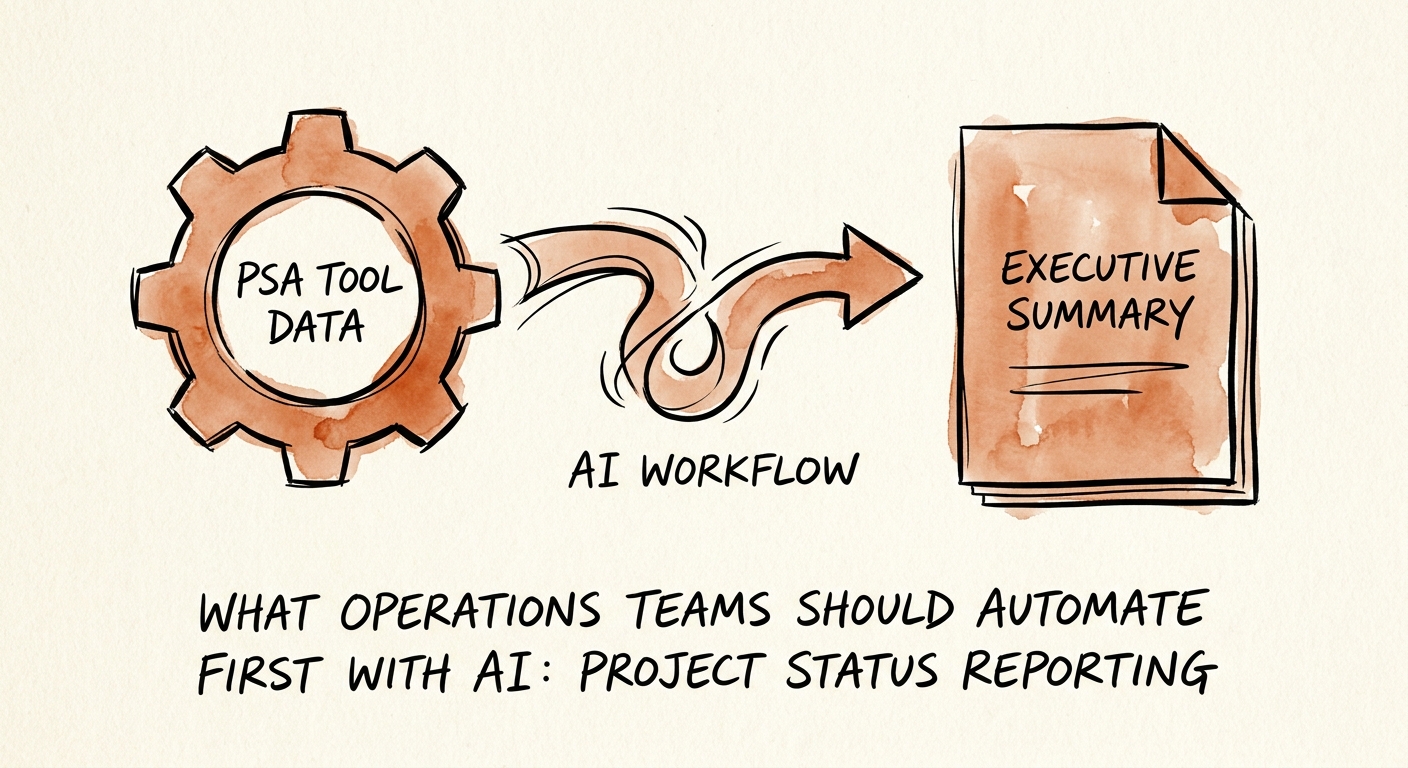
Govern the source of record, not the prose
Status reporting has a governance trap that other automations don't: the output is read by people who make capital and staffing decisions, and they assume the underlying record is real. So the controls belong on the inputs, not the wording. The NIST AI Risk Management Framework gives you the shape — map the intended use (pre-meeting drift detection, not executive sign-off), name the risk (stale data presented as fact), define the measurement (correction rate), and pin accountability to a person. For a status pilot, that means writing down which system is authoritative for each project, so the model never silently averages a fresh Asana board against a three-week-old spreadsheet.
Access is the other half. Project systems hold delivery context, client names, and internal timelines that should not leak into a prompt log or a summary that gets forwarded. The CISA AI data-security best practices should shape what the pilot can read and what it retains. Three rules cover most of it: detect and flag any field stale past a threshold, mark low-confidence lines instead of smoothing them into green, and require a human to clear the brief before it reaches anyone above the ops lead.
Here is what you can do Monday: pick one program, write down its single source of record per project, set a staleness threshold, and run the model against last cycle's data as a dry run — then compare its brief to what actually got argued about in that meeting. That one comparison tells you whether this is worth scaling before you spend a dollar on the next cadence. Only widen to adjacent management routines once the brief is exposing drift earlier and your managers trust the source trail behind it. Build the AI roadmap from there.