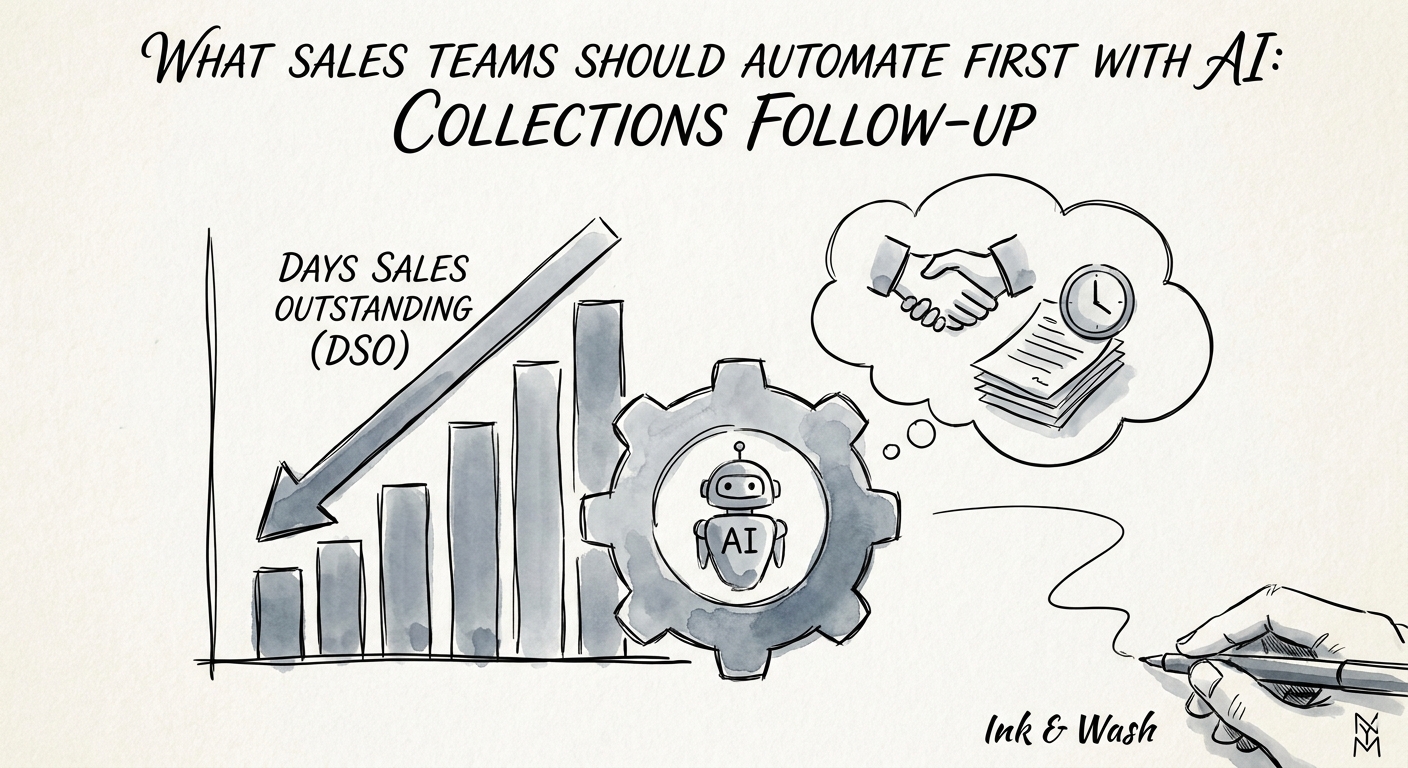
The invoice and the renewal are the same relationship
Picture a 60-person B2B software firm. An account manager owns a customer that's 40 days past due on a $90K invoice — and also up for renewal next quarter. In a finance team, a clerk fires off a dunning notice and moves on. But on a sales team, the person chasing that payment is the same person who needs the customer to re-sign. That changes everything about what you should let AI do first.
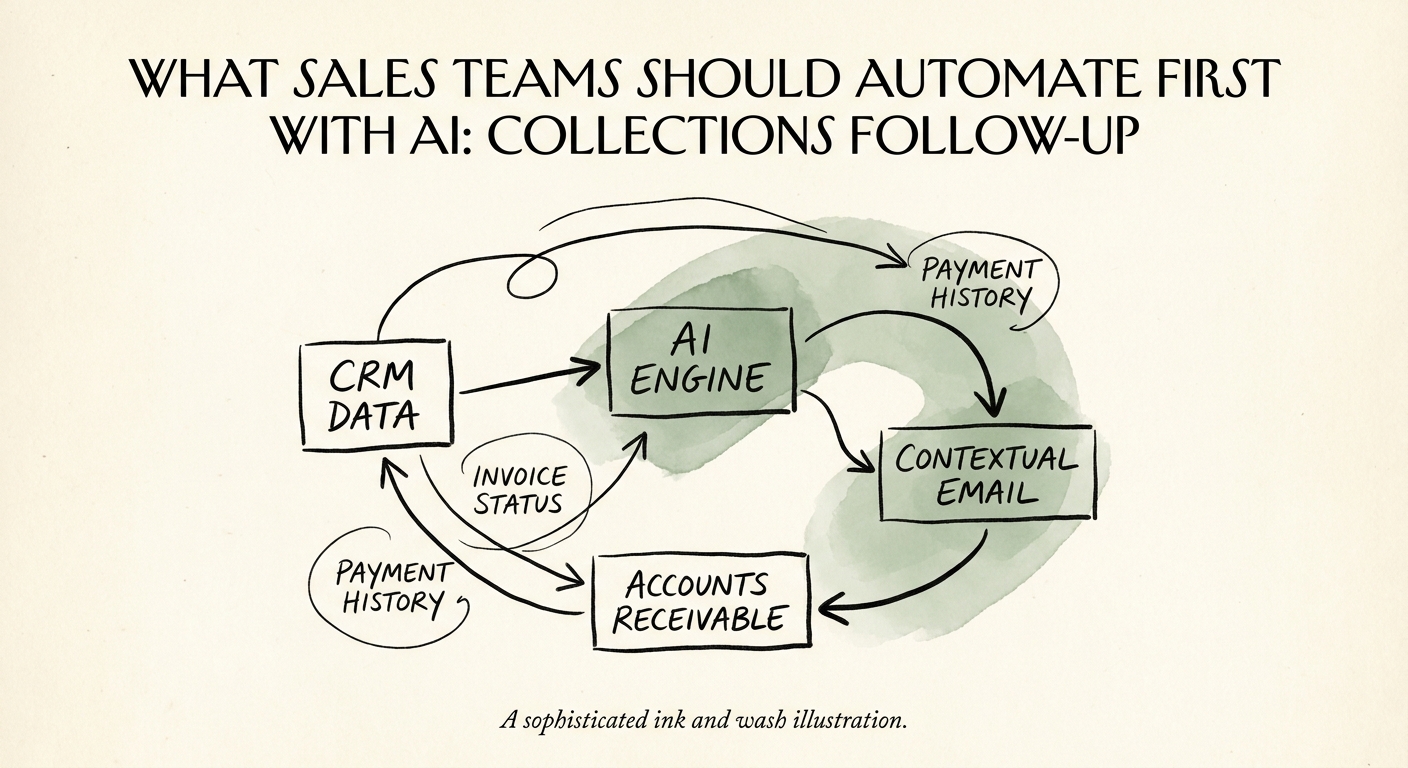
This is why I keep telling revenue leaders the obvious first automation is not an autonomous email engine. It's collections follow-up — but specifically the version sales owns, where the AI's job is to assemble account context before anyone touches the customer. The Salesforce State of Sales report frames the constraint well: sales execution lives or dies on clean account data and trusted signals, not on more activity. So have the AI pull the open opportunities, the unresolved support tickets, the last note the relationship owner left, and the actual invoice status — then draft a follow-up the rep reviews. The output is inspectable, the source systems are named, and the rep can judge whether the queue made the next conversation sharper or dumber.
The real value is the sends you stop
The feature that earns its keep here isn't the email it writes — it's the email it refuses to write. The system should hard-flag four situations before a single follow-up gets drafted: an open billing dispute, a live renewal negotiation, an executive escalation in flight, or a service credit the customer is still waiting on. Dunning a customer who's furious about a broken SLA, in the same week your colleague is negotiating their renewal, is exactly the own-goal a blind automation produces. The NIST AI Risk Management Framework is useful precisely because it treats context-blindness as a risk to manage, not an edge case to ignore — and in a sales relationship, the blast radius of one tone-deaf send is measured in lost annual recurring revenue, not a late fee.
There's a prerequisite people skip. The IBM Institute for Business Value AI capabilities research keeps landing on the same point: AI needs reliable inputs and a named owner, or it amplifies your mess at machine speed. If your CRM notes are three months stale, your invoices live in a finance system the reps can't see, and support context never syncs, then the first project isn't the automation — it's making those three account checks (status, open dispute, relationship owner) actually resolvable. Wire the plumbing before you wire the bot.
Measure it like RevOps, not like a mail-merge
Volume is the vanity trap. A pilot that "sent 400 follow-ups" tells you nothing; a pilot that surfaced 12 accounts where a send would have damaged a renewal tells you a lot. Track five things instead: reviewed-queue volume, bad sends the system caught and held, days-to-dispute-resolution, account-owner adoption (are reps actually using the queue or routing around it?), and follow-up quality as the owners rate it. The McKinsey State of AI research is blunt that the gains come from redesigning the workflow and getting people to adopt it — not from the model name on the slide. If reps trust the queue, you win; if they don't, the model quality is irrelevant.
On Monday, do one thing: pull a list of your 20 most-overdue accounts and tag which ones are also in an open opportunity, dispute, or renewal. That single overlap map will show you, in an afternoon, how much risk a naive automation would have created. Then pressure-test workflow fit with the AI Opportunity Score, and if it holds up, move into an AI Transformation Blueprint so revenue operations, finance, and customer success agree — in writing — on who owns the send and who can stop it.