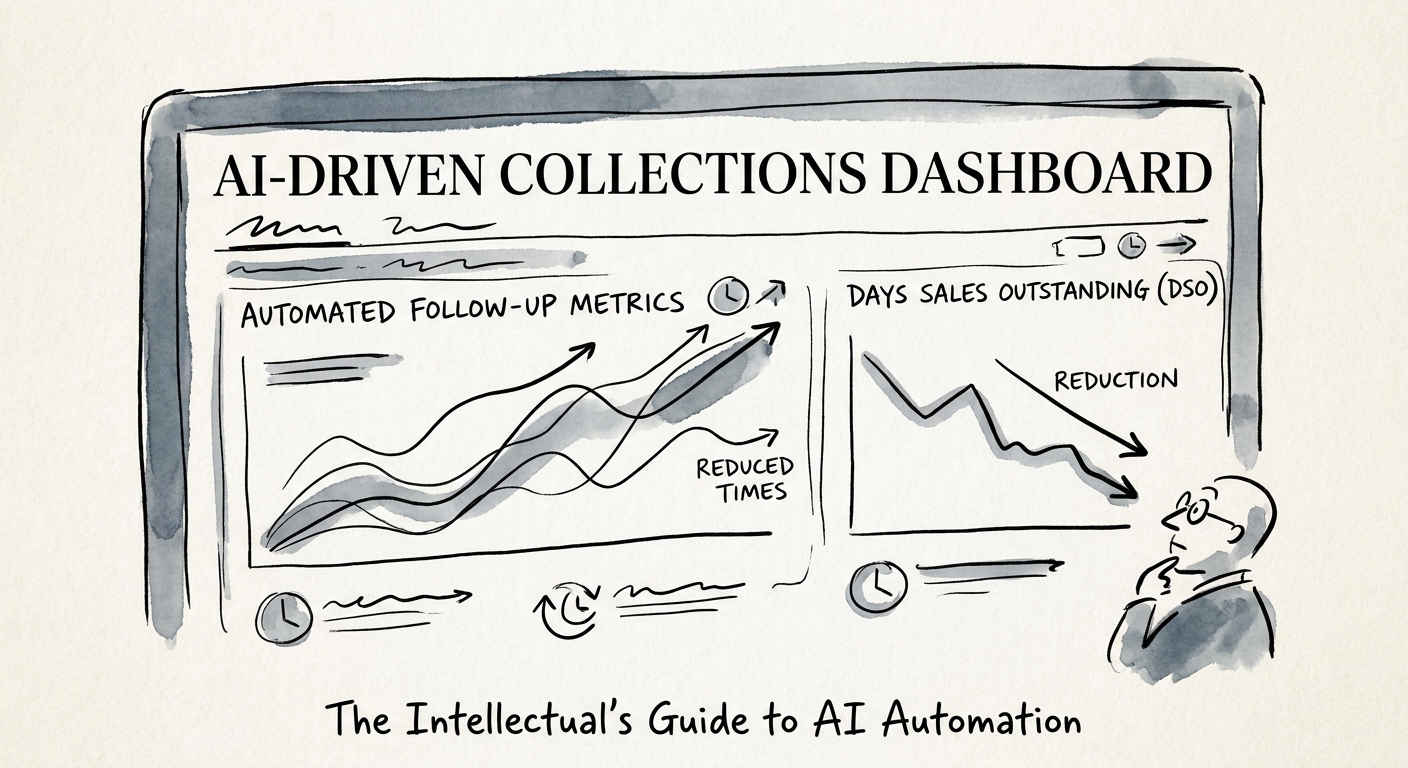
The reminder that cost you the renewal
Here's the scene that should make every service leader nervous. A customer is 18 days late on a $9,400 invoice. They also have an open support ticket about a feature that broke their workflow last week, and they're up for renewal in 60 days. Your automated dunning sequence doesn't know any of that. It fires a "Your payment is overdue" email on day 15. Now the customer feels squeezed for money on a product that's currently failing them—and your CSM finds out when the renewal call goes sideways.
That's the trap most teams fall into when they automate collections: they automate the send instead of the judgment. The right first AI workflow for a customer-service team doesn't push messages out the door faster. It assembles the full account picture—invoice record, payment history, open tickets, disputed line items—and hands the account owner a brief before anyone reaches out. This matters more than ever because the line between support, success, and account operations has blurred; the Salesforce State of Service 2025 describes service work spilling across exactly those boundaries. The person chasing a late invoice is often the same person managing the relationship.
And follow-up quality lives or dies on that relationship. The Salesforce State of Sales research is a useful reminder that commercial outcomes track with how well you understand the customer's context. A generic reminder treats a 200-employee logistics client and a three-month-old SMB account identically. They are not identical, and your follow-up shouldn't pretend they are.
What the AI should hand the human (and what it should never do alone)
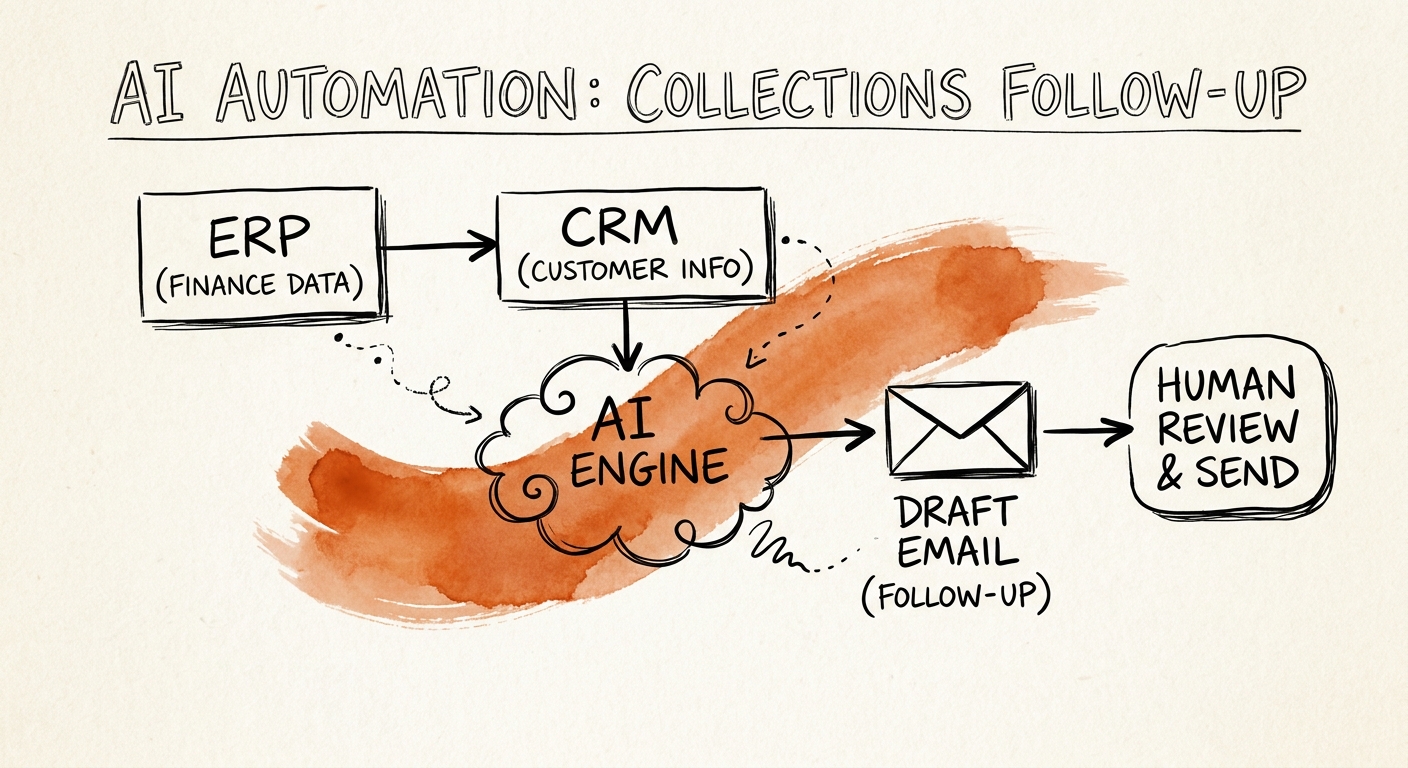
Draw the line clearly: the AI prepares, the human decides and sends. For a collections follow-up, that means four things land on the account owner's desk before a single message goes out—the invoice record, the customer context (tenure, support status, renewal date), a dispute check against any flagged or contested line items, and an approval gate that requires a person to click send. Notice what's missing from that list: the AI does not email the customer. External delivery stays behind human review, every time.
Why so cautious about a back-office task? Because collections communication touches trust, retention, and how revenue actually gets treated—which is precisely the kind of consequential decision the NIST AI Risk Management Framework says needs defined boundaries, traceable source evidence, and a named human owner for exceptions. A wrong dunning email isn't a typo. In a live account, it's a relationship event.
Most teams say they take responsible AI seriously and then never operationalize it; the PwC Responsible AI survey captures that gap between intent and practice. Here, "operational" is concrete and boring on purpose: approval required before outreach, an explicit tone rule (you're informing a customer, not pressuring them), and a hard stop that routes any invoice with a disputed line item to a human instead of a reminder. Say a 40-person services firm sets that disputed-invoice rule—now the account already arguing about a charge never gets a "pay now" nudge that pours fuel on the fire.
Five numbers that tell you it's working—or quietly failing
Most teams measure collections by days-sales-outstanding and stop there. For an AI-prepared workflow, that's not enough, because a workflow can shave DSO while torching accounts. Watch these instead. Draft correction rate: how often the account owner has to fix the AI's brief before acting—high and stubborn means the source data is wrong. Disputed-invoice detection: is the dispute check actually catching contested items, or are they slipping into reminder sequences? Source completeness: how often the brief arrives with the full picture versus gaps the human has to chase down. Approval time: is the prep saving the owner real minutes, or just adding a review step? Customer-response quality: are follow-ups producing payment and a civil reply, or payment and a frosty renewal?
If the workflow is doing its job, the account owner walks into every follow-up already knowing the story—who's late, why, what's contested, and what's at stake in 60 days. That's the whole point: it makes the human conversation sharper, it doesn't replace the human's read on the account.
Monday, pick your five worst-performing collections situations from the last quarter and ask one question of each: would an AI brief that surfaced the open tickets and disputes have changed how you handled it? If the answer is yes more than twice, you have your first workflow. For where the same prepare-don't-send line applies to finance, see the finance AI governance guidance, and pressure-test the math on your own volume with the AI ROI Calculator.