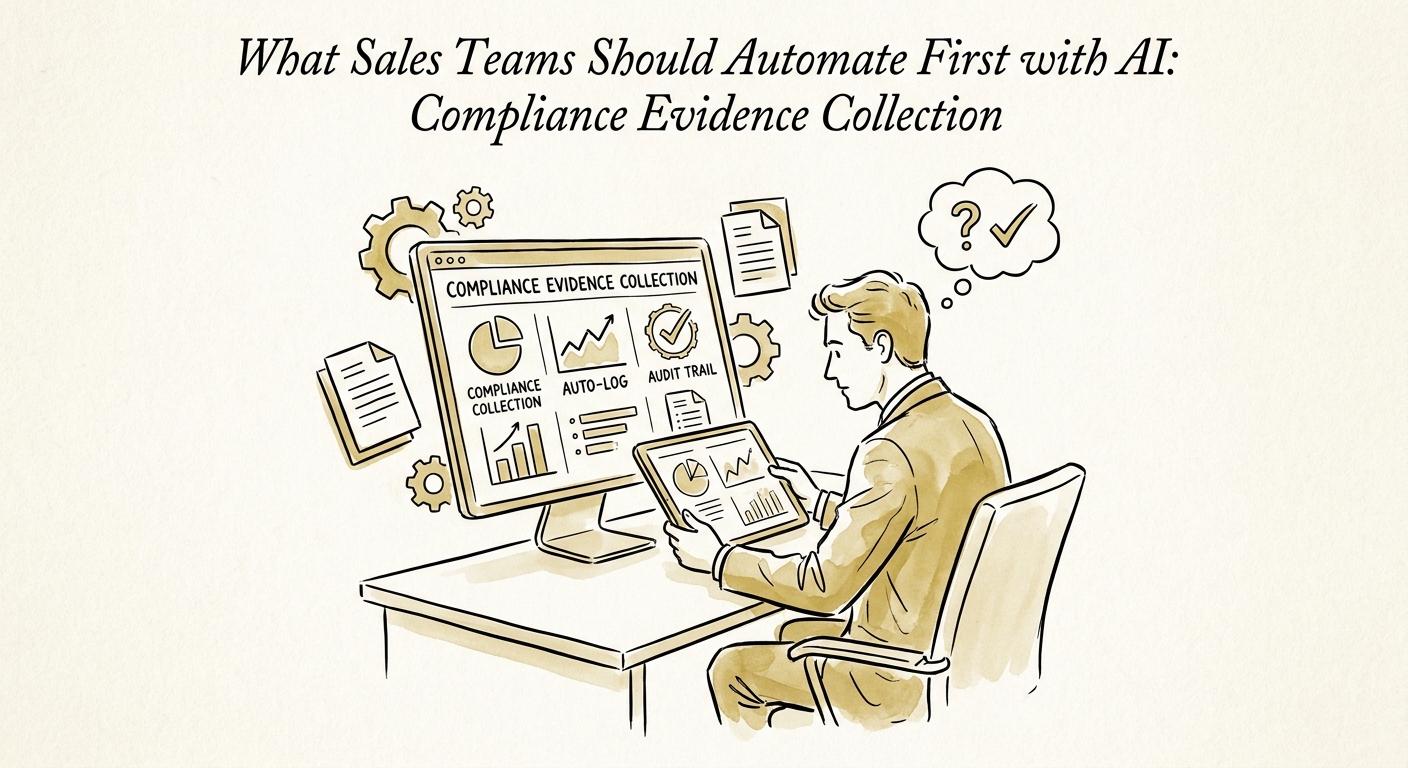
The 300-question SIG that arrives the day after verbal yes
You've worked a deal for four months. The economic buyer says yes on a Thursday. On Friday their security team forwards a SIG Lite, a SOC 2 request, a data-flow diagram ask, and forty custom questions about how you handle their PII. Now the deal sits — not because anyone objects, but because the answers live in seven different heads and four stale folders. Your VP of Sales pings your one security-literate engineer, who is mid-sprint and treats the questionnaire as an interruption. Two weeks evaporate. The buyer's enthusiasm cools by a degree every day it drags.
This is the workflow a 40-to-200-person B2B software or services vendor should automate before almost anything else in the sales stack. Not the cold email. Not the call summary. The security and compliance questionnaire — because it is the one place where a fast deal goes to wait, and where the cost of waiting is measured in closed-won slipping a quarter. The right job for AI here is narrow and specific: take an inbound questionnaire, match each question to an already-approved answer in your library, flag the questions where your approved evidence is missing or expired, and assemble a draft packet for a human to sign off. That is the entire mandate.
The thing it must never do — and the reason most teams get this wrong — is generate posture. If a buyer asks "Do you encrypt data at rest with customer-managed keys?" and you don't, a confident-sounding AI answer is not a productivity win. It's a material misrepresentation in a procurement document, and it surfaces during the buyer's audit, in the relationship's worst possible moment.
Build the answer library before you build the assistant
Here is the sequencing most teams invert: they buy a tool that drafts questionnaire answers, point it at their existing chaos, and discover it cheerfully scales whatever fiction was already in the folder. Spend the first three weeks of any pilot on the library, not the model. Pull every answer you've given in the last year of security reviews into one place, then have your security owner mark each one with three things: the source document it points to, who approved it, and the date it expires. A SOC 2 report is good for a fixed window. A pen-test summary ages. An access-control policy is only true until the next reorg. The expiration date is what keeps the system honest.
Once the library is clean, treat data boundaries as part of the design — not a setting you tune later. The CISA AI Data Security Best Practices guidance is directly relevant here because the evidence itself — your audit reports, network diagrams, customer-specific commitments — is exactly the sensitive material you'd never want a model to leak into the wrong response or retain where it shouldn't. Scope retrieval so the assistant can read your approved answer library and nothing adjacent to it. If you're running this on a platform like Microsoft 365 Copilot, the permission boundaries that govern what it can surface are the actual product, and you should be able to explain them to a buyer's auditor on demand.
For the answers themselves, structure beats fluency. Map your evidence against a recognized control vocabulary — the NIST Cybersecurity Framework 2.0 gives buyers a shared language, so a question about incident response maps to your documented IR process rather than to whatever the model improvises. And govern the failure mode that matters most — the confident wrong answer — with the NIST AI Risk Management Framework. Concretely: every drafted answer carries its source document, its approval status, its expiration date, and a flag if it touches a high-risk category (a security guarantee, a legal representation, a customer-specific exception). Anything flagged routes to a named human before it goes anywhere near the buyer.
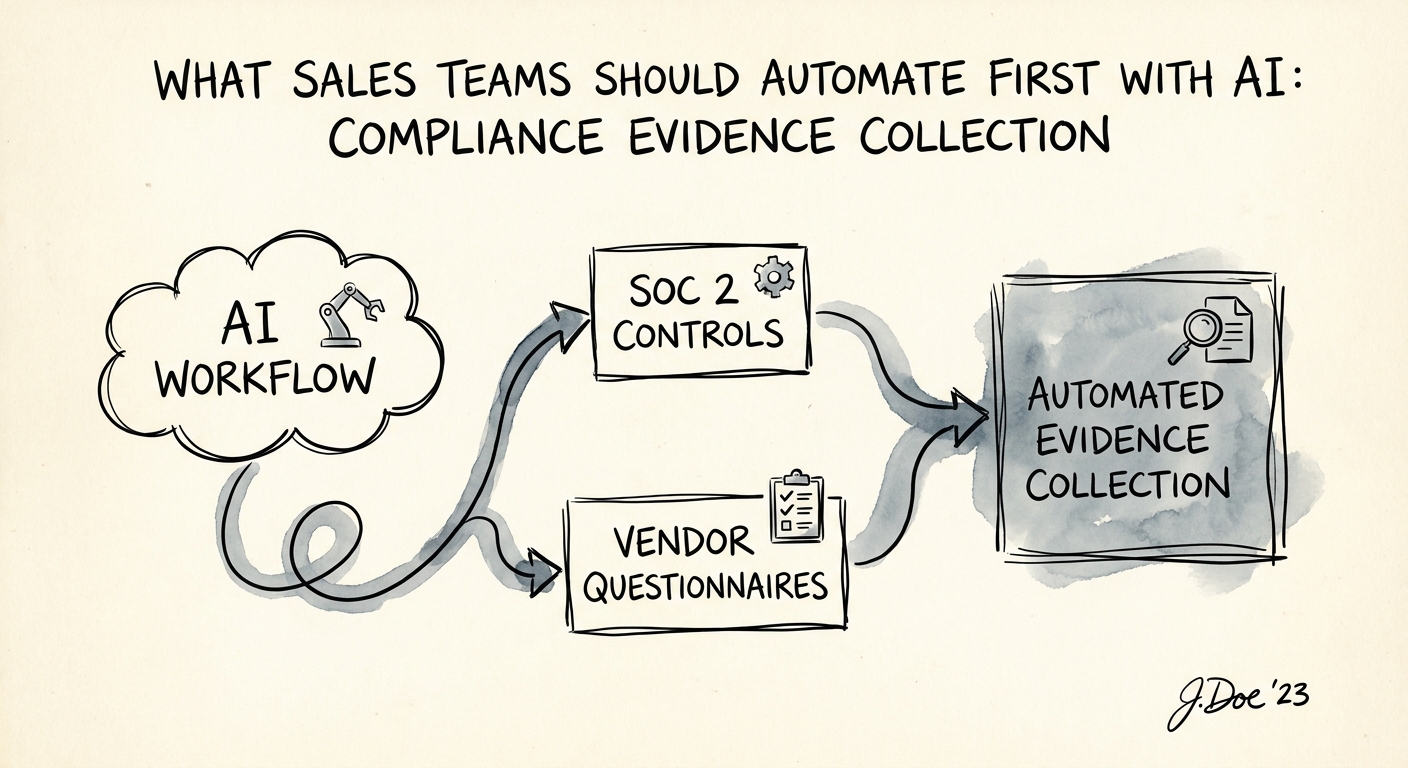
The metric that matters is "answers an auditor could open"
Cycle time is the obvious number, and yes, watch it — a questionnaire that took three weeks should take three days. But the metric that actually protects you is coverage: what share of your answers point to a current, approved document a buyer's auditor could open and verify. Track that, plus the count of questions that repeatedly land in the "no approved evidence exists" bucket. That bucket is gold. It's a prioritized list of the controls and documents you're missing — the ones that will block the next enterprise deal — handed to you by the buyers themselves. Assign each recurring gap an owner and a due date.
Keep your security owner as the final signature on anything that asserts a guarantee, makes a legal claim, or grants a customer-specific exception. The AI gathers the proof and writes the first draft; a human who can be held accountable owns what ships. This isn't a hedge — it's the design. The win is that your one security-literate engineer reviews a pre-assembled packet with sources attached in twenty minutes, instead of building the whole thing from scratch in a day and a half.
And when you tally the return, count it honestly. The hours saved are real only if approved evidence got genuinely faster to find and your reviewer caught fewer late corrections — see measuring AI ROI without fake savings for how to keep that math clean. Monday move: pick the last three security questionnaires you answered, dump every answer into one sheet, and mark which ones still point to a document that hasn't expired. That sheet is your pilot.
