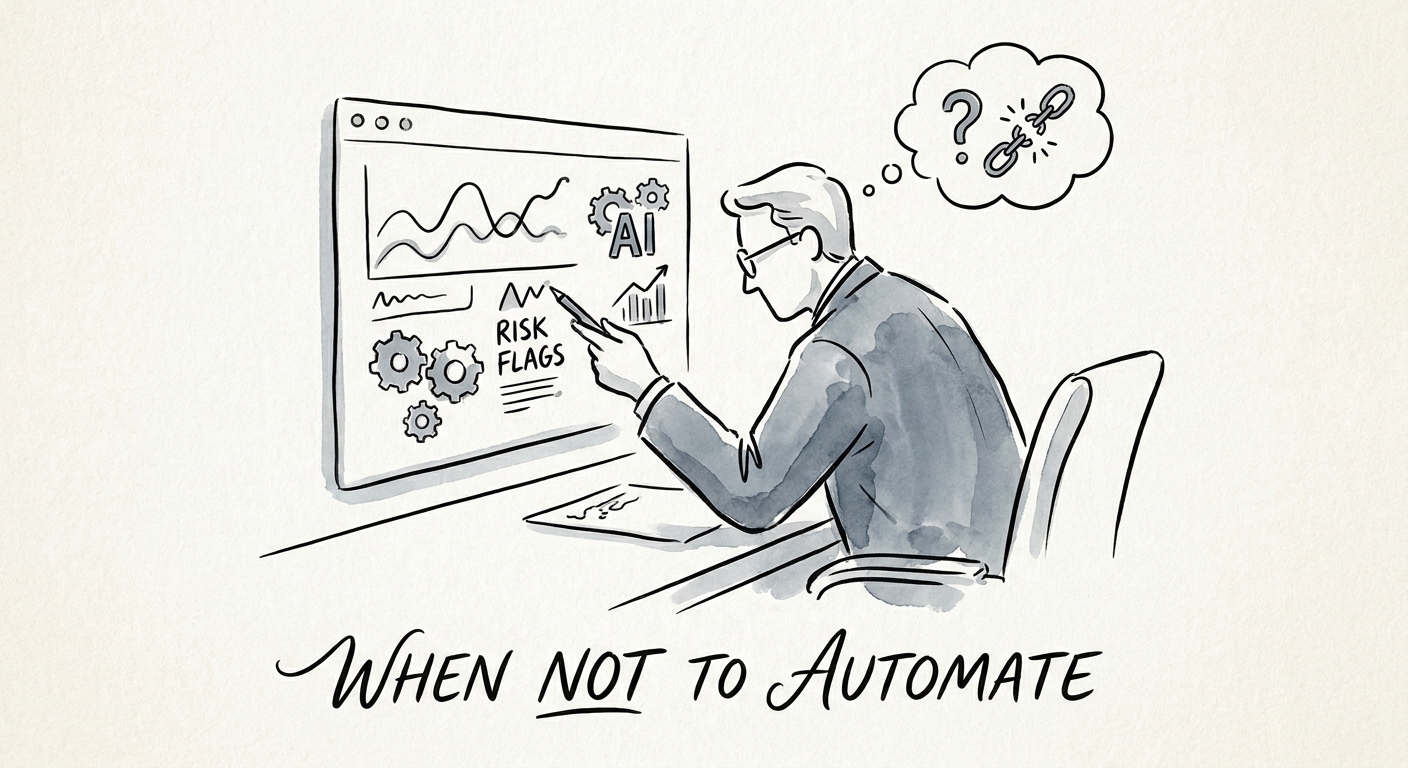
One webinar became a product roadmap nobody signed off on
Picture a 60-person professional services firm. The founder records a 45-minute webinar, the marketing lead drops the transcript into a repurposing assistant, and by Friday there are eleven LinkedIn posts, three email sequences, a one-pager, and a "frequently asked questions" block for the sales team. Volume looks like a win. Then a prospect emails back quoting a guaranteed timeline that the founder never offered, that legal never reviewed, and that the delivery team cannot hit.
That is the specific failure of automated content repurposing: it is fan-out, not authorship, but the model does not know the difference. Asked to write "an engaging post," it rounds a hedged statement ("we typically see results in a quarter or two") up to a promise ("results in 90 days"). It compresses a caveated case study into a clean number. Across forty derivative assets, dozens of small upgrades quietly become claims your company never made and cannot defend.
The temptation is understandable. The RSM middle-market AI survey shows mid-market leaders racing to operationalize AI, and content is the obvious first lane. OpenAI's enterprise privacy commitments mean your transcripts won't train someone else's model. But privacy answers "is my data safe?" — it says nothing about whether the words coming out the other end are things you actually believe.
The test isn't "can it write?" — it's "was this message already approved?"
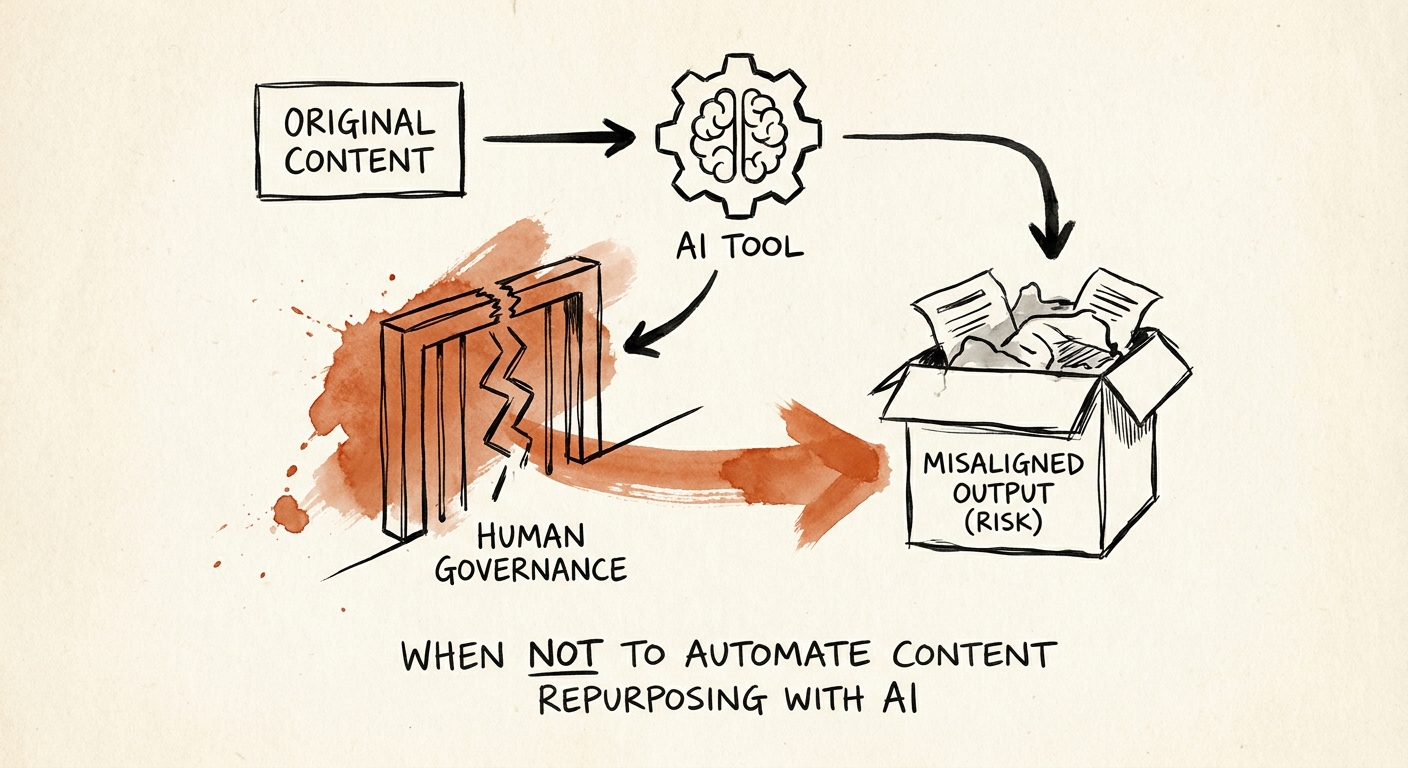
Repurposing is the one AI content use case that is genuinely safe to scale, but only inside a hard boundary: the source has to be settled before it fans out. Automate the derivative work. Never automate the decision about what the company is saying. The line runs straight through your source material.
Tag every input before it touches the tool. Green: an approved, published asset where the claims, numbers, and positioning have already cleared their owners — last quarter's case study, a shipped landing page, a pricing FAQ legal already signed. That content can be sliced into posts, emails, and snippets all day. Red: anything where the message itself is still in motion — a strategy debate between sales and product, a customer story you haven't gotten written permission to use, a regulated or outcome claim, a "draft" that only feels finished. Feed that to a repurposing engine and you are not reusing a message, you are minting one. CISA's guidance on securing AI training and operating data is a useful frame here: the discipline you apply to what data goes into a system is exactly the discipline a content owner needs over what source goes into the repurposing prompt.
The NIST AI Risk Management Framework gives the four moves in operator terms. Map: know the provenance of every source asset and who owns each claim in it. Measure: count what reviewers strike out of the generated derivatives. Manage: attach an expiration date to source assets (that "92% retention" stat is true until it isn't) and route any regulated, security, or customer-specific language to a named human. Govern: one person owns the green/red list. Start with a single green lane — say, one evergreen service page fanned into a month of posts — and prove the strike rate is low before you add a second.
Track the strike rate, not the output count
The vanity metric is assets produced. The metric that tells you whether the workflow is healthy is the strike rate: of every ten derivatives the tool generates, how many sentences does a human have to cut or correct before publishing? If a reviewer is killing one claim in three, the tool isn't your problem — your source library is full of unsettled messaging, and you should fix that before you scale the volume. A clean source set should fan out with almost nothing struck.
So watch four numbers in your first month: claims corrected per ten assets, drafts blocked because the source was red-tagged, customer-facing errors caught in review, and approval cycle time. When the strike rate falls and stays low, open the next lane. When it spikes, you've found a content owner who needs to settle a message — not a model that needs a better prompt. The accountable human still decides what the company says; the machine just helps it travel faster.
This is also where the business case stays honest. The value of repurposing AI is faster reuse of messages you already stand behind — not a bigger pile of copy nobody vetted. Tie the program to that, and read how to measure AI ROI without fake savings before you report a single time-saved number. Then pick your one green lane and run it for thirty days.