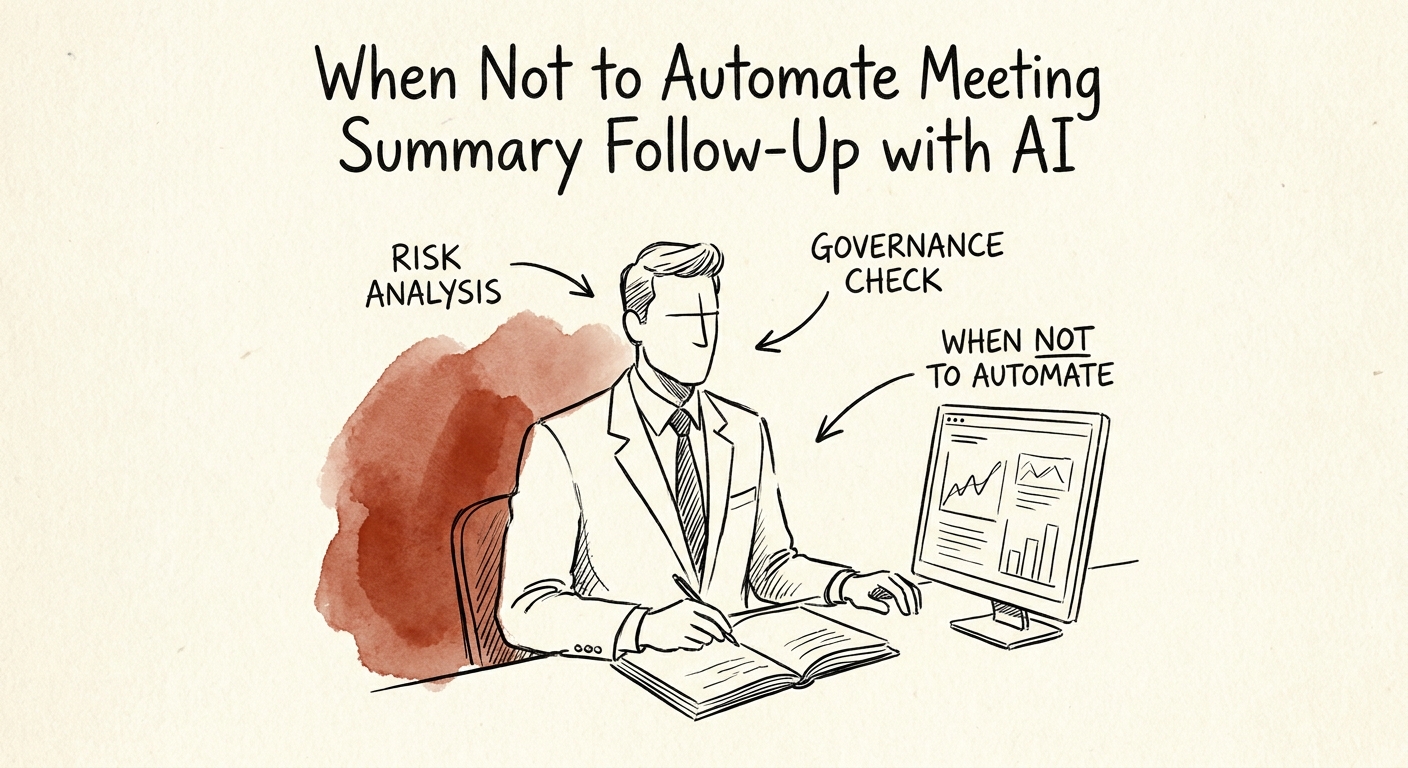
The transcript heard "maybe." The AI wrote "yes."
On a Thursday client call, your account lead says: "We could probably look at pulling the migration date forward — let me check with delivery." Forty seconds after the call ends, the AI note-taker fires off a recap to the client's procurement team. Action item, owner, due date: "Human Renaissance to move migration to the 15th." Nobody checked with delivery. Nobody decided anything. But it's now in writing, in the client's inbox, with your firm's name on the commitment.
That is the specific failure mode of automated meeting follow-up in a B2B services or technology shop, and it is different from every other place you might deploy AI. A summary that stays in your own Slack is low-stakes — if it's wrong, you reread the transcript. A summary that auto-sends to a customer is a different animal entirely: it manufactures obligations. The model is excellent at hearing words and terrible at knowing which words your firm is authorized to turn into a promise.
Microsoft 365 Copilot's data protection architecture is genuinely strong on the parts that get most of the attention — identity, permissions, who can see the transcript, what gets logged. Lean on it. But notice what it does not do: it does not decide whether "let me check" should become a dated deliverable in an external email. Access control is not commitment control. The second one is a human job, and on client-facing follow-up it has no substitute.
Sort your meetings by who's on the other end, not by convenience
The mistake teams make is writing one automation rule for "meetings." But a 9 a.m. internal standup and a procurement renegotiation are not the same risk, and treating them the same is how the recap email above goes out. Build the rule around the room:
Internal-only (standups, retros, 1:1s): Let AI summarize and even post to your team channel. Worst case is a wrong line someone corrects. Auto-send is fine.
Routine client touchpoints (status calls, check-ins): AI drafts the recap. A human reads it before it leaves the building. Specifically, they confirm every line that names your firm as an owner — because those are the lines that bind you.
High-stakes (escalations, contract or pricing talks, anything board-adjacent): AI captures notes for the file. It sends nothing externally, full stop. The account owner writes the follow-up by hand. The cost of a wrong word here dwarfs the minutes you'd save.
This tiering is the practical read of the NIST AI Risk Management Framework: map the context (who's in the room), measure the errors (how often the draft invents or misattributes a commitment), manage the controls (the send gate), govern over time. And the gate only works if people actually use it — which is the uncomfortable finding in the PwC Responsible AI survey: controls that exist on paper but get clicked through under deadline pressure protect nobody. If your "review step" is a button reps mash on the way to the next call, you don't have a control. You have a delay.
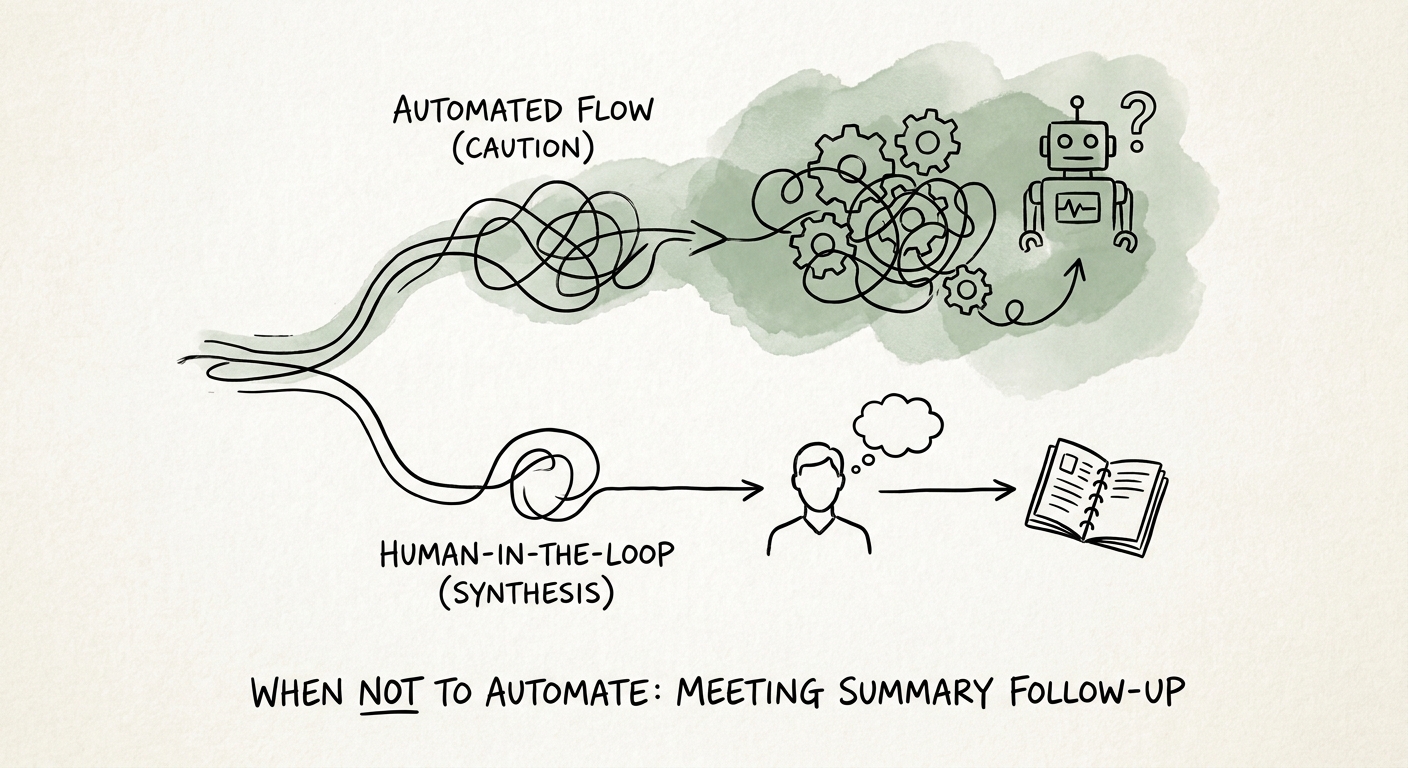
The metric that tells you when to take off the leash
Most teams either trust the AI on day one or never trust it. Both are wrong. The right move is to run it gated and instrument it, then earn the loosening. Track one number above all: commitment edit rate — of the action items the AI assigns to your firm in client recaps, what percentage does a human change, delete, or soften before sending? Watch it weekly. When a 40-person agency sees that rate fall from, say, one-in-three drafts needing a fix down to near zero across a couple hundred calls, that's the signal a given meeting tier has earned lighter review. Until then, the external send stays off.
Also worth logging: how long owner confirmation actually takes (if it's instant, nobody's reading), and whether anything the AI wrote ever touched a CRM field unreviewed — because a phantom commitment buried in an opportunity record is worse than one in an email; at least the email gets read. This mirrors the core lesson of the McKinsey State of AI 2025: value shows up when you redesign the workflow, not when you bolt automation onto the old one. The redesigned path is capture, draft, extract actions, confirm owners, then human-approved send — and the send is the last gate to open, never the first.
If you want to map which of your meeting types are safe to automate today versus which need to stay hand-written, our AI workflow automation work designs that approval path, and the AI Opportunity Score will tell you honestly whether client follow-up even belongs near the top of your list or behind three safer internal wins.
