The lead you never knew you lost
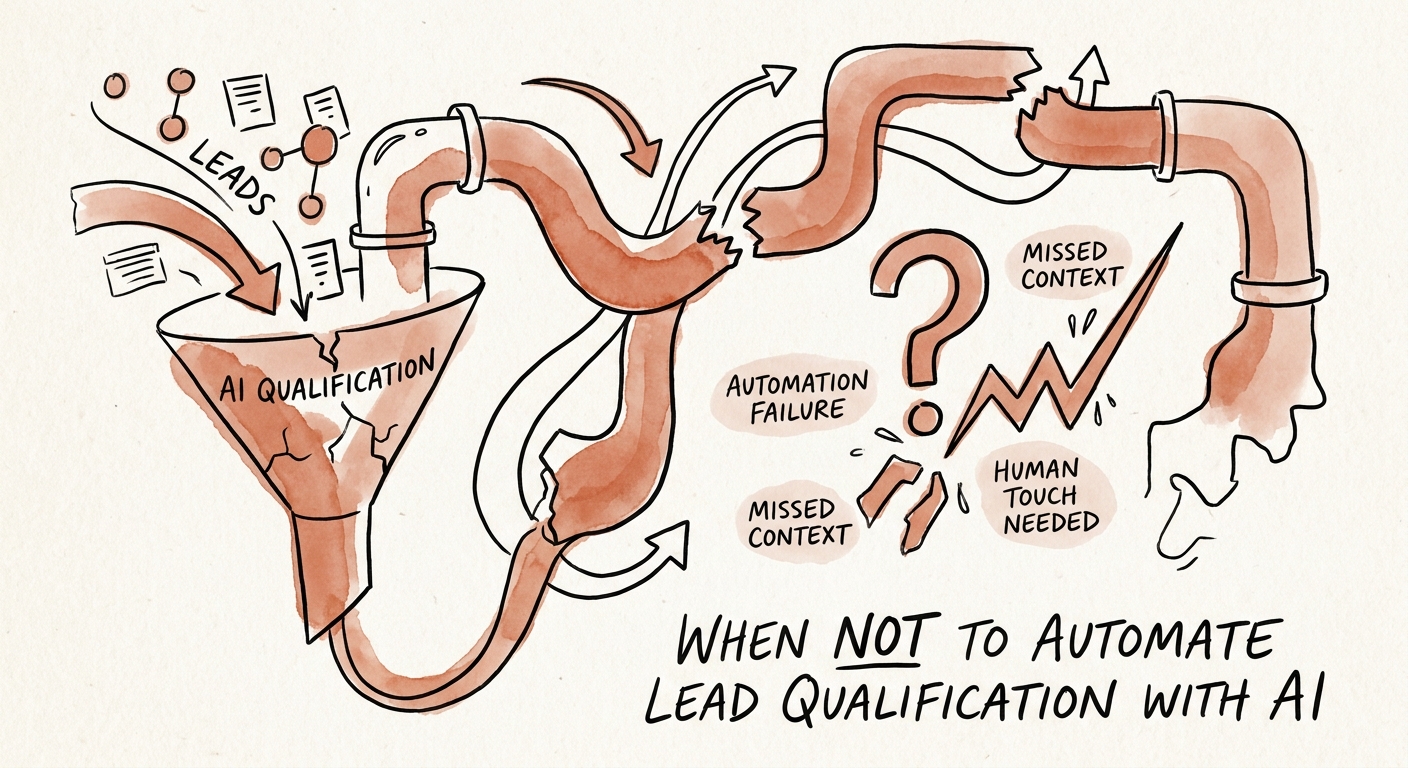
A director at a company you've been chasing for two years fills out your demo form on her phone between meetings. She skips the "company size" dropdown, types "Acme" instead of the full legal name, and uses a personal-looking email because she's logged out of her work Gmail. Your AI qualification model sees a thin record with three missing fields and a low firmographic match. It scores her a 31 and drops her into the 90-day nurture sequence. Nobody on your team ever sees the lead. The deal goes to a competitor, and your pipeline report shows nothing wrong — because as far as the system is concerned, nothing went wrong.
That is the real hazard with automated lead qualification, and it's a different animal from automating, say, invoice coding or ticket tagging. A misrouted lead doesn't throw an error. It vanishes into a logical-looking bucket. The Salesforce State of Sales data is worth reading here precisely because it shows sales teams racing to adopt AI while still running on incomplete CRM records and rep judgment that lives in nobody's database. You can't automate a decision that depends on context the model can't see.
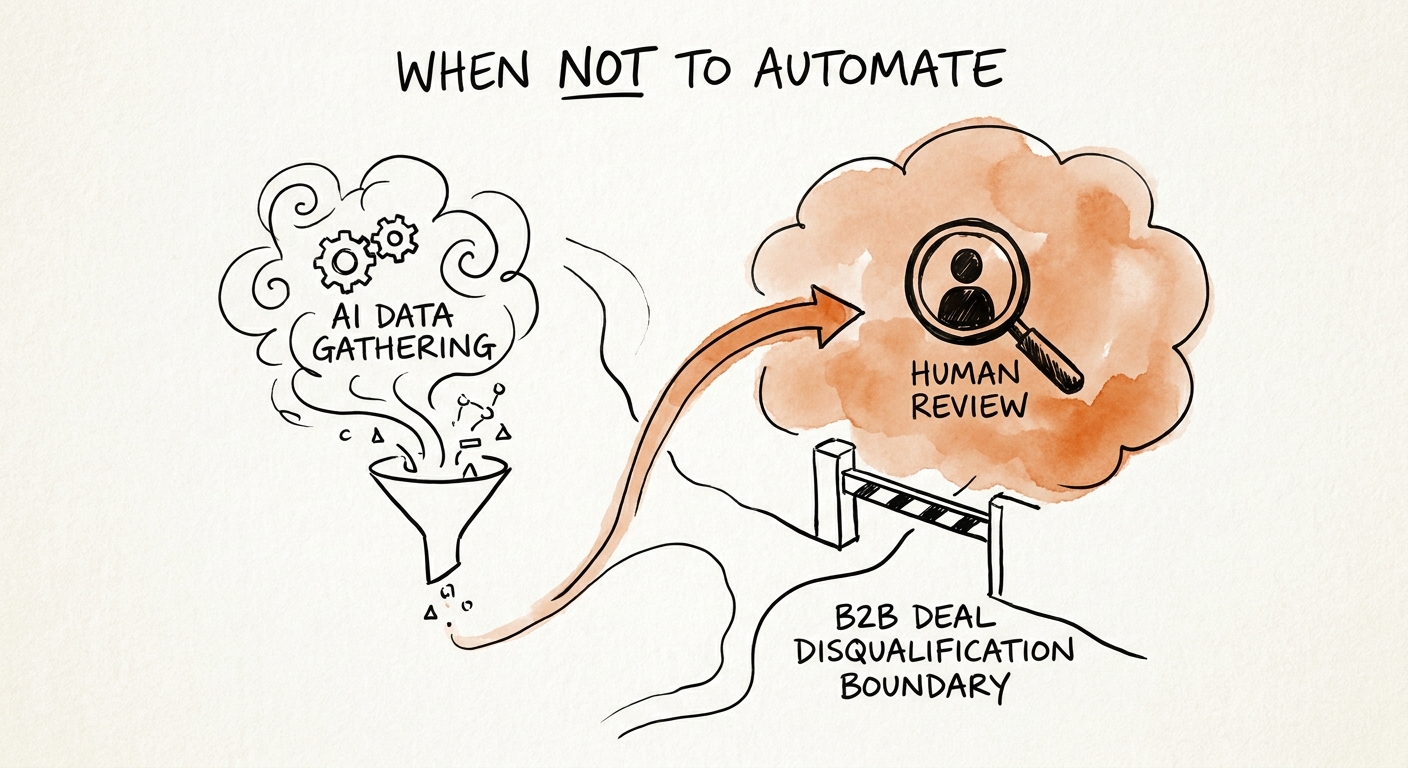
So draw the line before the routing decision, not at it. AI is excellent at the work that comes before qualification: enriching the account from public sources, pulling the last touchpoint history, summarizing what the buying committee has done across past opportunities, and flagging which fields are missing. Let it build the evidence packet. Just don't let it issue the verdict on a strategic account from a four-field form.
What "ready to automate" actually looks like
The gap most teams trip over is the one McKinsey's State of AI work keeps surfacing: the programs that get value redesign the workflow around the model instead of bolting a score onto the old funnel. For lead qualification, that redesign is concrete. It means the model has read-access to closed-won and closed-lost history, not just the inbound form. It means your ideal-customer definition is written down as rules the system can apply, rather than living in your VP of Sales' head. And it means there's an explicit exception path: when a lead is low-confidence, partial-record, or matches a named target account, it routes to a human owner — it does not get silently disqualified.
Run the qualification decision through the NIST AI Risk Management Framework lens and the two error types stop being abstract. A false positive — junk lead scored hot — wastes a rep's afternoon. Annoying, recoverable. A false negative — your whale scored cold — is the one that costs real money and never gets caught, because the cost shows up as a deal that simply never appeared. Measure both, but weight the second one far heavier, and build your audit around catching it.
That auditing has to run in the daily flow, not in a quarterly policy review. The point PwC's Responsible AI survey makes is that governance only counts if it operates where the work happens. In practice: a review queue for every "disqualify" decision above a deal-size threshold, a weekly sample of the leads the model sent to nurture, and a one-click way for reps to flag "this score is wrong" so corrections feed back into the model. If a rep overriding the AI is friction instead of a logged signal, your model will never learn the accounts it keeps getting wrong.
Keep it in recommendation mode, and watch these five numbers
Don't promote the model from advisor to decision-maker on a calendar date — promote it on evidence. Track five things and keep AI in recommendation-only mode until they're stable for a couple of months: (1) score accuracy against opportunities your reps actually accepted, (2) rep override rate, and whether overrides cluster around a specific account type, (3) confirmed missed-fit accounts — the whales it tried to bury, ideally surfaced by your sample audits before they're lost, (4) routing time from form submit to human or sequence, and (5) which CRM fields each recommendation leaned on, so you can see when a score rests on data that's usually blank.
Here's the Monday move: pull your last 90 days of inbound leads and re-run your draft scoring logic against the ones that became closed-won. Every deal the model would have routed to nurture is a hole in your funnel you're about to automate at scale. Find those before you flip the switch, not after.
If you want a structured read on whether your CRM data and customer-fit rules can even support this, a QuickStart AI Audit inspects the data quality first, and the AI Opportunity Score helps you judge whether lead qualification is a smart place to start — or one to hold.