The feedback graveyard most teams already have
Picture the quarterly business review at a 90-person B2B software firm. Someone pulls up the NPS dashboard: score is 31, up two points. There's a word cloud. "Onboarding" is large. Everyone nods. Nothing changes. Meanwhile the support queue logged 4,000 tickets that quarter, the CSMs left 200 renewal-call notes in the CRM, and the three customers who churned each sat through an exit call nobody transcribed. The signal exists. It's just scattered across six systems in a form no human will ever read end to end.
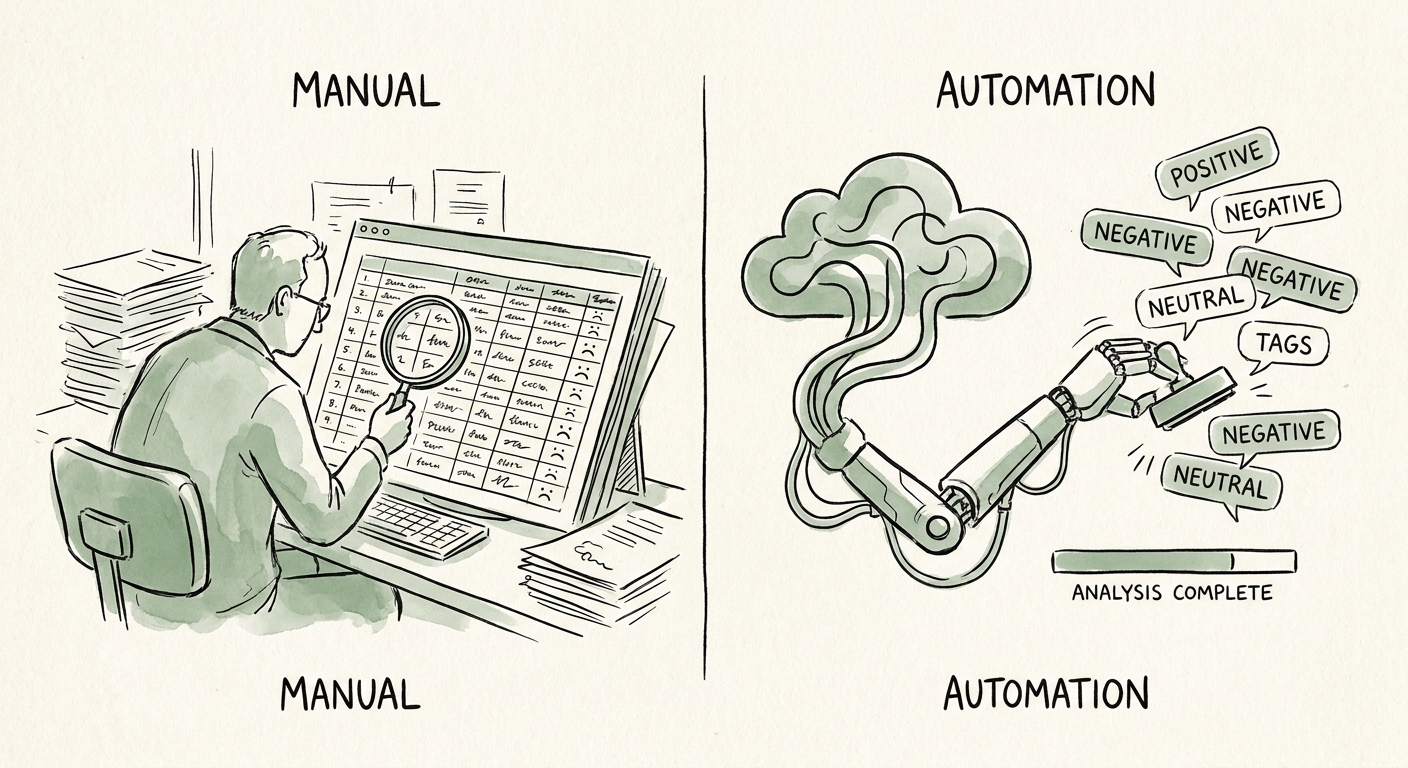
That scatter is exactly why customer feedback is a good first AI workflow: the input is high-volume unstructured text, it's repetitive to read, and it already feeds decisions people claim to make. The RSM middle-market AI survey and the San Francisco Fed analysis of AI and small businesses both show this pressure pushing down into companies your size — but value shows up only when unstructured input becomes a specific action, not a prettier chart.
So before any tooling, inventory the sources where your customers actually talk: support tickets, renewal and churn call notes, NPS verbatims, implementation retrospectives, in-product feedback, and sales-loss reasons. For a services or software shop, those last two are gold and usually ignored. Run AI workflow automation discovery across that map first. If no one owns what happens after a theme is confirmed, AI just gets you to the same shrug, faster.
What breaks: theme inflation, loud-account bias, and the confident summary that's wrong
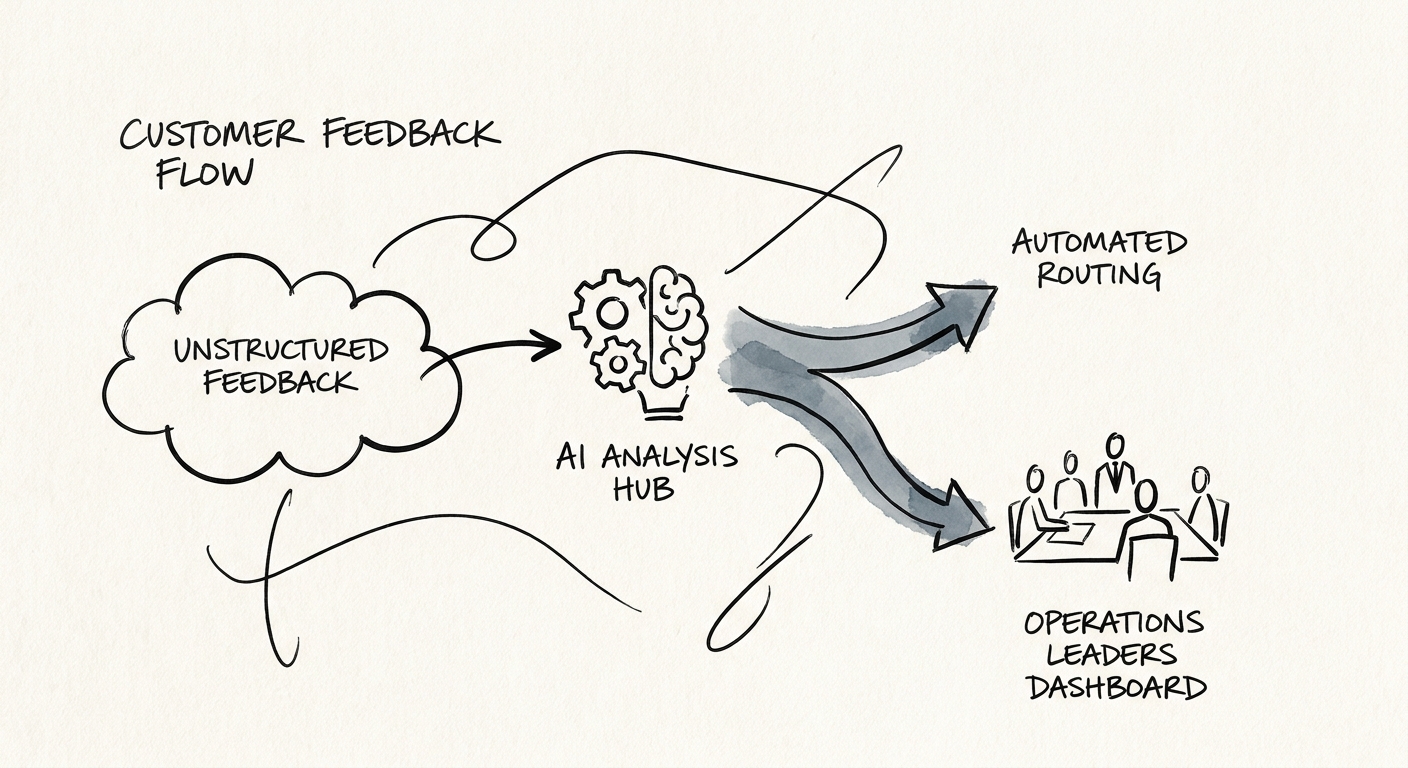
The build is the easy part. Pull text from approved systems, have a model cluster it into themes, attach the three or four most representative quotes per theme, and draft a one-line interpretation. The hard part is the three failure modes that quietly poison the output.
Theme inflation. Ask a model for themes with no constraints and you get nineteen of them, half overlapping. Cap it. Force the workflow to return a ranked top five with a frequency count, and require every theme to cite real verbatims — no quote, no theme. Loud-account bias. Your most vocal customer is not your average customer. If one enterprise account files forty tickets a week, it will dominate any naive clustering. Weight by distinct accounts affected, not raw mention volume, or you'll re-architect onboarding for a single screamer. The confident wrong summary. A model will happily write "customers want SSO" when the actual signal is "customers in the 200-seat tier want SSO and the ten-seat tier doesn't care." Segment the cut before you trust the headline.
This is where a control structure earns its keep. The OECD report on AI adoption by small and medium-sized enterprises ties adoption to data quality, skills, and process ownership — meaning consistent source access, stable tag categories, and a named reviewer. The NIST AI Risk Management Framework gives you the verbs: map the context, measure output quality, govern the workflow, manage the risks around customer data and overconfident claims. Then judge it with a practical AI ROI model: time from raw feedback to a confirmed, sourced theme; manual tagging hours eliminated; duplicate analyses avoided. Not "we have AI now."
Wire it into the cadence, then hold the line on scope
The output of this workflow is not a dashboard. It's a standing agenda item. The Deloitte State of AI report keeps making the same point: value comes from changing the process, not installing the tool. So end every cycle with a short review that names, for each top theme: the evidence, the segments affected, the owner, the decision required, and the status of the last cycle's actions. That last column is the whole game — it's what converts a recurring meeting from theater into accountability.
Keep version one embarrassingly narrow. Say a 40-person agency starts with just support tickets and churn-call notes — two sources, weekly cadence, one reviewer who approves themes before they leave the workflow, and a rule that every approved theme routes to a single owner in product, success, or ops. Resist adding sentiment scores, more sources, and live dashboards until the team trusts the categories and can point to one decision that changed because of a theme. A workflow people believe beats a comprehensive one they quietly ignore.
When the categories are stable and the team has acted on real themes twice, scale it deliberately with the 90-day AI implementation plan — tie the workflow to an owner, controls, measurement, and a recurring decision rhythm. If you want the broader sequence mapped before you start, build the AI roadmap first.