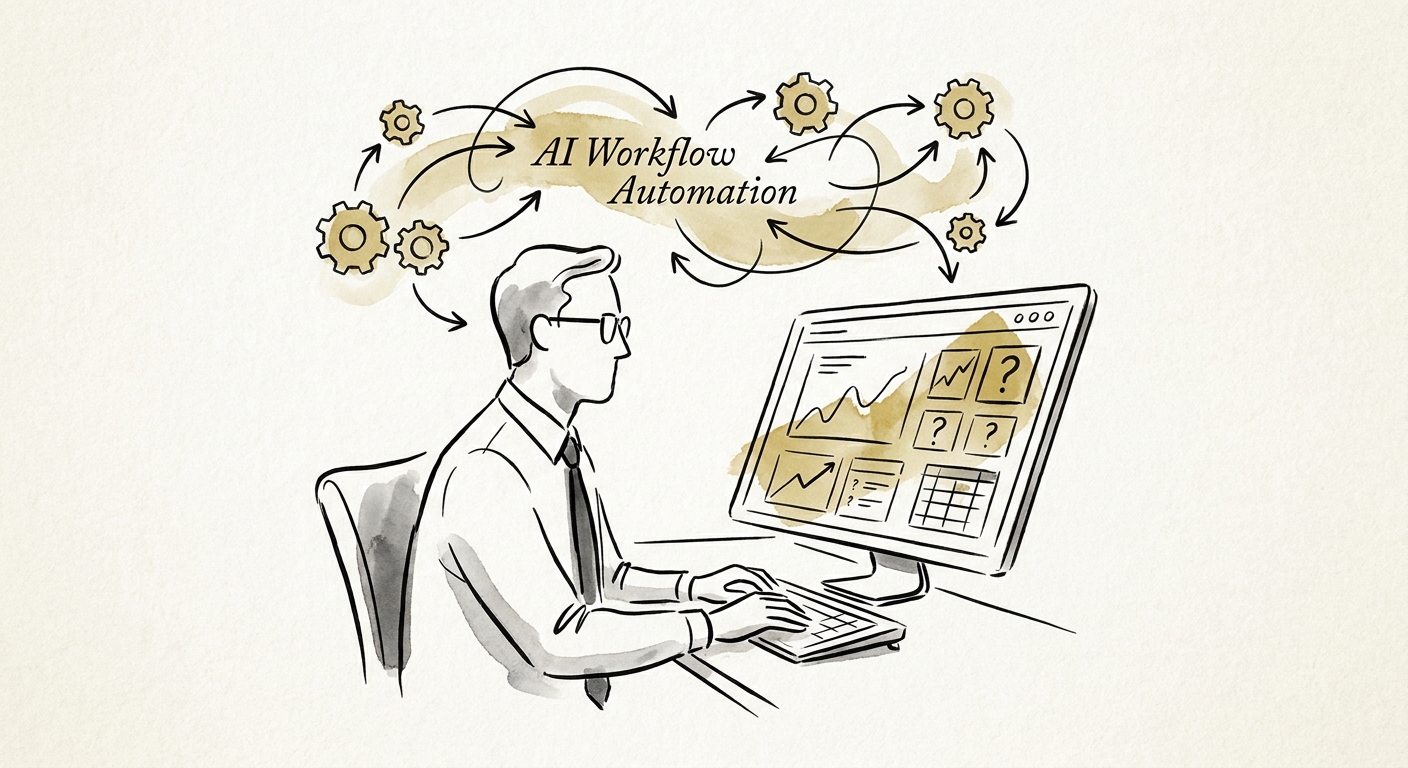
The problem was never the alert. It was the triage.
Walk a distribution planner's Monday. The ERP exception report ran overnight: 200-plus lines flagged. Short receipt on a PO. A supplier ASN that slipped three days. A SKU below safety stock. A customer order that now can't be filled complete. The planner has maybe two hours before the 10 a.m. allocation meeting, so they sort by the column they trust, work the top of the list, and accept that most of the report goes untouched. Somewhere down at line 140 is the short shipment that breaks a commitment to the account that's 18% of revenue. Nobody sees it until the customer calls.
That is the actual failure mode in inventory exception reporting, and it is not a shortage of alerts. Manufacturing and distribution teams are drowning in alerts. What's missing is the ranking: which of these 200 exceptions actually costs you something, what caused it, who owns the call, and what downstream commitment is now at risk. That triage is judgment work done under time pressure with incomplete context, and it's exactly the kind of work AI is good at preparing.
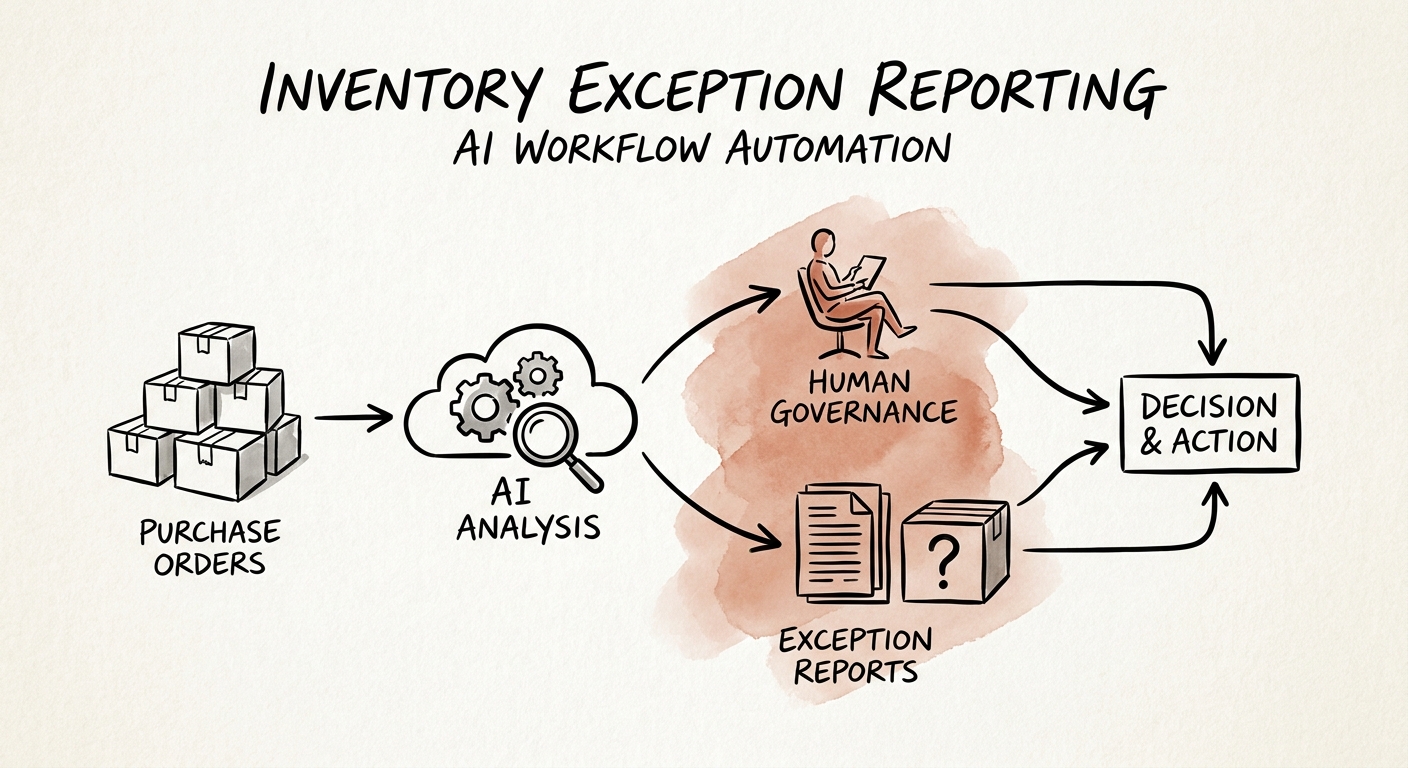
The honest version of the use case: AI doesn't decide. It assembles. It pulls the PO, the supplier update, the shipment status, the on-hand position, and the open customer orders into one reviewable line, scores it against what it puts at risk, and hands the planner a queue sorted by consequence instead of by SKU number. The IBM Institute for Business Value AI research and MIT Sloan Management Review AI coverage both keep landing on the same point: the value shows up where AI compresses the time between a signal and a good decision, not where it generates more signals.
Build one exception type, end to end, before you touch the rest
Do not try to automate the whole supply chain. Pick the single exception type that burns the most planner hours or causes the most expensive surprises, and build only that. For most distributors it's delayed inbound shipments or short receipts against open customer demand. Say a 120-person distributor handling 4,000 SKUs picks "inbound shipment slipped past the date a customer order depends on." That's the whole first build.
For that one type, the workflow should answer four questions on every line, in order: what changed (the ASN moved from the 14th to the 17th), where that came from (the supplier portal update, linked so the planner can click it), what it touches (PO 88421 covers three open orders, including the one for your top-five account), and what decision is now on the table (expedite, substitute, partial-ship, or call the customer). Get those four right and you've replaced an hour of tab-switching with a thirty-second read.
Draw the line hard between information and action. The system can draft the supplier follow-up email, identify every impacted order, and assemble the approval packet. It must not place an expedite order, cancel a shipment, or move a customer's promise date on its own. A planner approves the action, every time, with the evidence in front of them. That's not a limitation to apologize for; it's the control that lets you turn the thing on. PwC's responsible AI research frames the governance, and the practical rule is simpler than it sounds: AI prepares, a human commits. Use how to find manual work worth fixing to confirm you picked the right first exception instead of the loudest one.
Measure the gap between alert and action, not the alert count
The wrong scorecard counts exceptions surfaced. The right one measures whether decisions got faster and better. Track four things on the pilot: time-to-owner (how long from exception to the right person looking at it), missed exceptions (how many lines a planner had to chase that the queue should have surfaced and didn't), expedite spend (because catching a slip on day one instead of day three is the difference between standard freight and a panic air shipment), and rework (decisions reversed because the evidence was wrong or stale). If expedite spend drops and missed exceptions trend toward zero, the workflow is doing its job. If you're just generating prettier alerts, those numbers won't move.
Run it in parallel with the current process until the planners stop double-checking it. They will double-check it at first, and they should. Trust gets built when a planner clicks the linked supplier update and it's right, ten times in a row. Until then the AI queue is a second opinion, not the system of record. The McKinsey State of AI research and Bain artificial intelligence insights both note that adoption stalls when teams skip this trust-building stretch and try to flip the cutover early.
Once one exception type is reliable, the same pattern extends cleanly to quantity mismatches, supplier reliability scoring, and slow-moving stock review. You're not rebuilding; you're cloning a queue that works. If you want a governed path to stand the first one up, AI for Operations and Finance covers the implementation. To size the prize before you start, the AI ROI Calculator will turn reduced expedite freight and recovered planner hours into a number you can take to the table.