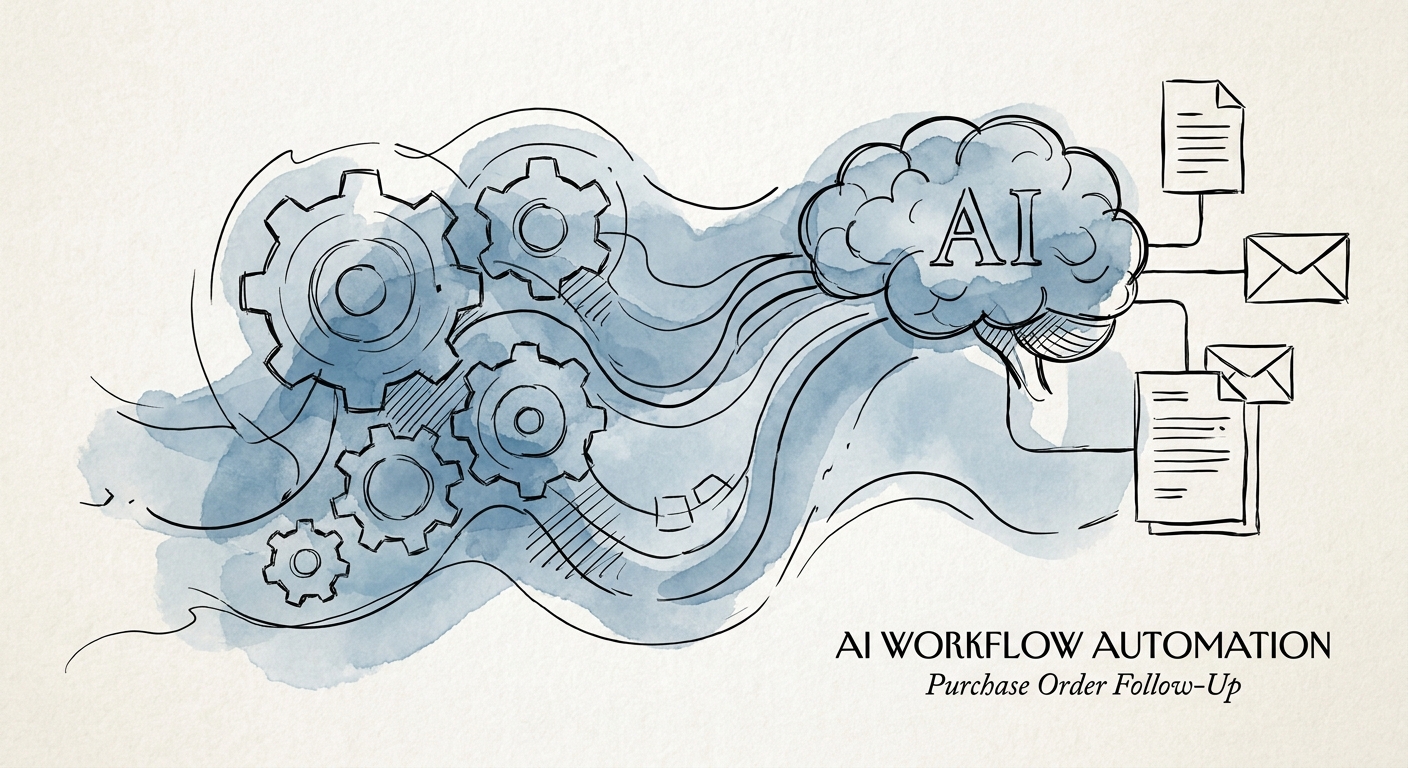
The part that stops the line is never the one you're watching
Picture a 120-person contract manufacturer. The senior buyer is sharp, knows every key supplier by first name, and runs the strategic POs in her head better than the ERP does. Then on a Thursday the assembly line stops because a $4,000 sheet-metal bracket — a part nobody flagged as risky — shipped two weeks late. The supplier had emailed a revised ship date eleven days earlier. It landed in a shared inbox, under a subject line that didn't match the PO number, and nobody connected it to the build schedule. A $9,000-a-shift line sat idle over a part nobody thought twice about.
That is the real shape of purchase order follow-up. The disasters don't come from the POs you're babysitting. They come from the 180 routine lines you assumed were fine, where an acknowledgment never arrived, a partial shipment quietly became the whole order, or a date slipped inside a portal nobody logs into twice a week. The signal exists — it's in an email, a portal field, an ERP confirmation date — it's just not connected to anyone who would act on it.
This is why follow-up is a strong first automation candidate, but not for the reason people usually give. It isn't just "repetitive." It's that the work is mostly reconciliation: comparing what the supplier said against what the PO promised, and surfacing the gap. That's pattern-matching against structured records, which is exactly where a governed AI workflow earns its keep — and exactly where a busy human running on memory loses. The boundary that keeps you safe: AI reads, drafts, and flags. It does not move a binding commit date in the ERP or release a change order without a buyer's hand on it.
Build a triage desk, not a smarter outbox
Most teams design this backwards. They point AI at the open PO list and tell it to "send follow-ups," and three weeks later the buyer has a faster, more polite version of the same flood she was already drowning in. The unit of value is not the email. It's the exception — and your whole design should orbit around separating the boring from the dangerous.
Draw the line explicitly. Routine: missing acknowledgments, overdue confirmations, "please confirm ship date" nudges. AI can own the drafting and the chasing on these, and you'll never look at most of them. Exceptions are where a human earns their salary: a revised date that lands after your customer's promised delivery, a quantity that came back short, a substitution offer, a price bump on a confirmed line, a supplier going quiet on a part with no second source. Those don't get auto-anything. They get a buyer.
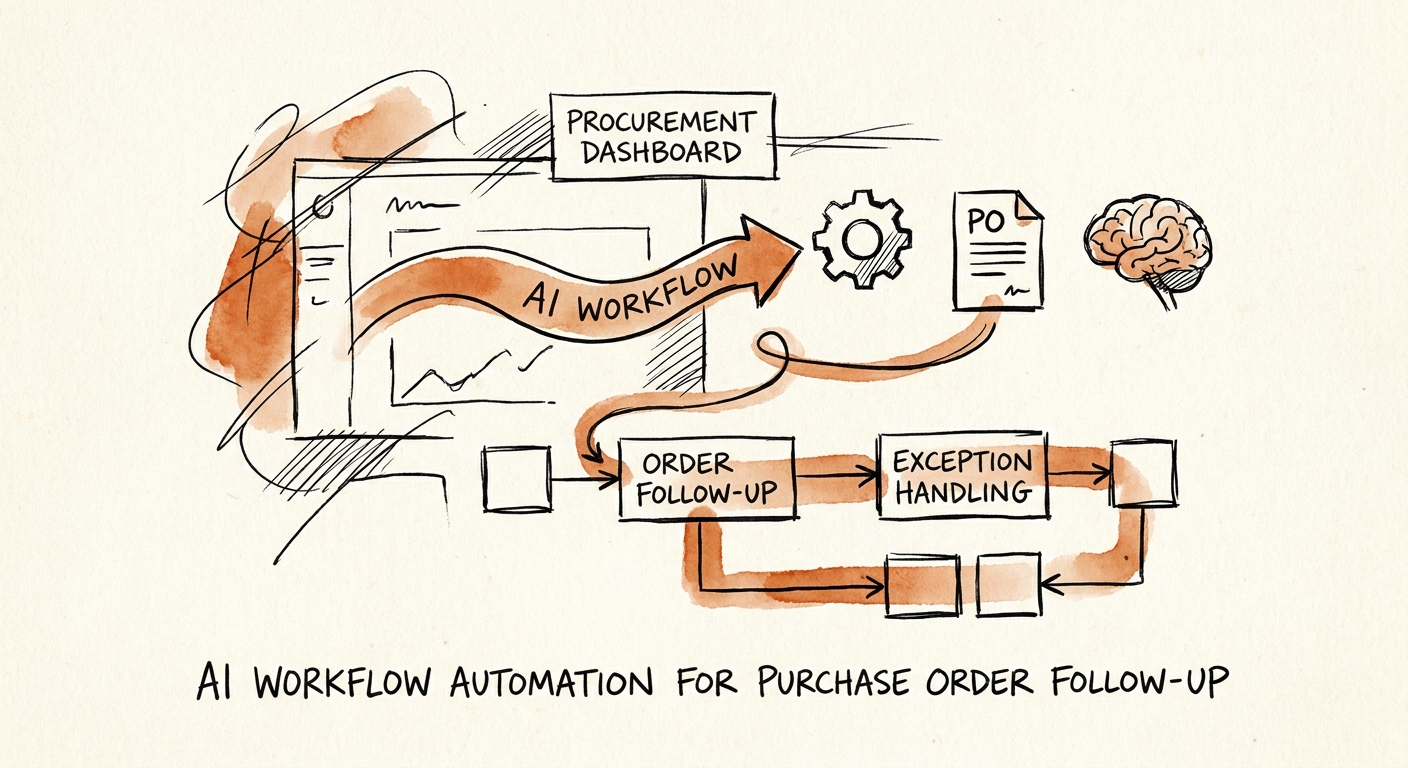
Here's the mechanism that makes it real. For each open line, the AI pulls the supplier's latest reply — from email or the portal — and diffs it against the PO of record: ordered date vs. confirmed date, ordered qty vs. acknowledged qty, original price vs. quoted. When the diff crosses a threshold you set (say, a confirmed date that pushes past the linked work-order need-by), it doesn't email anyone. It writes a row to a queue: PO number, supplier, what changed, the reason code, the source reference, the linked production impact, a timestamp, and a named owner. The buyer works a ranked list of fifteen things that actually moved, instead of re-reading two hundred threads to find them. That review point is also your insurance against bad source data and against an AI confidently misreading "we can split this shipment" as "this shipment is on time."
Notice what this frees up. The buyer stops being a chase-machine and goes back to the work that needs a human in manufacturing: qualifying a backup supplier for the single-sourced bracket, negotiating capacity before a quarter-end crunch, deciding whether to expedite freight or slip the customer a day. The expensive judgment, not the typing.
Prove it catches the slip before you claim it saves money
Do not lead with an hours-saved number. The first thing this workflow has to earn is trust that its exception queue is right — because the moment a buyer catches one bad AI summary that almost let a real date slip through, they stop reading the queue, and you've built nothing. So measure reliability first: open POs reviewed, supplier replies parsed, exceptions routed, ERP updates approved by a human, and the one that matters most — late changes caught that the old process would have missed. Track the failures out loud too: every time the AI read a reply wrong or missed a change a buyer found manually. That error rate is your real readiness signal.
Run it as a bounded 90-day pilot — pick one commodity group or one plant, not the whole supply base. Month one: map the workflow and clean the source data, because a confirmed-date field that's blank in the ERP half the time will sink this faster than any model limitation. Month two: run in draft-and-review only — AI proposes, the buyer approves everything, and you watch the error log. Month three: let AI own the routine chasing on low-risk lines while every exception stays human-led. The Hackett Group's procurement research and Gartner's supply chain work both keep landing on the same point: the constraint is rarely the tooling, it's whether the underlying data is clean enough to trust. McKinsey's procurement transformation analysis, Bain's procurement insights, and Deloitte's supply chain resilience research echo it from the resilience side.
What you should do Monday: pull your last six line-stoppages or expedite charges and trace each one back. How many had a supplier signal — an email, a portal update, a missed acknowledgment — that existed days before the fire? That count is your business case, and it's specific to your shop, not a benchmark. Then size the pilot with the AI ROI Calculator and structure the rollout with the 90-day AI implementation plan. Start by finding the manual work worth fixing — see how to spot it — and the goal stays fixed: make the late supplier visible while the bracket is still in transit, not when the line goes quiet.