The $15M Trap: You Re-Titled Your Account Managers and Called It Customer Success
Here is the exact sequence I watch play out at tech services firms right after they clear $15M in revenue. Delivery is buried. Clients are pinging project leads for status updates, scope is creeping in ten-minute increments nobody logs, and support requests are landing in inboxes that were never meant to catch them. So the founder does the reasonable-sounding thing: spins up a "Customer Success" function, gives three account managers new titles, and exhales. Six months later the EBITDA story is worse, not better, because those CSMs have no commercial mandate. They are answering "how's the project going?" on premium SaaS-CSM salaries. You are paying for white-glove receptionists, and none of it is billable.
Picture a 90-person cloud migration shop carrying a 12-person CS team. On paper that looks like investment in retention. In practice their net revenue retention had slid to 94 percent, because not one of those twelve people owned an expansion number. They owned feelings. McKinsey's 2025 B2B Customer Success Benchmark found that services firms which never tie CS compensation to net revenue retention churn at materially higher rates than those running outcome-based comp. The cost center grows; the retention number doesn't move. That is the tell.
The distinction that matters in a services business: a SaaS CSM keeps a license renewing. A services CSM has to find the next statement of work while the current one is still being delivered. Those are different jobs requiring different instincts. Gartner's 2026 Tech Services Expansion Study shows proactive teams running quarterly business reviews built around the client's roadmap — not project status — lift expansion revenue meaningfully over reactive account management. If your churn is bad despite heavy CS spend, the problem usually isn't headcount. It's that nobody handed these people a P&L responsibility. Diagnose it first in NRR Below 100%? Your Customer Success Function Is Broken.
The Org-Chart Line That Decides Whether This Works
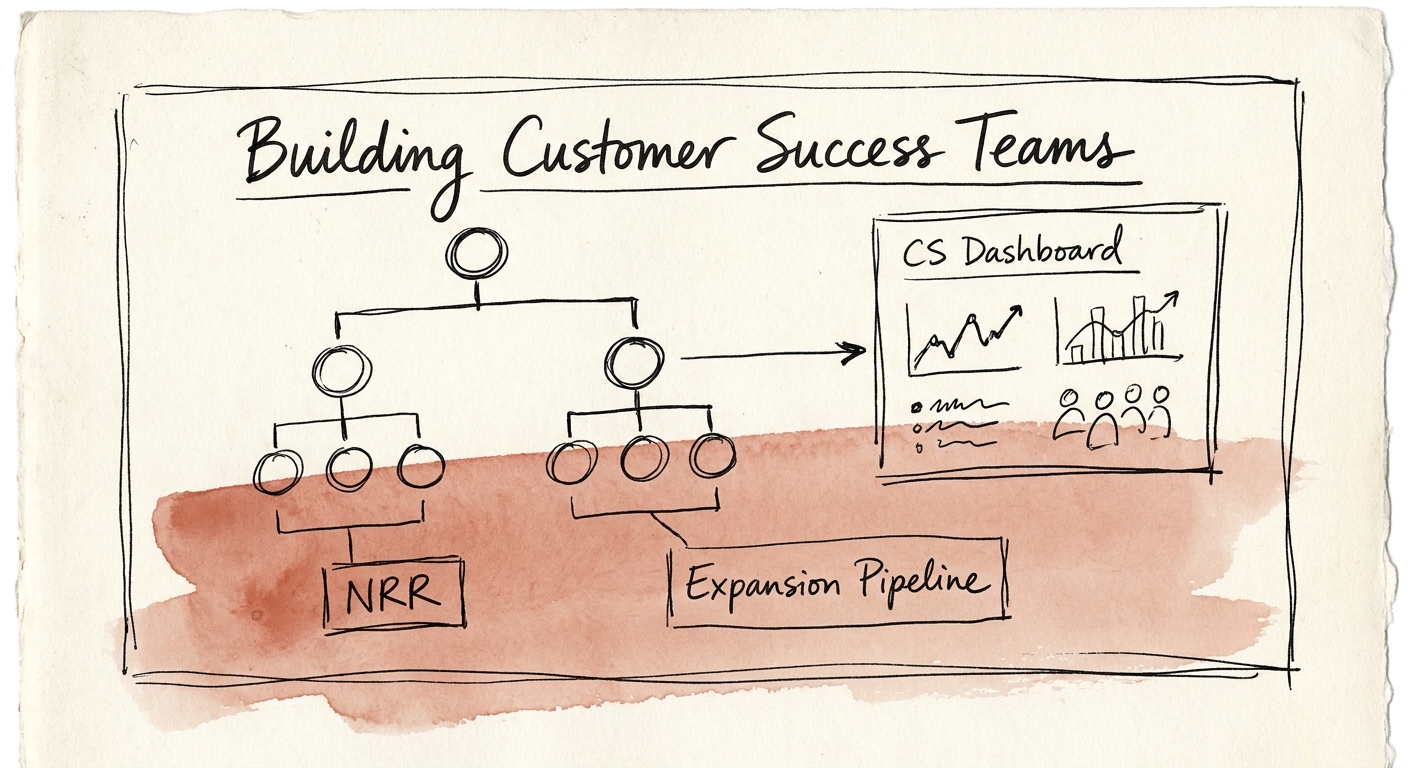
Before you write a single job description, settle one question: who does CS report to? If the answer is your Head of Delivery or VP of Professional Services, you have already lost. A delivery leader is paid to protect project margin, hold scope, and close engagements clean. A CS leader is paid to widen the account and surface the next problem worth solving. Put one under the other and the incentives cancel out. What you get is what I call delivery drift — your CSMs get yanked into firefighting a slipping project instead of building pipeline, because their boss's bonus depends on the project, not the expansion.
So decouple it, hard. CS gets a peer seat at the leadership table, reporting to the CEO or the CRO — never to delivery. I have rebuilt this exact function three times for portfolio companies in the past year, and the report line was the first thing I changed every time. HBR's 2025 Analysis on Post-Sale Organization Design found that separating customer success from implementation meaningfully reduces project margin erosion, precisely because nobody can quietly fund delivery overruns with unbilled CS hours anymore.
Now the hiring mistake, and it is a specific one for services firms. Do not staff this team with pure-play SaaS CS veterans. They will not survive your world. SOW mechanics, utilization rates, the politics of a six-month implementation with a technical stakeholder who hates change — none of that is in their muscle memory. Forrester's 2025 B2B Retention Cost Analysis reports that external CS leaders hired without a professional services delivery background wash out a majority of the time inside 18 months. The blend that works: hire the leader for retention framework and commercial method, then staff the line with former implementation consultants who can read a scope document and talk to a CTO without a translator. As for how many people — resist scaling before delivery is stable. MIT Sloan's 2024 Management Review on Customer Success points to services orgs holding roughly an 8:1 delivery-to-CS ratio expanding margin best. Over-hiring CS ahead of a stable delivery machine just accelerates burn. Pressure-test your number against Customer Success Team Size Benchmarks: Why You're Likely Overstaffed.
What a Buyer Actually Does to Your CS Team in Diligence
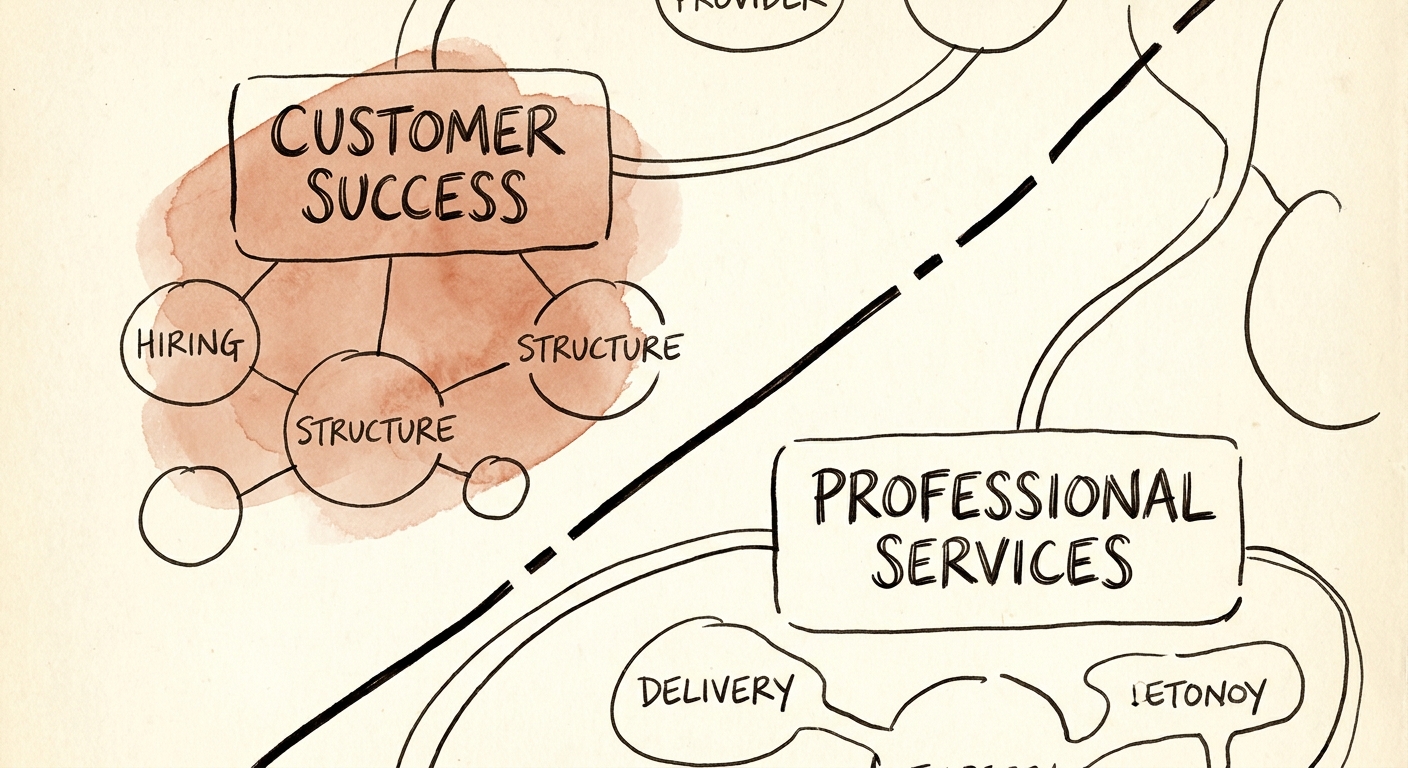
Here is where it stops being an org-design preference and starts being a valuation number. When a PE buyer runs Quality of Earnings on you, they are hunting for margin that isn't real. A CS team comingled with billable delivery is one of the cleanest places to find it. If your "delivery margin" is quietly propped up by CSMs doing project management for free, that margin is fiction, and the diligence team will treat it as fiction. Deloitte's 2026 Tech M&A Diligence Report notes buyers discount valuations by as much as 1.5 turns of EBITDA when the customer success function isn't cleanly separated from billable hours. On a firm doing $4M of EBITDA, that 1.5x is real money walking out the door over an org-chart decision.
So make the team legible. The diligence-proof CS function runs on a dashboard, not on tribal knowledge: net revenue retention, gross retention, time-to-first-value, and expansion pipeline generated — owned, numbered, reviewed monthly. Every handoff from sales to delivery to CS is documented and mapped in the CRM. The blunt rule a buyer applies: if it isn't written down, it doesn't exist. A book of business that lives in one beloved CSM's head is a liability they will price against you, because it walks out the door the day she does. Codify it before anyone is in the data room — start with From Tribal Knowledge to Turnkey: Documenting Your Way to Higher Multiples.
The reframe worth holding onto: in 2026, a structured, commercially accountable CS team is the single best proof you can offer a buyer that your revenue is genuinely recurring and your client relationships don't depend on the founder picking up the phone. Build it on a real reporting line, staff it with people who understand delivery, hold it to retention and expansion numbers, and keep it out of the delivery trenches. Do that and the team stops being a cost the buyer questions — it becomes the moat that defends your multiple.