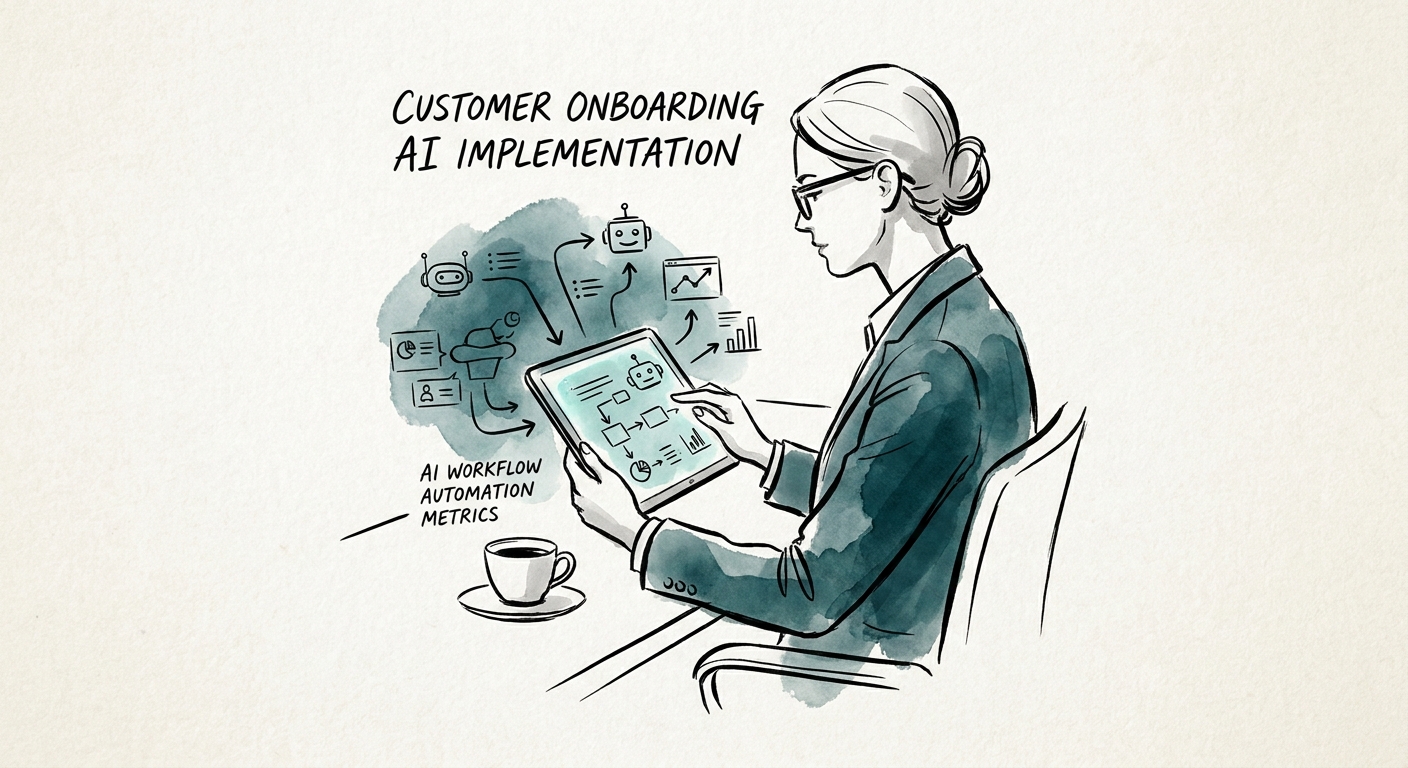
The folder is half-empty and nobody knew until Monday
Here is how it actually goes at a 25-person consulting firm. The deal closes Friday. The kickoff is set for Monday. The partner who sold the work has moved on to the next pitch, and the senior consultant who'll run delivery opens the client folder Sunday night to prep. The signed SOW is there. The org chart is there. But the data dictionary the scope assumed, the prior-vendor handoff notes, and two of the four stakeholder access grants? Missing. Nobody flagged it because nobody owned checking it. Week one gets spent chasing inputs that should have been verified before the engagement letter was countersigned.
That is the real onboarding problem in consulting, and it is not a writing problem. It is an intake-completeness problem. You don't need AI to draft a prettier kickoff deck. You need it to read every document the client sent against what the engagement actually requires, and tell you what is missing while there's still time to ask. The RSM middle-market AI survey, the San Francisco Fed small-business AI analysis, and the OECD SME AI adoption report all land on the same point: the value shows up where ownership, process fit, and review capacity are clear enough to turn a tool into operating leverage. Onboarding qualifies precisely because the inputs repeat from engagement to engagement.
Concretely, the workflow classifies what the client sent, extracts the commitments buried in the SOW, cross-checks them against an intake checklist for that engagement type, and surfaces a single list: what's present, what's missing, who needs to chase it. If your onboarding has repeatable inputs, a named delivery owner, and someone with capacity to review, run it through the workflow automation screen before you build anything.
Client documents are not your documents
A consulting firm's onboarding pile is uniquely sensitive: it's other companies' confidential material. Financials under NDA, customer lists, contracts, sometimes regulated data the client themselves can't fully share. The moment you point an AI workflow at that pile, you've created a new question your client will eventually ask: where did our data go, and who can see what it produced?
This is where most firms either freeze or wave it through, and both are wrong. The NIST AI Risk Management Framework gives you a way to map the context and assign controls per engagement instead of treating all client data as one bucket. CISA's AI Data Security Best Practices spells out the mechanics that matter here: scoped source access, retention rules, logging, and output handling. For a consulting onboarding flow that means engagement-level data boundaries (Client A's intake never bleeds into Client B's summary), approved intake templates per engagement type, and a reviewer named on each summary before anyone on the delivery team treats it as fact.
The non-negotiable feature: traceability. When the system says "scope commitment X has no supporting document," a consultant must be able to click and see exactly which client file that finding came from, whether the field is genuinely absent, and who signed off on the summary. A summary nobody can audit is a liability you've handed your delivery team, not a head start. Before you commit, run onboarding through the AI use-case scoring model against your other delivery workflows on value, data sensitivity, handoff risk, and adoption effort. Client-document intake will score high on sensitivity. Plan for that rather than discovering it.
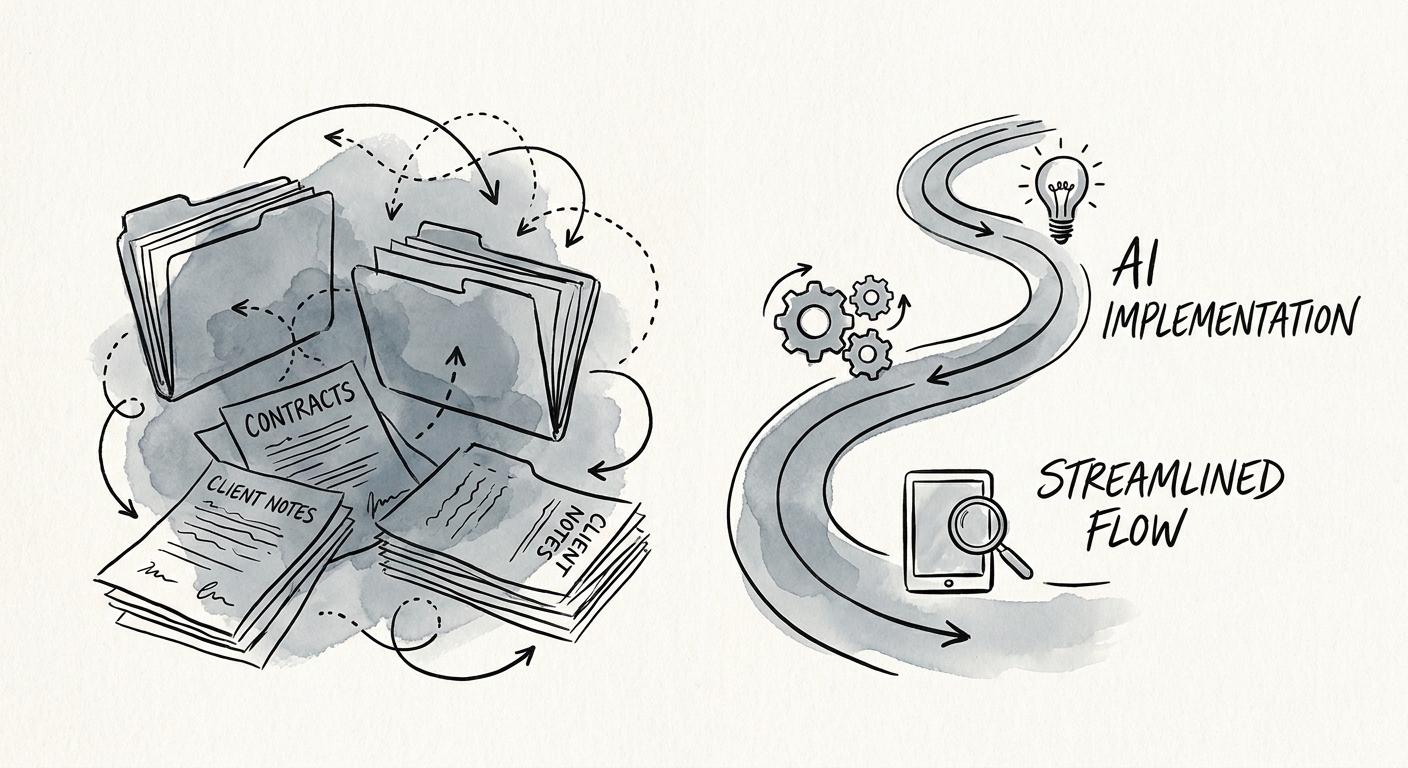
The metric is week-one rework, not minutes saved
If you measure this project by "how much faster do we write the kickoff brief," you've measured the wrong thing and you'll build the wrong system. Deloitte's State of AI in the Enterprise 2026 is blunt that value comes from redesigning the process, not bolting speed onto a broken one. A faster summary built on incomplete intake just gets you to the wrong conclusions sooner.
So measure what the delivery team feels. Track time to complete intake, the missing-information rate at kickoff, and the one number that actually correlates with engagement margin: rework hours in the first week. A 40-person firm that runs ten kickoffs a quarter and loses two consultant-days per engagement to chasing missing inputs is burning twenty days a quarter on a problem AI is genuinely good at preventing. Also watch the manager review burden so you don't trade chasing documents for proofreading summaries.
Sequence it conservatively. Start with internal onboarding support: the AI prepares the intake check and the missing-input list, a human reviews, the delivery team uses it. Do not automate anything client-facing until the internal loop is trustworthy. Use the 90-day AI implementation plan to order the work: clean up your intake templates first, pilot on one engagement type, train your reviewers, then expand once week-one rework actually drops. When you're ready to map this against the rest of your delivery operation, build the AI roadmap.
