The ticket that says "quick question" is the one that ends an engagement
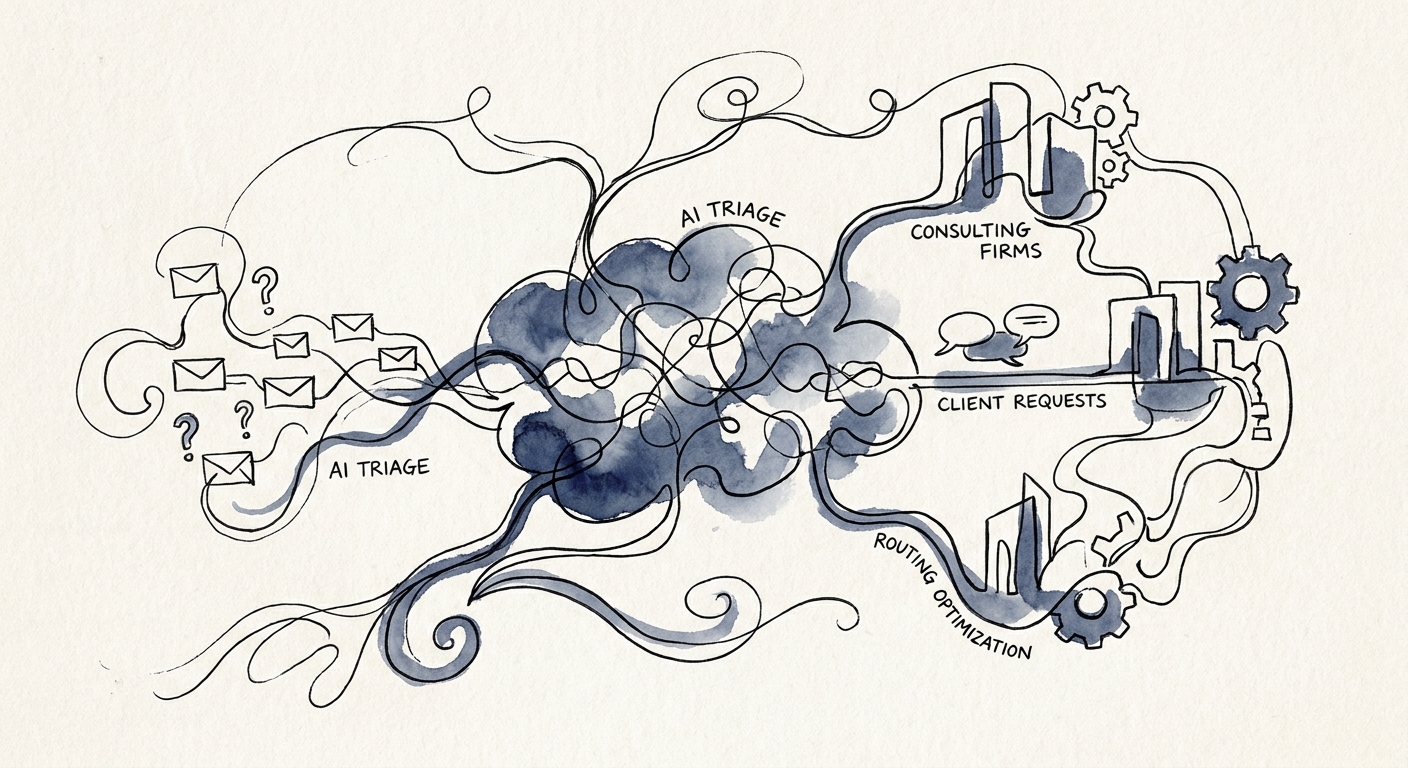
Picture a 60-person consulting firm. An email lands in the shared client inbox: "Quick question about the dashboard you delivered last week." On the surface it's a support request. Underneath, it's the third time this client has flagged the same thing, the engagement manager is on a flight, and the account renews in six weeks. A junior coordinator routes it to whoever's free. By the time the right partner sees it, the client has already drafted a frustrated note to their VP. That's not a triage failure of speed. It's a triage failure of context, and it's the exact failure consulting firms can't afford because the asset being routed isn't a ticket, it's a relationship with revenue attached.
This is what makes triage in a consulting firm different from a retail help desk or a SaaS support queue. Your inbound isn't a stream of interchangeable problems. It's a mix of delivery questions, scope-creep signals dressed as bug reports, invoice disputes, and "can you also just" requests that quietly erode margin. Before you let any model touch routing, you have to be able to say out loud what category each of those is and who owns it. The RSM middle-market AI survey and the OECD report on AI adoption by small and medium-sized enterprises keep landing on the same point: the firms that get value have the management capacity and process ownership in place first. The model amplifies whatever routing logic already exists. If your logic is "ask around," AI will ask around faster.
So the honest first move is unglamorous. Pull 90 days of inbound and sort it by hand into the categories you actually serve: delivery defect, in-scope request, out-of-scope request, scheduling, billing dispute, relationship/escalation. If two experienced people disagree on which bucket a ticket belongs in, the model will disagree with both of them. Use the workflow automation screen to confirm those categories are stable and there's a named owner for the exception queue before automation changes a single live route.
Route on the account, not the keyword
Here's the trap most consulting firms fall into. They configure triage to read the words in the ticket — "error," "urgent," "broken" — and route on those. That works for a software vendor where a ticket is a ticket. It fails for you, because the same sentence from your largest retained client and from a one-off project that wrapped in March are not the same priority, and they never should land in the same queue.
Routing in a consulting context has to read the account before it reads the request. Your rules need to layer in: which client tier this is, whether the work falls inside the current statement of work or signals scope creep, the SLA you actually committed to in the contract (not a default), who the named engagement manager is, and whether the ticket touches anything compliance-sensitive — a client's regulated data, an NDA boundary, a deliverable under review. A "quick question" from a top-tier retained account with a renewal pending is a partner-attention event. The same words from a long-closed project are a 48-hour reply. Keyword routing can't tell them apart. Account-aware routing can.
And you need to be able to show your work. When a partner asks why the model sent a ticket to the analyst pool instead of flagging it, you should be able to trace the path from ticket facts to recommendation and point at the rule. The NIST AI Risk Management Framework frames this as mapped, auditable controls, and CISA AI Data Security Best Practices matters here in a way it doesn't for generic support: your tickets carry client data you're contractually obligated to protect, so access scoping and monitoring on the triage system aren't optional. Anything ambiguous or high-stakes — an escalation, a scope dispute, a regulated-data touch — routes to a human, full stop. Use the AI use-case scoring model to weigh ticket volume against the cost of a misroute on a marquee account, your client-data exposure, and how much reviewer capacity you genuinely have before you commit budget.
The metric isn't response time. It's "the right partner saw it in time."
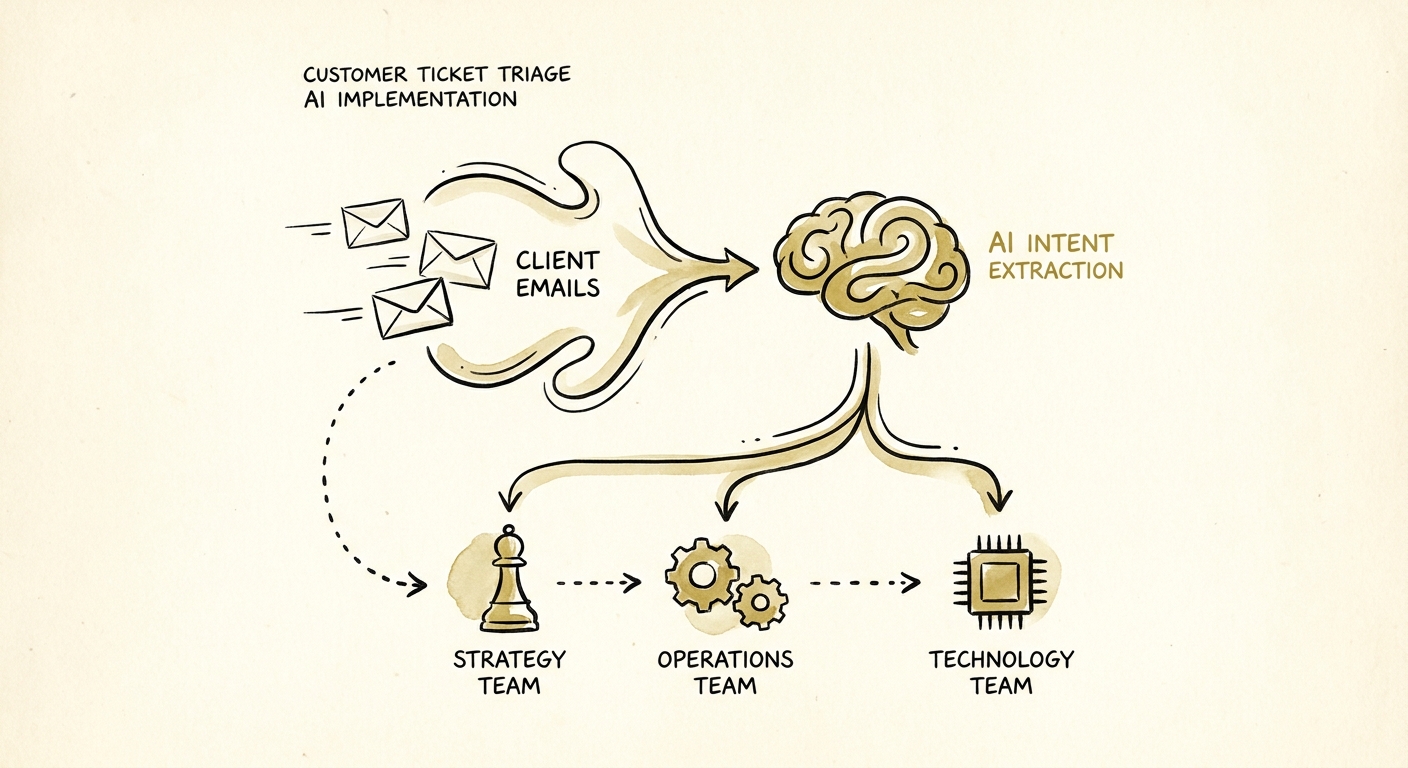
Consulting firms that measure triage by first-response speed are optimizing the wrong dial. A fast auto-acknowledgment to a client who's actually signaling they're unhappy is worse than silence — it tells them a robot heard them and a person didn't. Deloitte's State of AI in the Enterprise 2026 is a useful warning against exactly this kind of demo-led adoption, where the impressive thing is the speed and the valuable thing — the request reaching the right owner with the right context — never gets measured. The San Francisco Fed analysis of AI and small businesses echoes the same caution about scaling on capability rather than on managed process.
So measure what matters for a firm whose product is judgment: routing accuracy by client tier, reassignment rate (how often a human has to bounce a ticket the model placed wrong), how many high-tier or renewal-window tickets reached a partner before the client followed up, scope-creep flags caught versus missed, and the correction patterns your reviewers leave behind — those corrections are your real training data. If analysts keep overriding the model on out-of-scope requests, you've found where your rules and your contracts disagree.
Run it in recommendation mode first. For a few weeks, let the model suggest a route while a human still makes the call, and log every disagreement. Don't automate a category until you can predict where the model gets it wrong and why. Use the 90-day AI implementation plan to sequence a shadow queue, account-aware routing rules, reviewer training on the exception cases, and a staged rollout that starts with your lowest-stakes ticket types and earns its way up to the accounts you can't afford to fumble. When you're ready to map this to the rest of your operation, build the AI roadmap from there.
