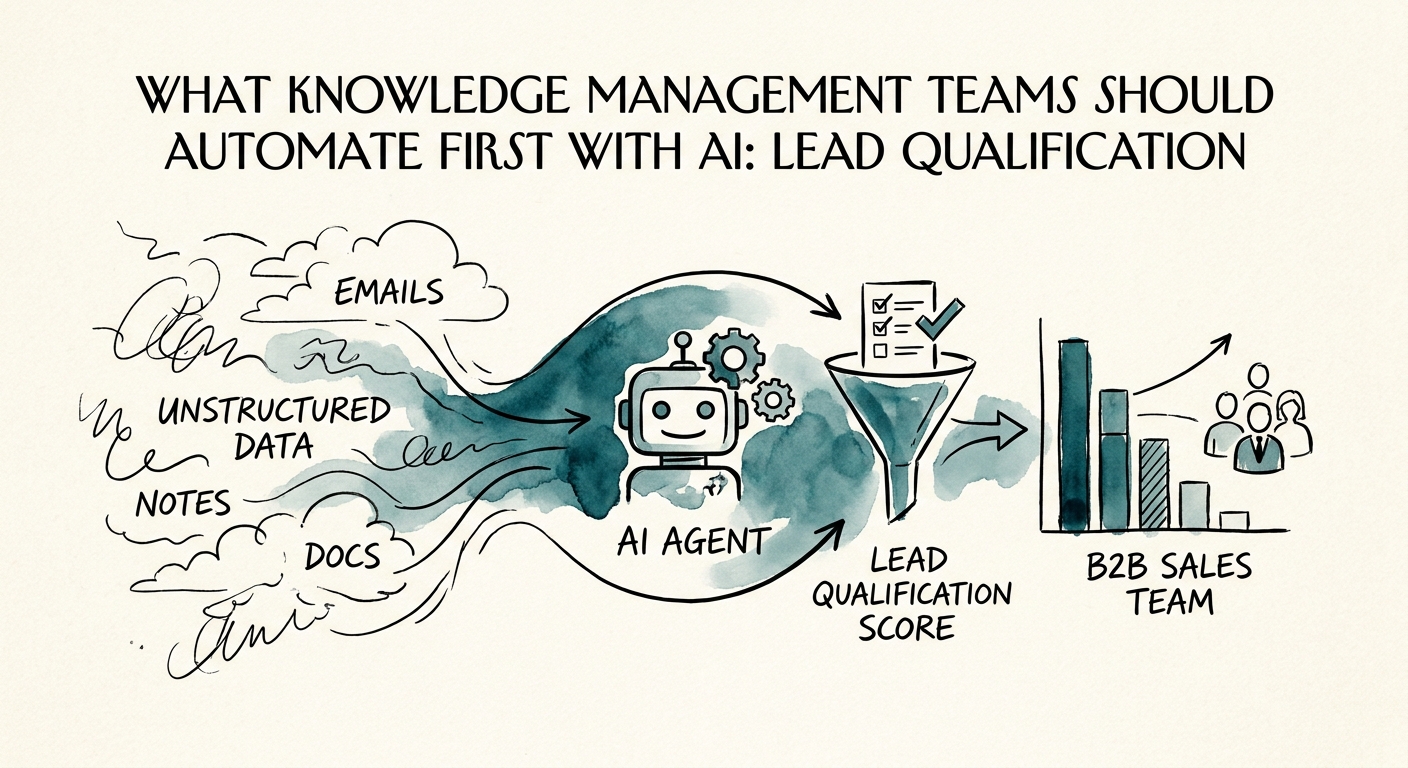
The rep already knows. The system doesn't.
Watch a tenured B2B seller triage a new inbound. They glance at the company, the title, the form fill, and within ten seconds they've made a call that a brand-new scoring model would take a quarter of training data to approximate. How? They remember the three deals exactly like this that died in procurement. They know this vertical never gets sign-off without a security review. They know the product edge case that makes this account a poor fit no matter how good the firmographics look.
That judgment is real, and it is also fragile. It lives in one rep's head, in a Slack thread from August, in a pricing exception nobody wrote down. When that rep goes on PTO or leaves, the qualification quality goes with them. This is the part most teams miss: lead qualification isn't a math problem, it's a knowledge-retrieval problem. The reason it feels chaotic is that the evidence sellers rely on is scattered across the CRM, a stale fit doc, case-study PDFs, and tribal memory.
OECD's research on AI adoption by smaller firms keeps landing on the same precondition: the organizational readiness matters more than the model. For qualification, readiness means one thing first — does your team actually agree on what makes a lead real, and can you point to the record that proves it? If two reps would qualify the same lead differently and neither can cite a source, no AI is going to fix that. It will just automate the disagreement faster.
The four sources that beat a firmographic score
A good-fit web signal — right industry, right headcount, right tech stack — gets you to "maybe." It does not get you to "yes, and here's why." The qualification calls that actually predict close come from knowledge a scraper never sees. Say a 60-person B2B software firm wants to put AI in front of inbound triage. The retrieval set that earns its keep is narrow and specific.
First, product eligibility and exclusions: the integrations you don't support, the deployment model that disqualifies regulated buyers, the seat minimum below which the deal never pays back. Second, pricing guardrails and exceptions: where discounting is allowed, where it isn't, and the threshold above which a deal needs leadership before a rep can even imply a number. Third, closed-won and closed-lost patterns — not the win rate, the reasons. "Lost to incumbent on switching cost" is a qualification signal; a fit-score percentage is not. Fourth, the proof library: the case-study snippet, the reference logo, the metric this exact buyer profile responds to.
Pull those four together and the assistant stops scoring and starts arguing the case the way a good rep would: this lead matches the won pattern, here's the proof point that lands for their segment, and here's the one exclusion to check before you book the meeting. The hard part isn't the retrieval — it's governance. NIST's AI Risk Management Framework is useful here because it forces you to state intended use and keep a human accountable for the commercial judgment. The system recommends; the seller decides, and overrides with a reason that feeds back into the rules. And because you're now wiring an assistant into CRM notes, customer references, and live pricing terms, CISA's data-security guidance should set who can see what before you connect anything. A qualification helper that surfaces a confidential discount floor to the wrong audience isn't an efficiency win.
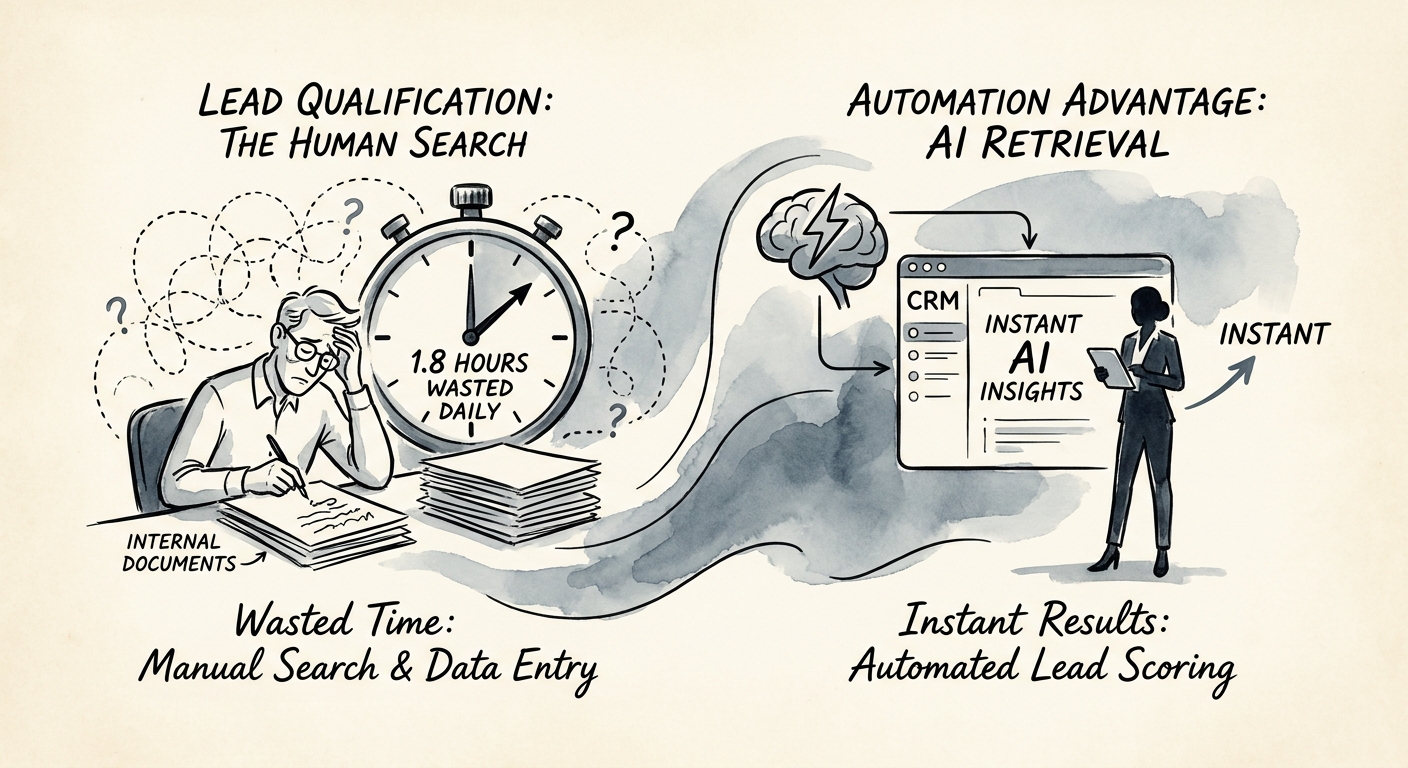
What to do Monday, and when to wait
Start narrow. Pick one segment where you already know cold which deals are good and which are traps — the segment your best rep could qualify blindfolded. Write down the four sources for that segment only. Then run the assistant in shadow mode: it makes a recommendation, the rep makes the real call, and you log every place they disagreed and why. Those disagreements are the product. Each one either fixes a rule or reveals knowledge that was never written down.
You'll know it's working when reps stop fighting the recommendation and start using it to explain a handoff to sales leadership — "qualified because it matches the won pattern, proof point attached, no exclusions tripped." That's a system earning trust, not a prettier number. Measure it on accepted handoffs, conversion of those handoffs, and a visible drop in stale fit guidance — not on how confident the score looks.
Wait if any of these are true: sales and marketing still don't agree on fit; most of your deals close on a custom pricing exception that lives nowhere durable; or nobody maintains closed-lost reasons. Those aren't AI problems and AI won't paper over them. And once it's live, assign owners — product-fit rules drift, pricing exceptions expire, proof points get stronger or weaker. An unowned knowledge base becomes the next source of confident, wrong advice. If you want to find the manual work most worth fixing before you build, start with manual-work triage and the AI opportunity score.
