The brief that took four days to approve was drafted in nine minutes
Picture the marketing lead at a 60-person company on a Tuesday. The Q3 campaign kicks off in two weeks, and the brief is the gating document: it tells the designer what to make, the copywriter what to say, the media buyer where to spend, and legal what claims they can't let through. The actual writing of that brief? Maybe nine minutes with a decent AI assistant pointed at last quarter's campaign notes and the offer doc. The four days that follow are the problem. That's brand asking why the tone shifted, sales pasting in segment context that never made it to the brief, and legal flagging a "guaranteed results" line on the day before launch.
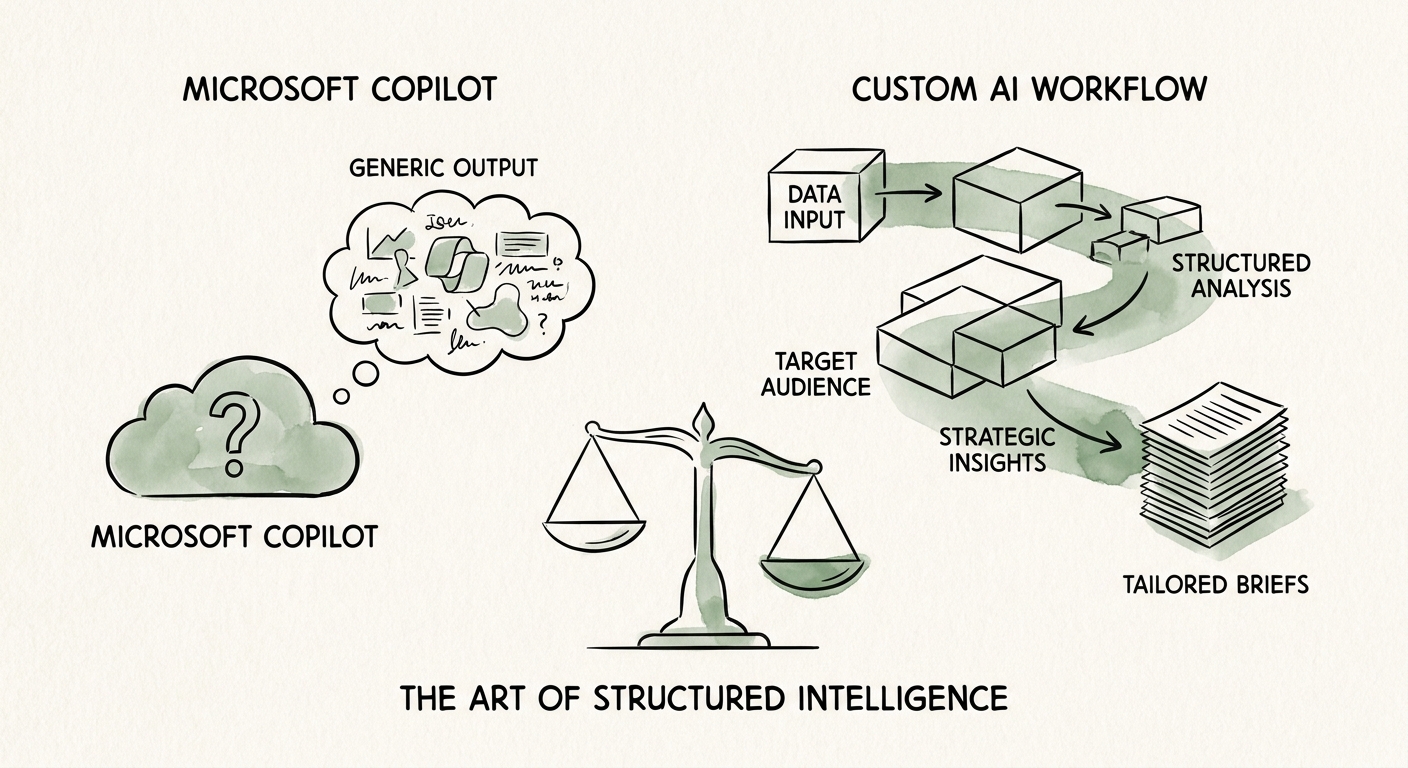
This is why the Copilot-versus-custom decision for marketing briefs is not really about who writes the better first draft. It's about where the approval lives. Microsoft's documentation on Microsoft 365 Copilot privacy and data controls describes how Copilot works inside your existing Microsoft 365 permissions and data boundaries. If your campaign history, audience notes, and offer docs already live in SharePoint and Teams, Copilot can synthesize them into a clean draft without touching anything it shouldn't. That covers the nine minutes beautifully.
What it doesn't natively cover is the four days. The RSM middle-market AI survey shows mid-market teams adopting AI fast, but speed of drafting is not the constraint marketing actually feels. Before you pick a tool, map one thing: does a finished brief need a brand sign-off, a legal claims check, or a CRM segment definition that lives outside Microsoft 365? If yes for even one of those, the draft was never the hard part.
Use Copilot when the brief is synthesis; build custom when the brief is a checkpoint
Here's the line I'd draw, and it's sharper for marketing briefs than almost any other document type. Copilot is the right tool when the brief is a synthesis job: take the kickoff transcript, the prior campaign's performance recap, the approved messaging pillars, and the offer terms, and turn them into a structured first draft the marketing lead edits and circulates. The inputs are documents. The output is a document. The reviewer is a human who reads it. The OECD report on AI adoption by small and medium-sized enterprises makes the point that adoption hinges on operating fit rather than tool availability, and for a small marketing team running a handful of campaigns a quarter, the operating fit of "faster, source-grounded drafts" is exactly right. Don't overbuild.
You cross into custom-workflow territory when the brief stops being a document and becomes a checkpoint — something that must move through defined states and cannot advance until specific people or rules clear it. Concretely: a brief queue that won't let a campaign brief reach the designer until brand has marked tone approved; a hard gate that routes any brief mentioning pricing, claims, or comparative language to legal; CRM segment IDs pulled in so the targeting in the brief matches what the media buyer can actually build; and a log that shows who approved what, when. Each of those is a state and a rule, not a paragraph. The NIST AI Risk Management Framework is useful precisely here — mapping the brand and legal risk in a brief, deciding which claims get measured against an approved list, and keeping accountability traceable when a campaign later gets questioned.
Force the choice with money, not enthusiasm. Run both candidate paths through an AI ROI model that avoids fake savings. Copilot's honest return is drafting hours saved and a faster first pass. A custom workflow only earns its build cost if you can name the number it moves: fewer brief revision rounds, fewer last-minute legal escalations, a shorter gap between brief approved and campaign live. If you can't point at that number, you're building a state machine to do a writing assistant's job.
What to do Monday: pull your last five briefs and count the rework
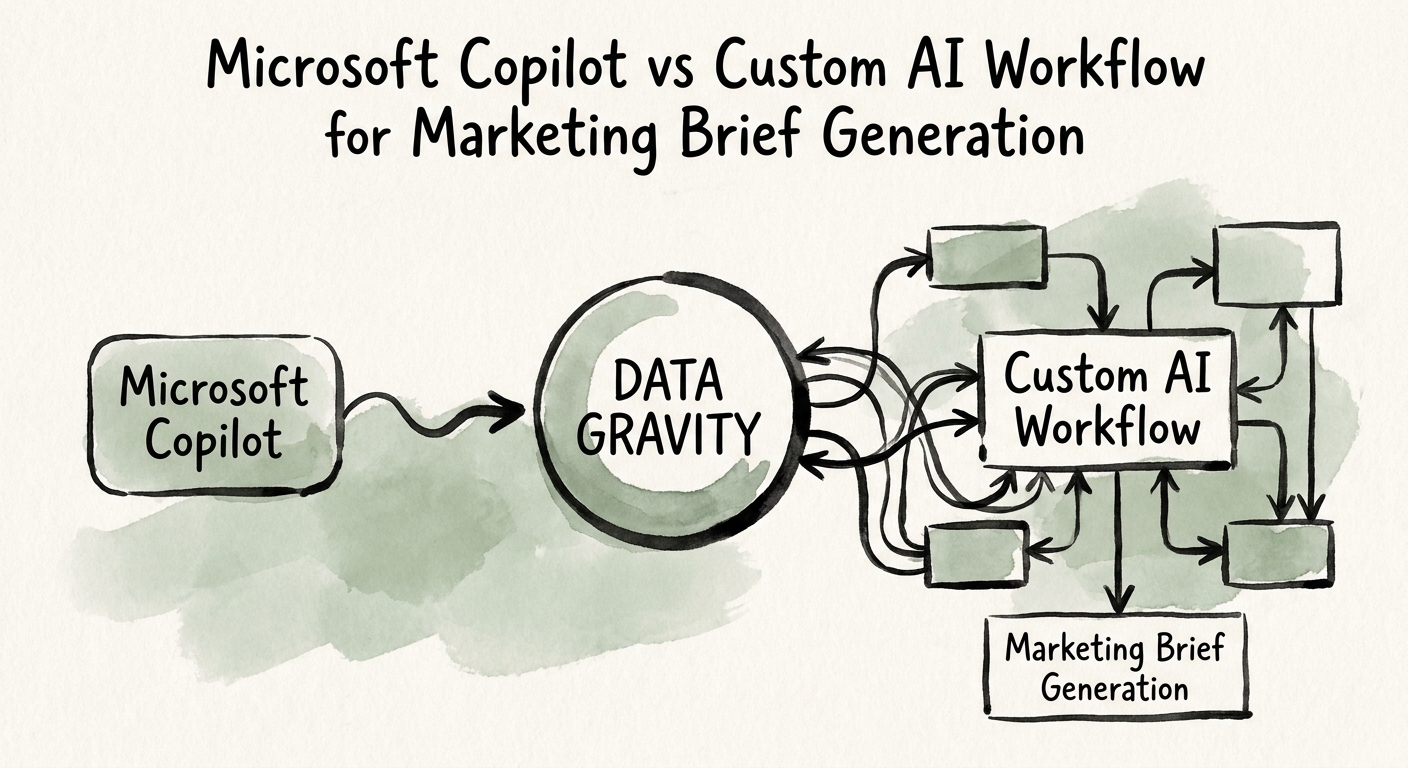
Skip the tool demos for a week. Instead, open your last five campaign briefs and reconstruct what actually happened to each one after the first draft existed. Count the revision rounds. Note every time brand sent it back, every legal flag, every "wait, which segment are we targeting" thread. That history tells you which tool you need better than any vendor pitch. The Deloitte State of AI report frames the real question well: the value isn't a faster first draft, it's redesigning how campaign inputs, audience context, and approvals become a finished, shippable brief. If your five-brief audit shows the drafting was quick and the approval chaos was the cost, no amount of better drafting fixes that.
And resist building custom just because you can. The Gartner agentic AI project forecast is a warning shot for exactly the marketing team that gets excited about an automated brief pipeline, builds it, and then watches it stall because nobody defined who owns the brand-approval state or what happens when legal is on vacation. Build the workflow only when Copilot genuinely cannot carry your campaign inputs, your approval states, your CRM context, or your audit trail — and when you've named an accountable marketing owner for the production version, not a committee.
If the audit leaves you unsure whether you need Copilot enablement, a light approval automation, or a fully governed brief workflow, walk the decision through the AI pilot versus production workflow guide before you commit a budget. Most marketing teams I see need less than they think on day one and more structure than they expect by campaign three.
