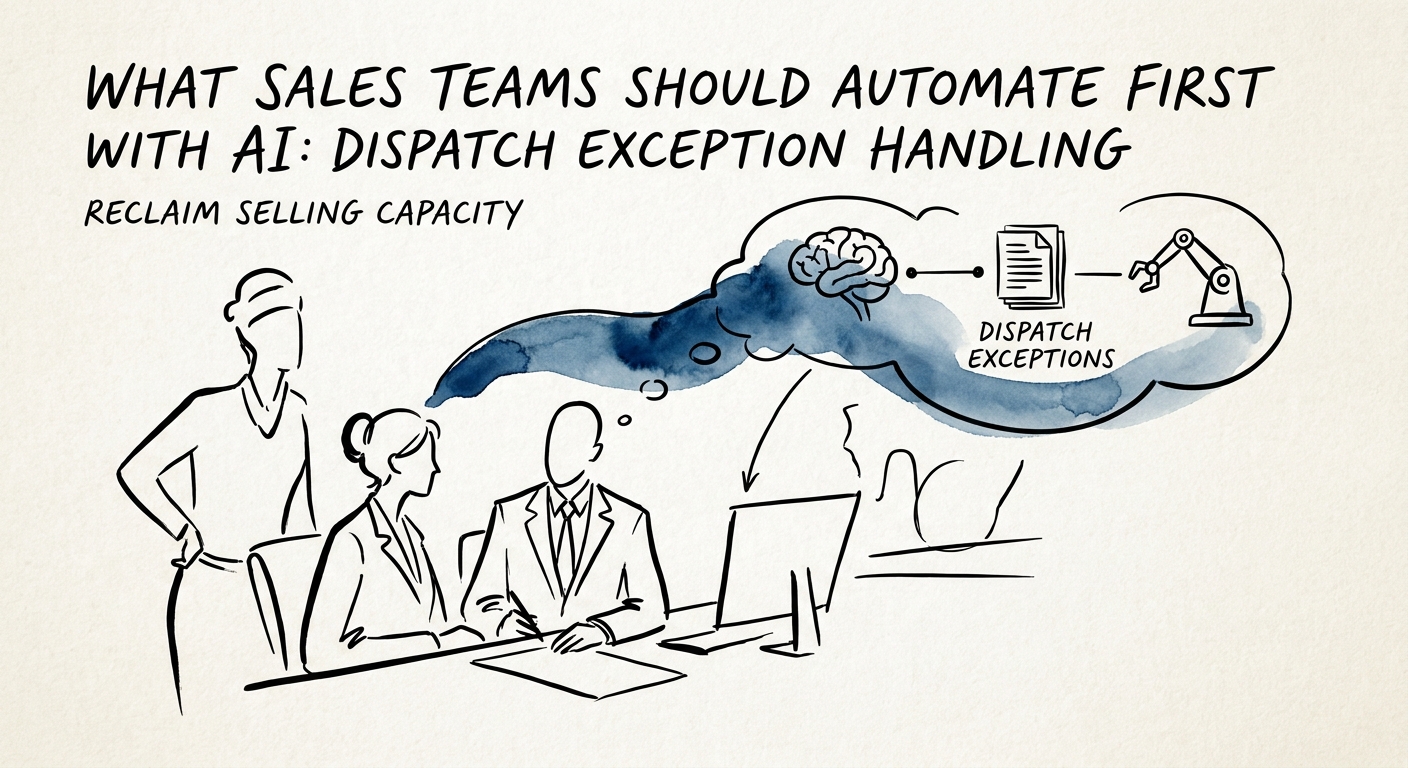
The Gap Between What Sales Promised and What Dispatch Can Deliver
Here is the moment this whole workflow exists to prevent. A rep at a distribution or field-service shop closes a deal on a Tuesday and tells the customer the install crew arrives Thursday morning. Wednesday afternoon, dispatch reroutes that crew to an emergency, a part goes on backorder, or the ETA on a freight pallet slips two days. The schedule changes inside an operations system the rep never looks at. Nobody tells the account owner. Thursday at 8 a.m., the customer calls the rep — angry — and the rep is the last person in the building to find out.
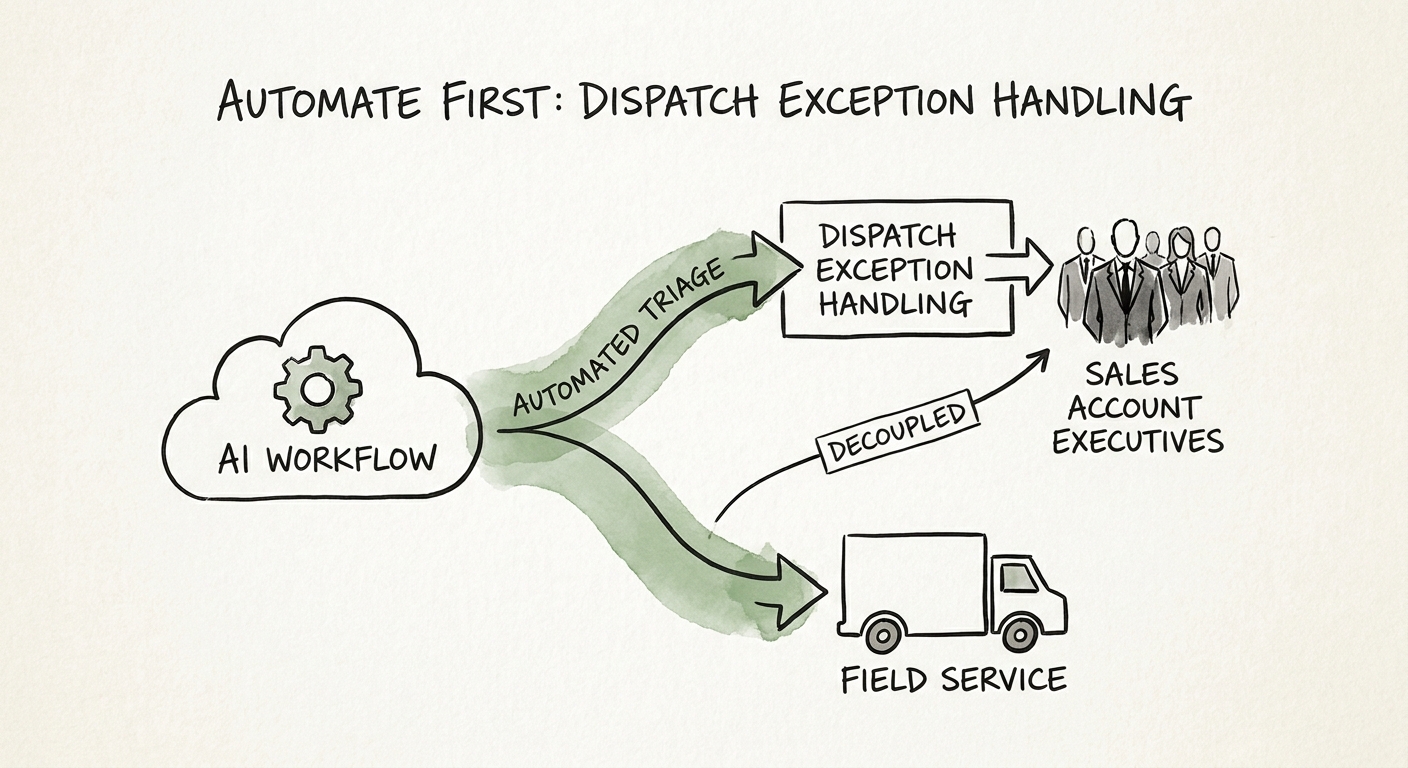
That gap, between the commitment sales made and the capacity delivery actually has, is where AI earns its first paycheck in a sales org. Not by drafting cold emails. By watching the dispatch calendar, technician availability, inventory status, and freight ETA, and pinging the account owner the moment a change breaks a promise that's already out the door.
The case for picking this as your first workflow is grounded in where mid-market firms actually are with AI. The RSM middle-market AI survey, the San Francisco Fed small-business AI analysis, and the OECD SME AI adoption report all point to the same trap: smaller firms stall when they treat AI as a clever toy instead of wiring it to a specific system of record with a named owner. So the first design question isn't "what prompt do we write" — it's "which operations system holds the real delivery date, and who gets the alert when it moves."
Have It Flag the Risk — Not Invent a New Delivery Date
The dangerous version of this build is the seductive one. Someone wires the model straight to the customer and lets it send a soothing text: "Good news, your install is rescheduled for Monday at 9 a.m." Except dispatch hasn't confirmed Monday. The crew might be slammed Monday too. Now you've turned one broken promise into two, in writing, with the customer holding the receipt. The model sounded fluent and confident and made things worse.
The fix is to draw a hard line between detection and communication. AI is allowed to detect the exception and alert your own people. It is not allowed to tell the customer anything until a human who can actually see the schedule has approved it. Use the NIST AI Risk Management Framework to pin down who that reviewer is and what "acceptable risk" means for a customer-facing message. Use CISA AI Data Security Best Practices to decide which fields the model is even allowed to touch — dispatch calendar, technician capacity, freight ETA, inventory level, customer priority tier, account owner, open commitment notes — and which stay locked down.
What the account owner should actually receive is a tight, factual alert, not a paragraph of reassurance. Picture a 40-truck HVAC distributor: the alert reads "Order #4417, Riverside Dental (priority account, owner: Dana). Thursday install crew rerouted. Earliest re-slot pending dispatch confirmation. No customer contact yet." That's it. Source, impacted account, owner, the constraint, and the explicit boundary that nobody has talked to the customer. Dana now decides whether to call Riverside herself, push dispatch for a firm date, or escalate. The AI handed her a verified problem with her name on it — it didn't hand the customer a guess.
The Only Metric That Matters: Who Heard It First
Run this for a quarter and judge it on one thing — whether your account owners stopped getting blindsided. Deloitte's State of AI in the Enterprise 2026 makes the point that the firms getting value have moved past counting pilots and started counting outcomes. For this workflow the outcome is brutally concrete: did the rep learn about the slip from your system, or from a furious customer?
Track five numbers. Hours from the dispatch change to the account-owner alert (your target is inside 24, ideally same-day). Count of "surprise" customer calls where the rep was caught flat. Mismatch rate between what the model flagged and what dispatch actually showed — your trust signal for the data source. Customer messages corrected before they went out. And escalations the alert let a manager catch in time. If, during the pilot, owners say "I still found out from the customer," the problem isn't the model — it's that your dispatch system isn't the trusted source yet. Fix that before adding any new AI surface.
Start narrow. Pick one exception type — say, install reschedules on priority accounts — wire the alert to land within the 24-hour window, and measure whether surprise calls dropped. Use the manual-work scoring guide to confirm this exception is actually worth automating, and the 90-day AI implementation plan to sequence the source cleanup, prototype, reviewer training, and launch. Expand only when the workflow does two things at once: protects the commitment the rep made, and keeps the customer message honest about what delivery can really do.
