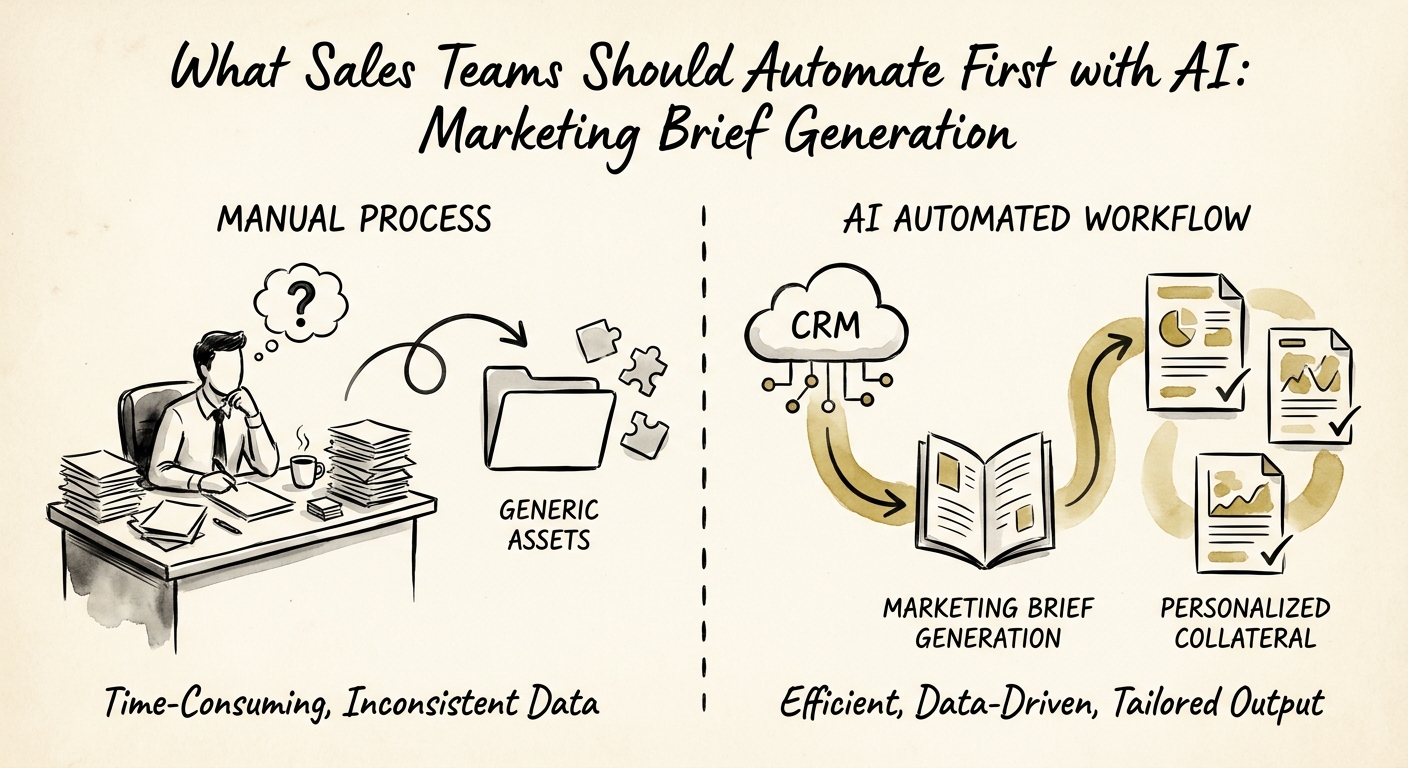
The competitor's name you wrote in a deal note is not a campaign asset
Picture a 40-person B2B software company. The sales team runs maybe 60 discovery calls a month. Inside those calls is the most expensive market research the company will ever own: the exact words buyers use for their pain, the objection that kills three deals out of ten, the competitor they're switching away from and why, the budget line they have to defend internally. Marketing is two desks over, guessing at all of it.
So the obvious move is to point an AI at the call recordings and have it write marketing briefs. And the obvious move is where this goes wrong. The seller's note says "Acme Corp's CFO hates their current vendor's renewal pricing." That is gold as a theme. It is a lawsuit as a sentence. The model doesn't know the difference — it will happily surface "Acme Corp's CFO" into a brief that lands in a campaign deck, because nothing told it that the deal identity is the one thing that can never leave the building.
The adoption research is consistent that mid-market companies are moving fast on this kind of workflow — the RSM middle-market AI survey and the OECD SME AI adoption report both show small and mid-sized firms past the curiosity phase. But the San Francisco Fed analysis of AI and small businesses is the one worth pinning to the wall: the value shows up when a workflow has a named source, a named owner, and a defined cadence — not when a tool is impressive in a demo. For sales-call briefs, that means deciding up front which calls feed the system, who owns the resulting themes, and who is allowed to say a theme is safe to publish.
Build the stripper before you build the writer
The instinct is to spend the effort on prompt quality — making the AI write a sharper brief. The actual work is the layer that runs first, before the writing: the part that turns "Acme Corp's CFO hates renewal pricing" into "in financial-services buyers, mid-contract renewal pricing is a recurring switching trigger." Same insight. Zero deal identity. That transformation — recurring buyer language and objection patterns extracted, every name and account and dollar figure stripped — is the entire product. The brief writer is the easy 20%.
This is where two specific references earn their keep. The NIST AI Risk Management Framework gives you the structure to name what could go wrong and who is accountable when it does — useful precisely because "a customer's competitive intel ended up in a public-facing deck" is a concrete, nameable risk. The CISA AI Data Security Best Practices guidance helps you decide, field by field, what the system is even allowed to see: call transcript, yes, anonymized; CRM opportunity stage, probably not; the account name, never past the anonymization step.
Concretely, write down the rule set before anyone touches a model. Which call segments are in scope. What gets masked (names, accounts, dollar amounts, anything that fingerprints a specific deal). Who owns each theme. What proof a claim needs before it can become a marketing message. And who signs off before a single line reaches a campaign. A general assistant can absolutely cluster recurring objections across 60 calls — that part is solved. What a general assistant cannot do is enforce that the cluster came out scrubbed and that a human approved it. That enforcement is yours to build, and it's deterministic, not probabilistic: a hard filter, not a polite instruction in the prompt.
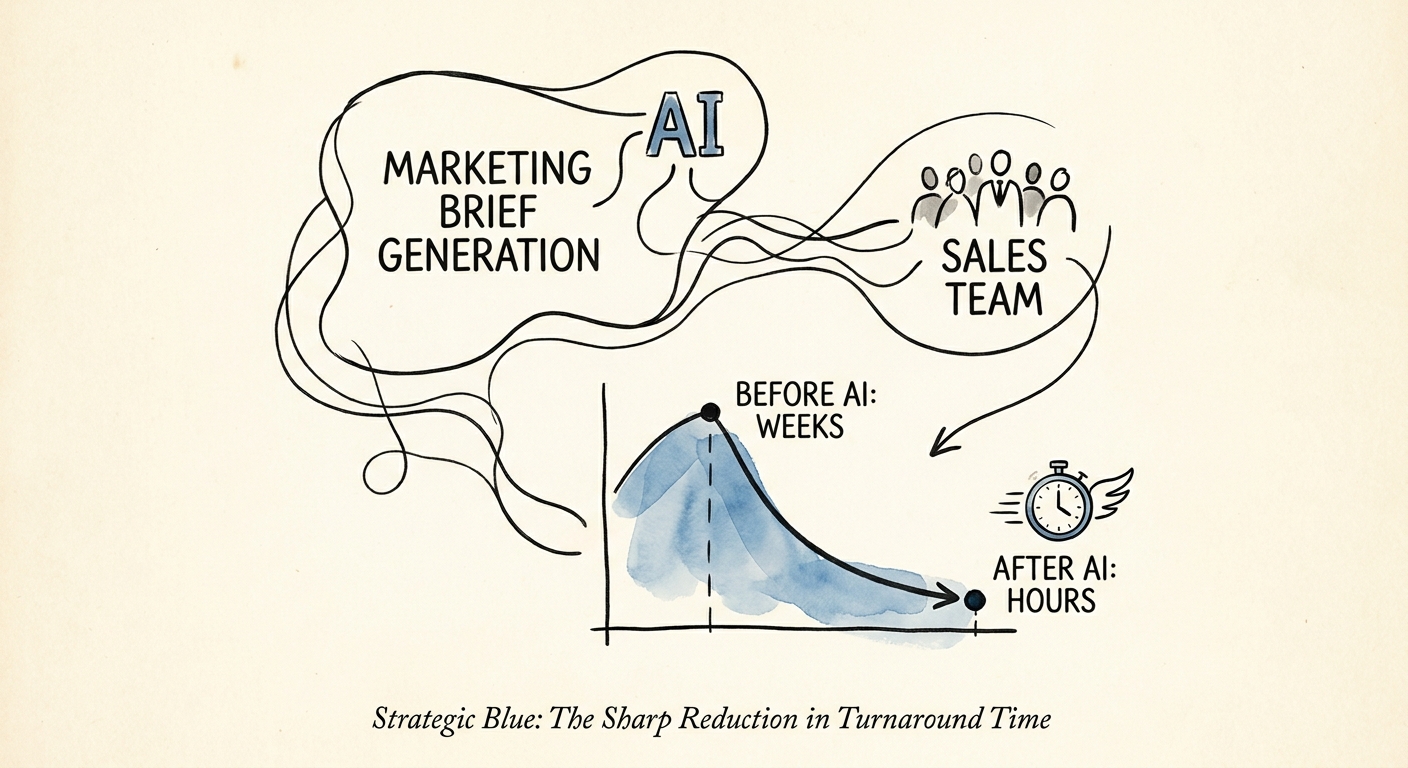
The metric that matters: does sales recognize the brief?
Most teams measure this thing wrong. They count briefs generated, which is a vanity number — a model can produce a hundred a week. The Deloitte State of AI in the Enterprise 2026 report keeps hammering the same point across use cases: the gap is between pilot activity and production value, and the only people who can confirm production value here are the sellers who were on the calls. So the real test is uncomfortable and specific: hand a generated theme back to the rep whose calls fed it and ask, "Is this what your buyers actually said?" If the rep shrugs, the workflow is laundering noise.
Track the numbers that prove the safe-and-useful loop is closing: themes marketing accepted, sensitive details the stripper caught and removed, proof requests the briefs generated for the sales team, the rep validation rate, and how long the marketing review cycle actually takes. The single failure signal to watch for is a brief that can't separate the market signal from the deal identity — if that shows up even once in review, stop expanding and fix the anonymization layer, because the next miss is the one that escapes.
Start narrow on Monday. Pick one buyer segment — say, the financial-services accounts. Pull the last month of calls in that segment. Group them by the single most common objection. Run that one cluster through the strip-then-draft flow, then put the result in front of both the sales lead and a marketing owner and require both signatures before it becomes content. One segment, one objection theme, two approvals. Before you build any of it, use the manual-work scoring guide to confirm call-note mining is actually eating enough hours to be worth automating, and the 90-day AI implementation plan to stage the source cleanup, the anonymization build, reviewer training, and launch. Expand only when the loop is producing safe market evidence faster than someone could mine the call notes by hand.