The 9-Rating That Was Actually a Resignation Letter
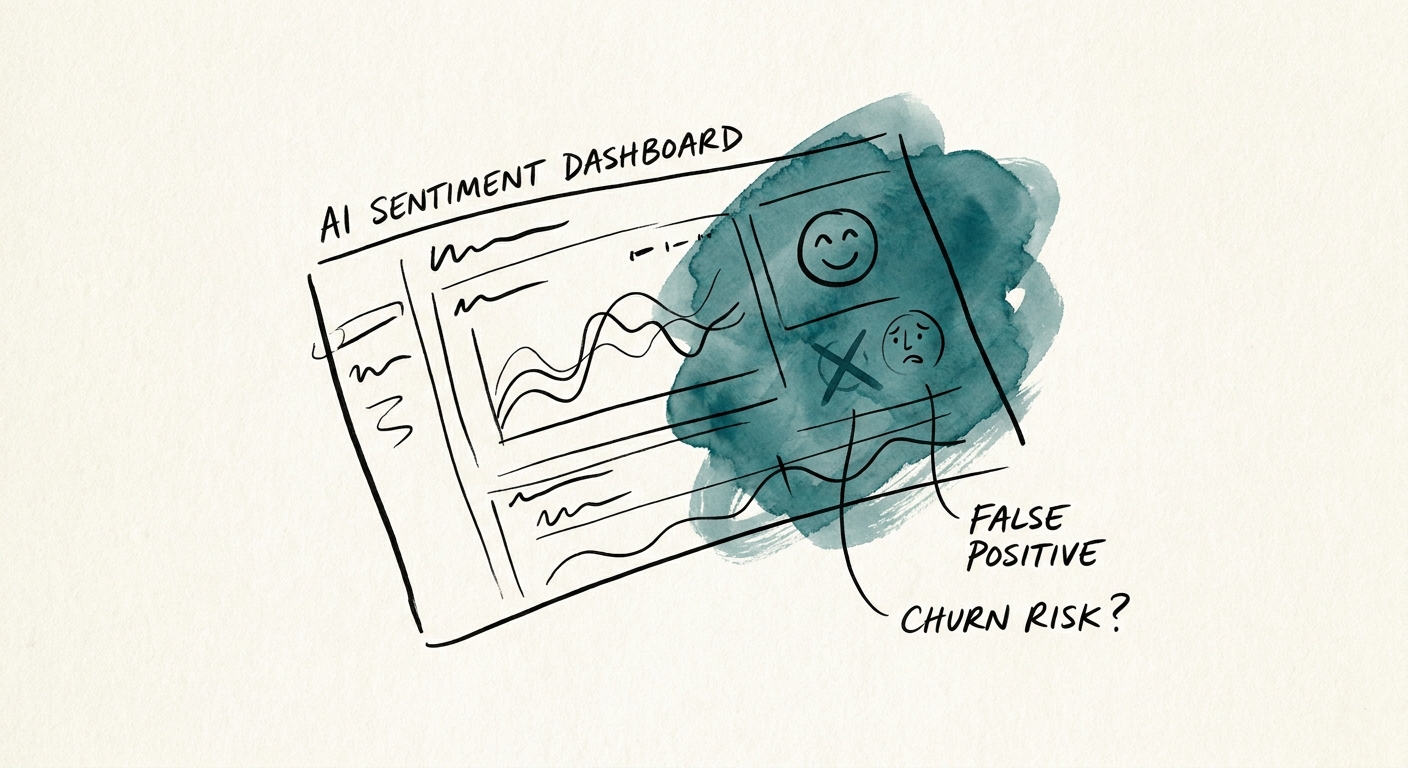
Picture a 90-person B2B SaaS company. An account that pays you $180K a year submits an NPS response: a 9, with one line of comment — "Still happy with the product, just have a lot going on internally right now." A sentiment model reads that as positive. It tags it green, rolls it into the quarterly dashboard, and the comment is never seen again. Eleven weeks later that account doesn't renew, and the post-mortem turns up three more "green" comments from the same logins, each one a little colder than the last.
That is the specific failure mode in SaaS customer feedback. The risk is not that AI mislabels an angry rant — angry rants are easy, even a keyword filter catches those. The risk is that AI is excellent at scoring tone and terrible at reading account stakes. A short, polite, lukewarm comment from a strategic account at month nine of a twelve-month term carries more business weight than a furious 2-rating from a free-trial user who was never going to convert. Tone is the same. Context is opposite.
Deloitte's 2026 State of AI in the Enterprise finds real production value in AI text analysis — and the honest reading of that is knowing which comments the model is allowed to close on its own. Census Bureau data on AI use at U.S. businesses shows adoption climbing faster than the governance around it, which is exactly how a sentiment dashboard ends up owning renewal-risk calls it was never built to make.
Sort the Comment Stream by Account Stakes, Not by Tone
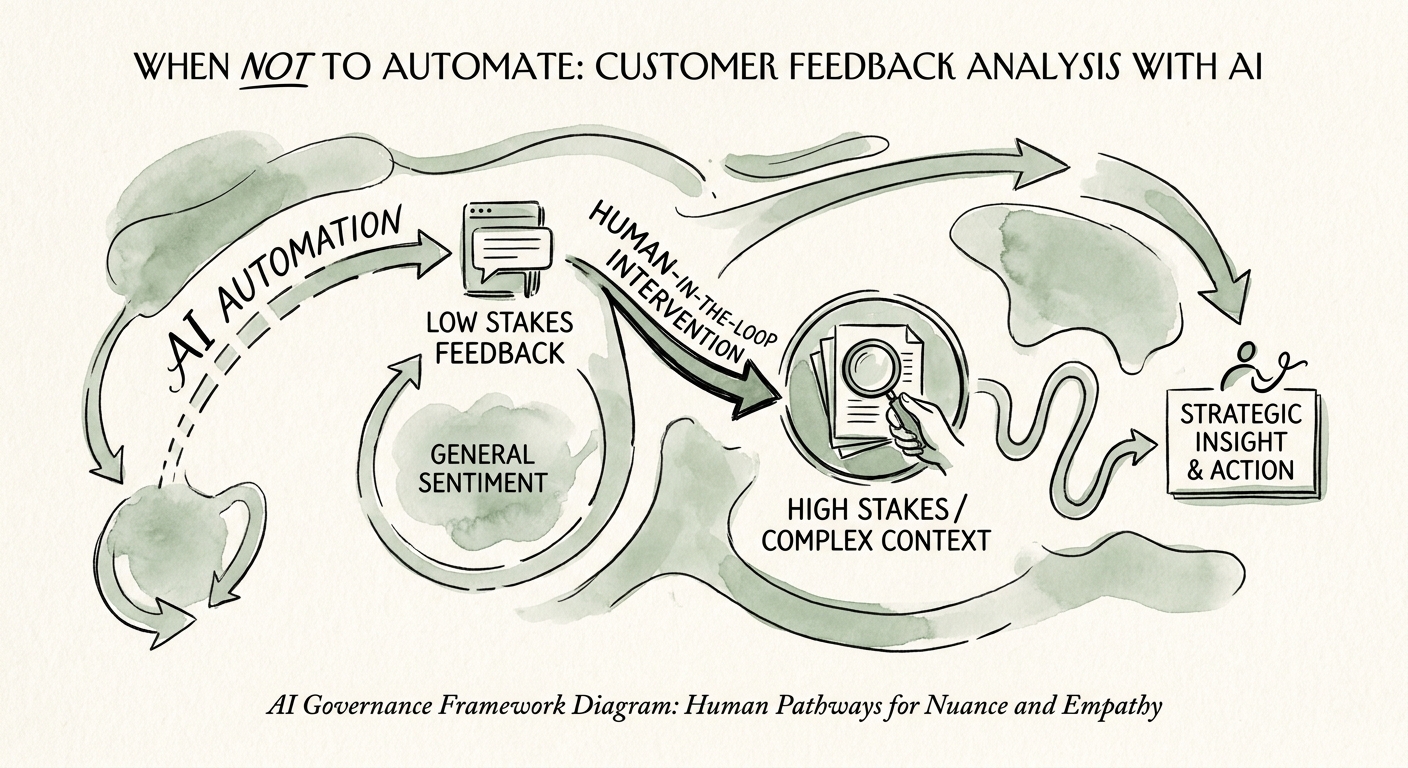
The fix is not "add a human in the loop" as a vague reassurance. It's a routing rule that runs before the model ever assigns sentiment. Join every incoming comment — NPS, CSAT, support survey, in-app feedback, churn-survey free text — to the account record first: contract tier, ARR, days-to-renewal, expansion or contraction in the last quarter, and who owns the relationship. Then split the stream in two.
The first lane is safe to automate: feedback from low-ARR accounts, closed-won-and-stable customers far from renewal, and aggregate product-feature requests. Let the model cluster themes ("onboarding is confusing," "wish the export had X"), count frequency, and feed the product trend report. This is where AI genuinely earns its keep — a CS team that used to read 800 comments a quarter by hand can see the top fifteen themes in minutes.
The second lane never gets auto-closed: anything from a top-tier account, anything inside the renewal window, any comment mentioning price, a competitor by name, a stalled implementation, a missing executive sponsor, or legal/contract language. NIST's AI Risk Management Framework is useful here precisely because it forces you to write down intended use and failure modes — and "the model quietly downgraded a save opportunity to a dashboard tile" is the failure mode worth measuring. Whatever the model summarizes, keep the verbatim attached. CISA's AI data-security guidance matters more than usual in this workflow because feedback text is laced with named customers, deal context, and usage data, and a summary that strips identifiers for "safety" can also strip the exact detail a CS lead needs to make the save.
What to Stand Up Monday
Before any pilot, write the routing rules where the whole CS and revenue team can see them — not buried in a model's prompt. Three lanes, one page: auto-tag and report; AI-summarized but human-reviewed; never-touched-by-the-model-alone. The third lane is your strategic-account, in-renewal, price/legal/competitor list, and every comment in it lands in a named owner's queue with the raw verbatim, the account's renewal date, and its expansion/contraction trend attached. The model can organize that queue; it cannot decide what the comment means for the relationship.
Measure two things separately, because they pull apart. One: speed — how fast does the team now see product trends. Two: trust — when a strategic-account comment routes to a human, was the routing right, and could the owner still see the customer's actual words? A pilot that triples tagging speed but produces summaries CS leaders don't believe has made the dashboard prettier and the renewal forecast worse. Run it for one quarter on a deliberately narrow input set — verbatims, account tier, renewal context, usage, escalation history — and review the after: of the comments the model auto-closed as "positive" from accounts that later churned or contracted, how many should have been escalated? That number is your real accuracy score, and it's the one no sentiment-percentage chart will ever show you.
OECD research on AI adoption by smaller firms and the San Francisco Fed's work on AI and small businesses both point at the same lesson: the wins come from the boring, high-volume sorting, not from letting the model make the judgment call. Start where it's safe, connect it to finding the manual work actually worth automating, and fold the stop conditions into the broader AI transformation blueprint. The pattern-finding should get faster. The decision about whether to pick up the phone stays yours.