The week before the audit, the same fire drill
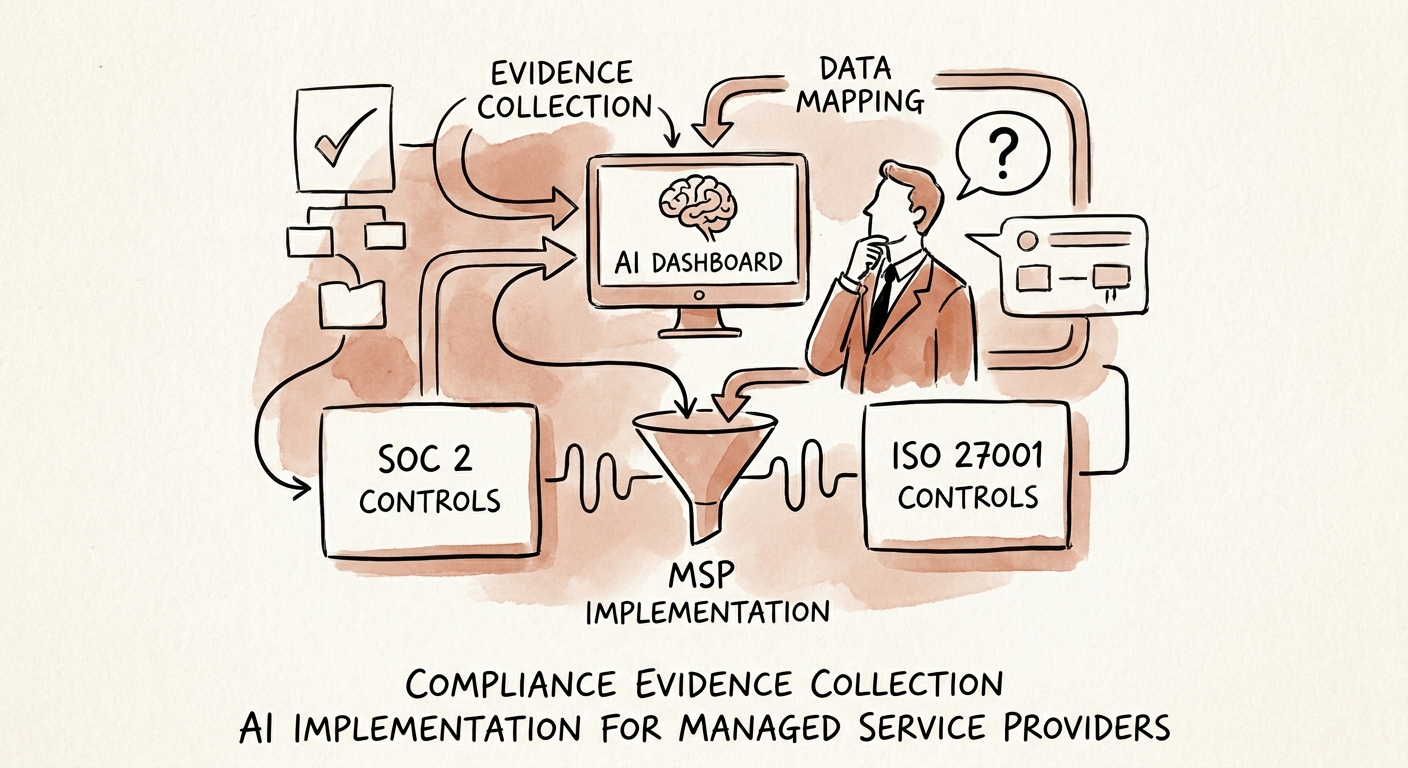
Picture a 60-person managed services provider. A client's auditor wants evidence for the last four quarters: proof that every offboarded user lost access within 24 hours, that critical patches went out on schedule, that change requests were approved before they shipped. That evidence exists — but it's spread across the PSA ticket system, the RMM endpoint reports, a quarterly access review spreadsheet somebody owns part-time, and a change log that lives half in a tool and half in Slack. So a senior engineer who should be billing client work spends three days screenshotting, exporting, and reconciling. Multiply that by every client who runs their own SOC 2 or asks you to fill out their security questionnaire, and you have a recurring tax on your best people.
This is exactly the kind of narrow, painful workflow that AI is good for — and exactly the kind that goes sideways when you skip the boring part. The RSM middle-market AI survey, the San Francisco Fed analysis of AI and small businesses, and the OECD report on AI adoption by small and medium-sized enterprises all land on the same point: smaller firms win when they aim AI at one specific operating pain, not a vague "let's use AI" mandate. For an MSP, that pain has a name: audit evidence collection. Start there — not with "what assistant should we buy."
The trap that's unique to MSPs: you're holding everyone else's data
Here's what makes an MSP different from, say, an accounting firm building the same workflow. Your evidence sources are also your clients' production systems. Your RMM sees their endpoints. Your PSA holds their ticket history. Your documentation tool stores their network diagrams and admin credentials. The moment you point a retrieval system at that pile to answer "show me access removals for Client A," you've built something that could just as easily surface Client B's data — or pull a credential into a draft answer that gets shared with the wrong auditor.
So the order of operations matters. Before any retrieval goes live, classify the source library by client and sensitivity, and decide what is categorically off-limits — credentials, client PII, anything covered by a client MSA confidentiality clause. The NIST AI Risk Management Framework gives leadership the language to map where the system can touch and where it can't, and CISA AI Data Security Best Practices speaks directly to a knowledge system sitting on top of client, security, and contract data. If you're running this through Microsoft 365 Copilot, your permission model has to mirror your existing tenant boundaries — check it against Microsoft 365 Copilot privacy and data controls — and if you're using a hosted model, confirm the data-handling terms in OpenAI's enterprise privacy commitments before a single client document goes in. The test is blunt: can you prove, per query, which documents were used, that they belonged to the right client, and that nothing confidential left the approved environment? If you can't answer that, you don't have an evidence tool — you have a liability that happens to type fast.
Ship the boring version, then watch what it can't answer
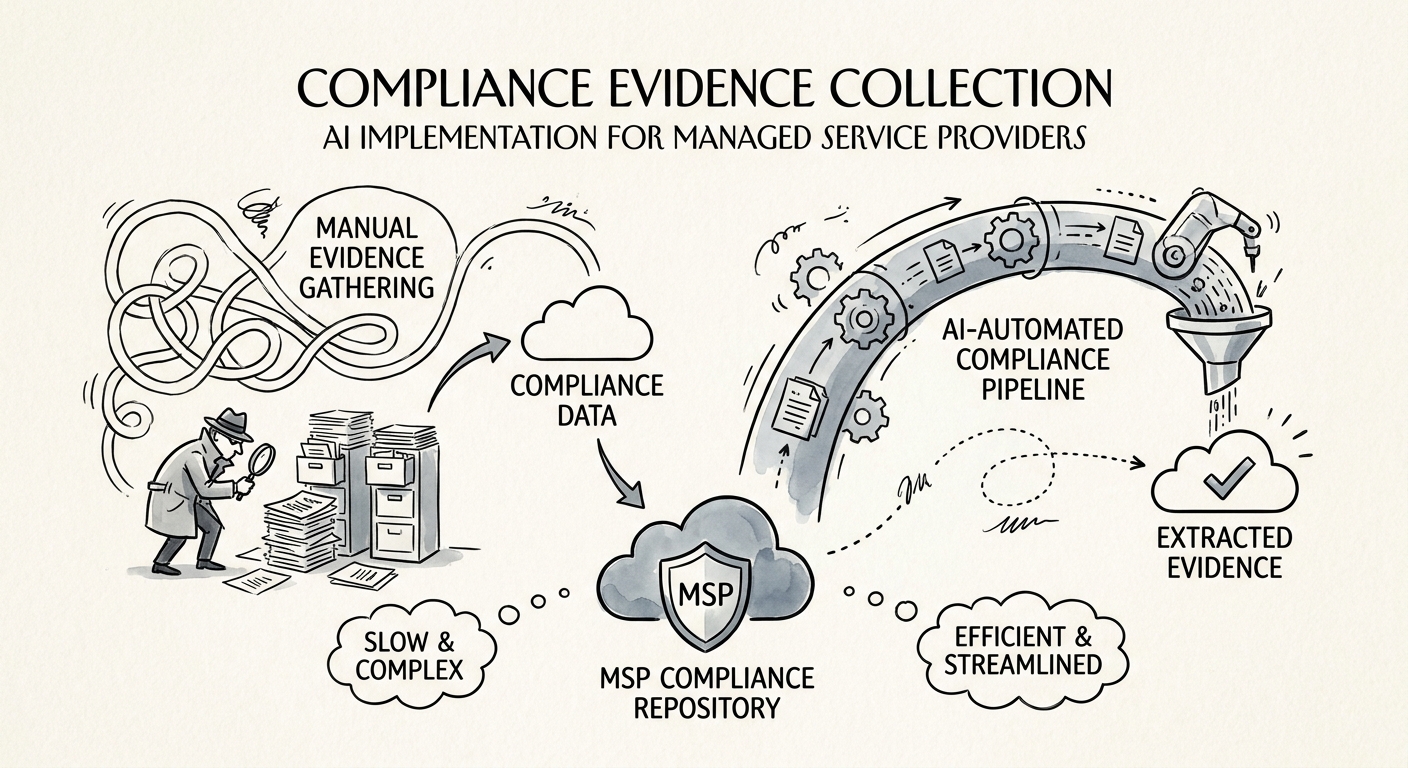
The production version should be smaller than the demo that impressed everyone. Pick one evidence type — say, user offboarding access removals — connect only the approved sources that hold it (the PSA tickets plus the identity provider logs), and require a cited source on every answer it drafts. Route anything ambiguous to a named reviewer; for audit evidence, "the AI said so" is not a control, a human signature is. Then measure the things that actually tell you if it's working: how often the cited evidence holds up under reviewer check, how much engineer time you reclaim per audit cycle, and — the most valuable output — which controls return no evidence at all. That last metric is gold. When the system can't find proof that Q2 patches shipped on schedule, it hasn't failed; it's just told you about a control gap before the auditor did.
Get the source boundaries right by working through the internal AI knowledge assistant guide, and pressure-test whether you actually have the ownership, permissions, and review capacity to run this with the SMB readiness assessment. For an MSP, the win isn't a chatbot that talks about compliance — it's a governed system that produces audit-ready evidence from trusted sources and quietly surfaces the gaps that need fixing before someone outside your firm finds them.
