The 9:40am scramble
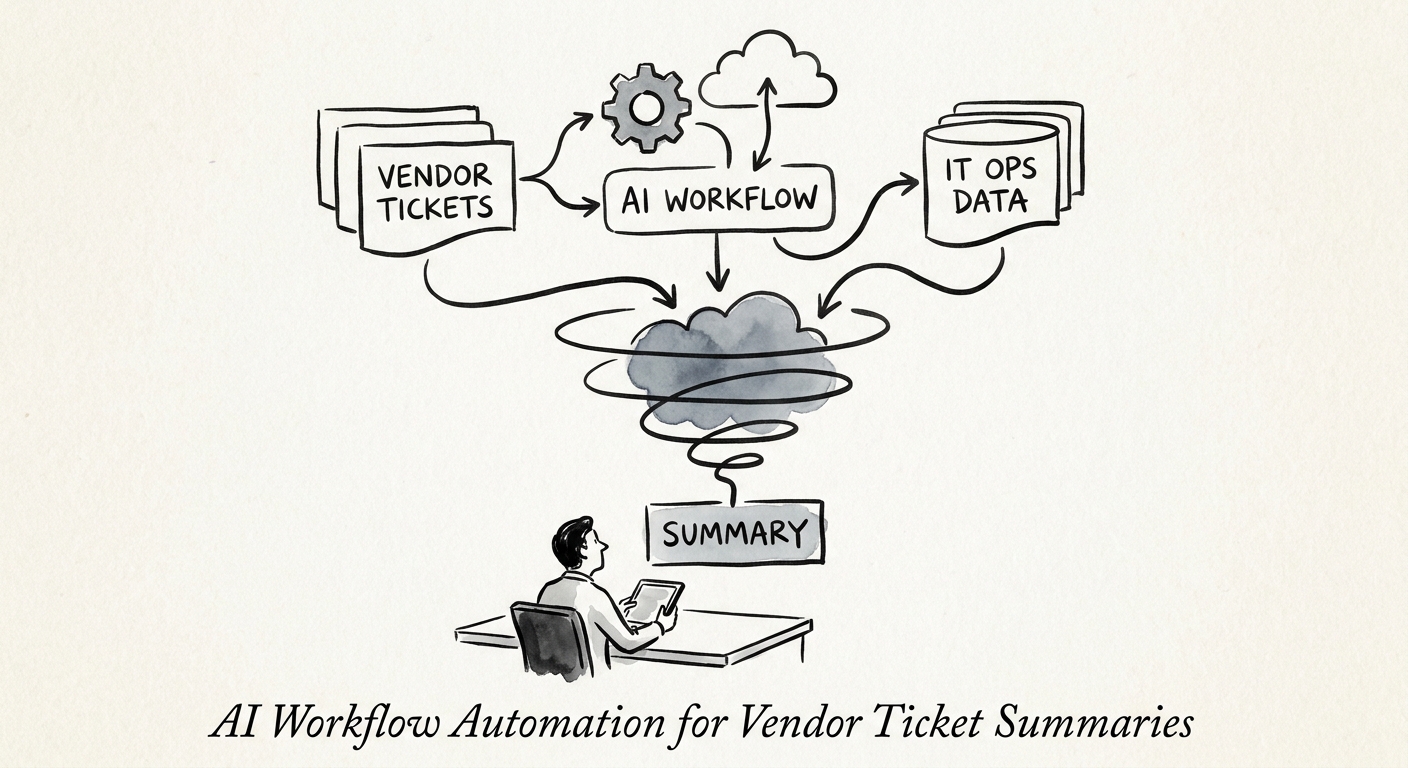
A SaaS tool your company runs on has been throwing intermittent errors since Tuesday. By Thursday the vendor wants an escalation, and someone on your team — say a service desk lead at a 60-person ops group — spends forty-five minutes doing the same thing they did the last three times: scrolling the vendor portal, the email thread, the internal Slack channel, and last quarter's ticket for the same integration, trying to assemble a coherent story before the bridge call. The vendor opens with "can you confirm which systems are affected," and the lead is back to digging.
That re-assembly is the actual job, and it is the part AI is genuinely good at. Vendor escalations are repeated, the source material is fragmented across portals and chats and notes, and the structure barely changes from ticket to ticket. The RSM middle-market AI survey shows middle-market organizations expanding AI usage, but the lift shows up only when the workflow itself changes — not when you bolt a summarizer onto a process nobody fixed.
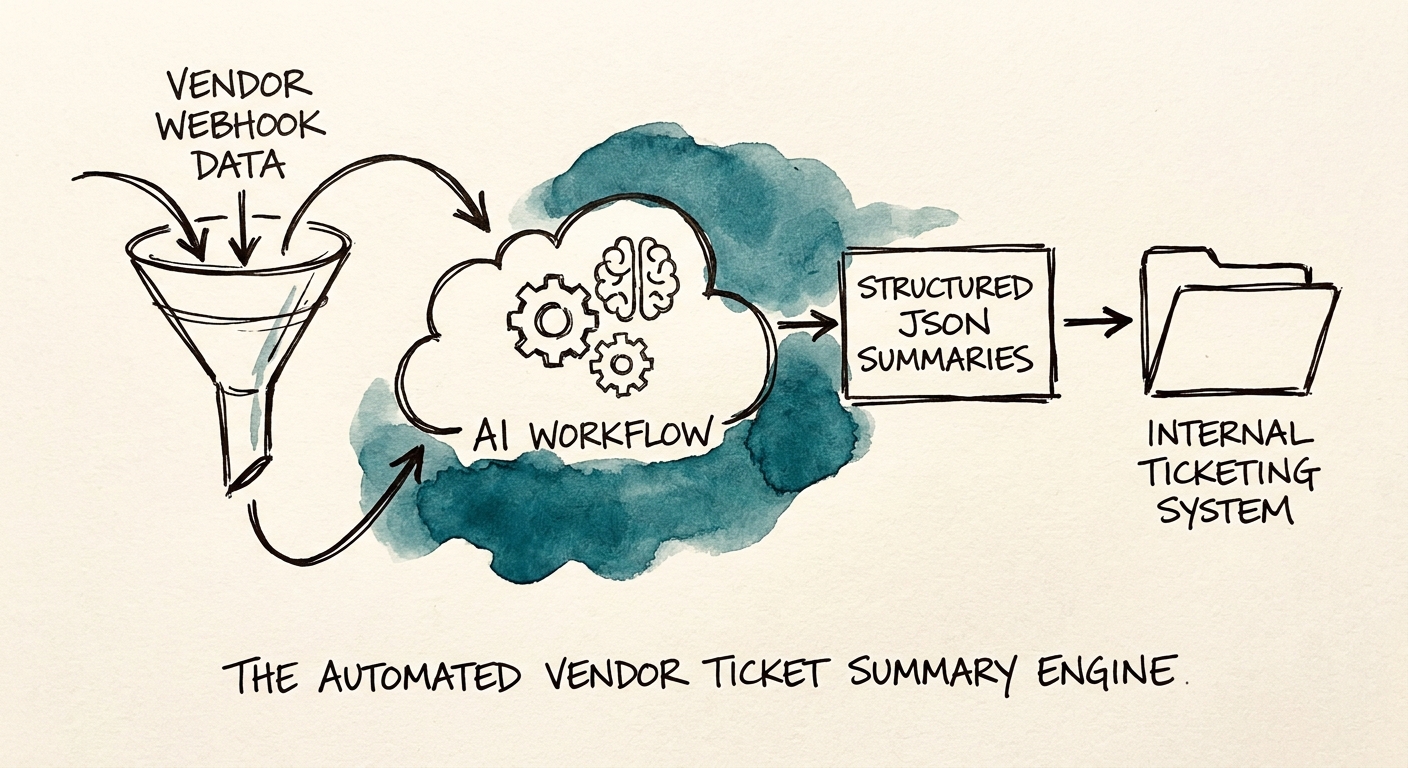
Start narrow. The first version should pull together the vendor ticket history, which of your systems are affected, the customer-facing impact, what your team already tried, the attachments, and the still-open questions — then draft the escalation packet. A human owner still approves the message and the next action. Pick your starting queue with workflow discovery: find the vendor where your team keeps rebuilding the same context from scratch.
Vendor tickets are not clean data — treat the access map as the design
What lands in a vendor ticket is messier than most automation projects assume: server hostnames, customer account identifiers, incident timelines, error logs that quote real records, and a map of which of your systems depend on which of theirs. Pipe that into a model with sloppy boundaries and you have built a quiet exfiltration path to a third party. The NIST AI Risk Management Framework gives the control frame, while CISA AI data security best practices and the NIST Cybersecurity Framework 2.0 matter here precisely because the source material is operational and sensitive.
Settle four things before launch, not after the first incident. Approved sources: the model reads from your ticketing system and named channels, nothing else. Role-aware access: a tier-1 agent's summary should not surface data the agent cannot already see in the ticket. Redaction and retention: customer identifiers get masked in the outbound packet by default, and drafts do not live forever. Logging: every summary records what it read. The hard line is this — AI assembles context and flags what is missing; it does not approve a vendor change, disclose system internals to the vendor, or commit your company to a remediation window without a human signing off.
Then measure whether any of it worked, using a practical AI ROI model. The numbers that count for this workflow are specific: minutes to assemble an escalation packet, the count of "can you confirm…" round-trips the vendor sends back, how often a dependency gets missed and surfaces mid-incident, and whether the same context gets rebuilt twice for one ticket.
The summary is not the point — the weekly vendor review is
A cleaner escalation packet is nice. A vendor program that runs tighter because the context is always ready is the actual return. The Deloitte State of AI report keeps landing on the same finding: the value comes from the process change, not the tool. So judge this workflow by whether your weekly vendor review gets sharper — whether you walk in knowing which vendors are generating repeat escalations, which dependencies keep biting, and which SLAs are quietly slipping — not by whether the prose reads well.
Resist the pull toward letting the system coordinate vendors on its own. The Gartner agentic AI project forecast is a fair warning: agentic workflows get cancelled when cost, value, data quality, and controls were never nailed down. Prove summary accuracy and escalation discipline on real tickets for a quarter before you let anything act.
Monday move: pick your three messiest vendors, pull last quarter's escalations, and time how long it actually takes someone to rebuild the packet today. That number is your baseline. Then read the AI pilot versus production workflow guide to decide whether the vendor-ticket workflow is ready for production controls — or when you are ready, build the AI roadmap around it.