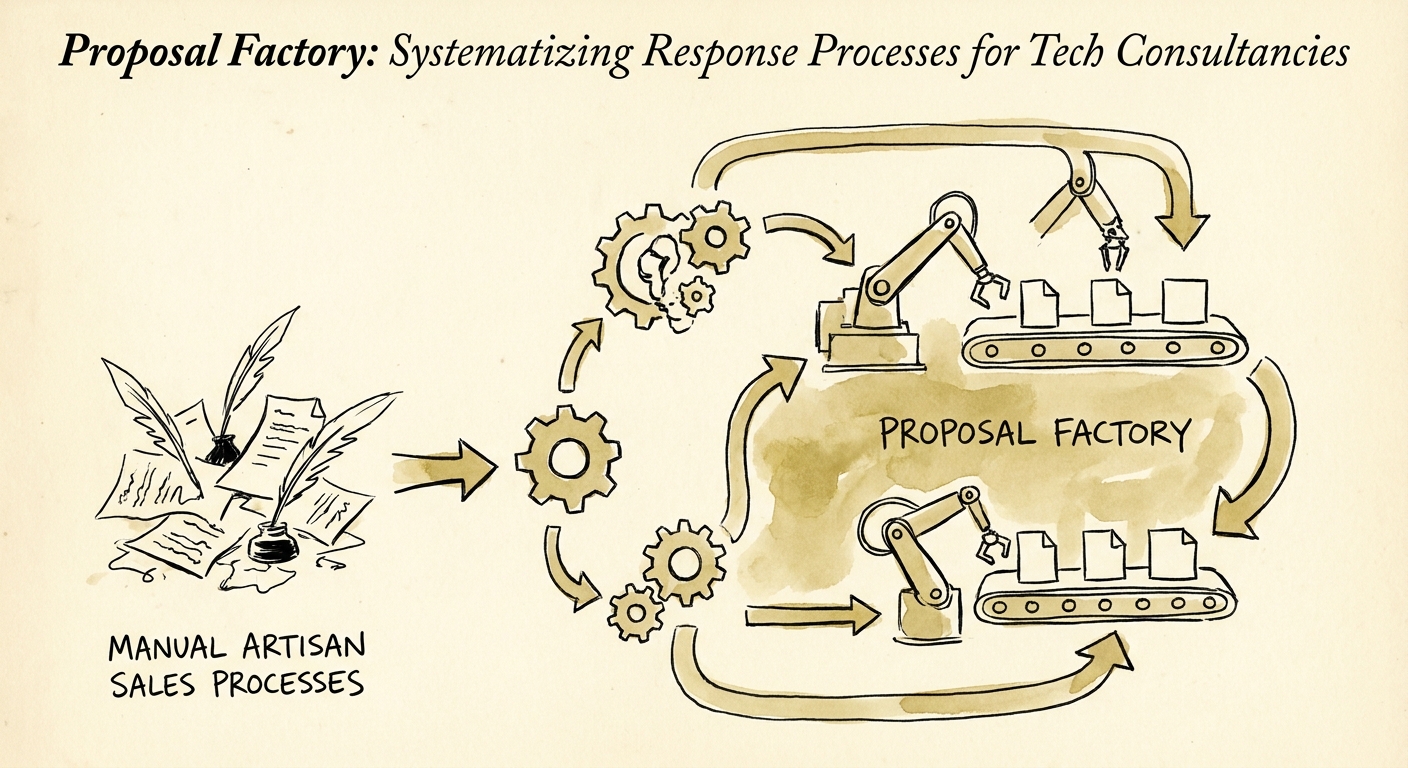
Proposal work breaks when every enterprise pursuit starts from a blank page. The visible symptom is a slow response. The deeper problem is that pricing logic, scope boundaries, proof points, security language, and delivery assumptions live in scattered documents or in the heads of a few senior people. That creates a fragile revenue motion. It also pulls delivery leaders into administrative assembly work when they should be validating the few details that truly affect risk.
A proposal factory solves a practical operating problem: make the repeatable parts of the response reusable, governed, and measurable. The goal is not generic copy. The goal is a structured response system that lets the team assemble a complete first draft quickly, then spend the remaining time on the buyer specific work that actually changes the outcome. That structure reduces founder dependency, improves handoffs between sales and delivery, and gives buyers more confidence that the proposal reflects how the work will really be delivered.
What belongs in the proposal factory
The useful version of a proposal factory starts with five controlled components: qualification criteria, service descriptions, reference architectures, pricing assumptions, and proof narratives. Each component needs an owner, an update cadence, and clear rules for when it can be changed. Without that governance, a repository becomes another folder of outdated examples. With it, the sales team can build from approved language while architects and operators focus on exceptions, constraints, and implementation risk.
The first operating target is a complete internal draft within 24 hours of qualification. That draft should not pretend to answer every buyer question. It should give the pursuit team a shared baseline: scope, assumptions, delivery model, references, known gaps, and decisions needed. From there, the technical team reviews the delta instead of rebuilding the entire response. This is where process documentation becomes commercially useful. A documented response system turns prior delivery knowledge into a reusable sales asset rather than a one-off scramble.
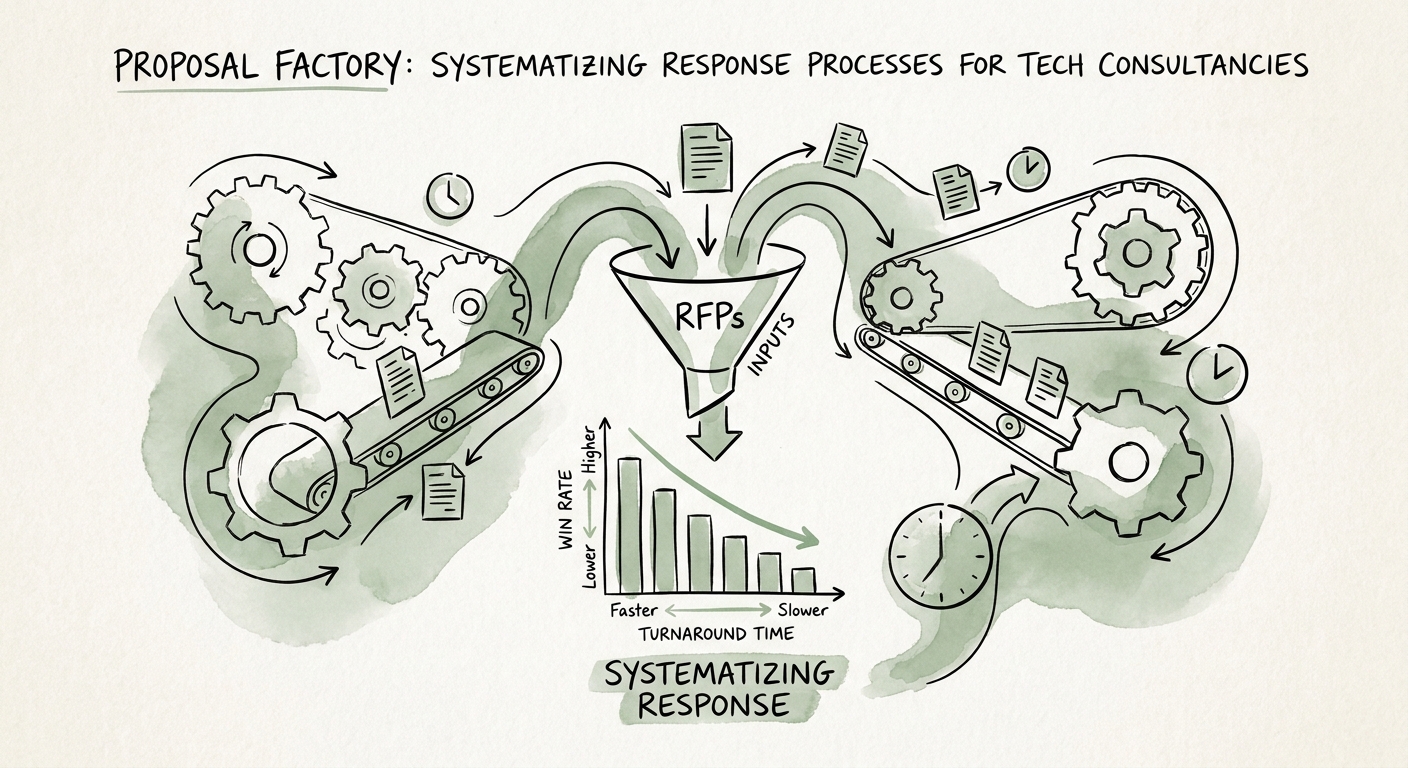
How the system changes diligence conversations
For investors and acquirers, repeatability matters because it separates a scalable revenue engine from individual heroics. A company that can show how opportunities are qualified, scoped, priced, reviewed, and handed into delivery is easier to understand. It is also easier to improve. Buyers do not need to believe that every future proposal depends on the same founder, lead architect, or senior seller being in the room.
The operating cadence is straightforward. Track response cycle time, component utilization, rework, pricing exceptions, and win-loss reasons. Review the library after every major pursuit. Retire language that no longer matches delivery reality. Add proof narratives only when they are specific, current, and defensible. Over time, the proposal factory becomes more than a sales productivity tool. It becomes evidence that the business can convert demand into signed work through a process that management can inspect, train, and improve.